










WelcomeThis is the English home page of neyzenim.com. You can use the menu above to access lessons, ney solos, note archive and other sections.
Our latest sheet music updates continue
You can find them in the Sheet Music Archive section. → Sheet Music Archive 👉 Ney Performances on Our YouTube Channel
Nihavent Saz Semai Composed by Reşat Aysu Ney Performer: Zeki Sözen
Arranged by: Faruk Paker Recording Studio: SP Studio Recording: Sina Polat Mixing & Mastering: Sina Polat 🕯️ Ancient Melody: The Oldest Known Written Vocal Composition from c. 1400 BCE – Hurrian Hymn No. 6 🪕 Discovered in the 1950s during excavations at Ras Shamra (ancient Ugarit) in Syria, a clay tablet dating to around 1400 BCE contains a hymn written in musical notation. This hymn is dedicated to the moon goddess Nikkal and is known today as the “Hurrian Hymn No. 6.” It is considered one of the oldest known written vocal compositions in human history. The tablet is inscribed in the Hurrian language using cuneiform script and is believed to have been performed on a nine-stringed lyre-like instrument. 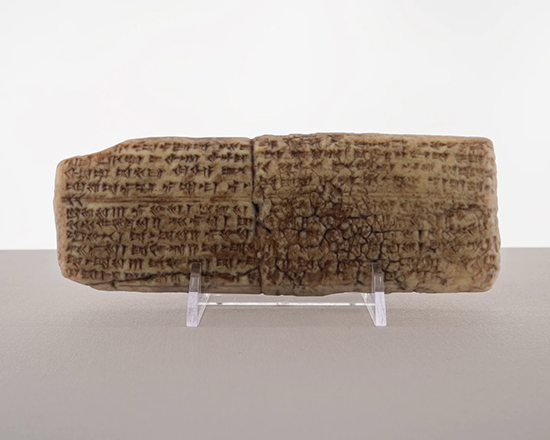
The Royal Court Orchestra of Ur – Sumerians, c. 2600 BCE 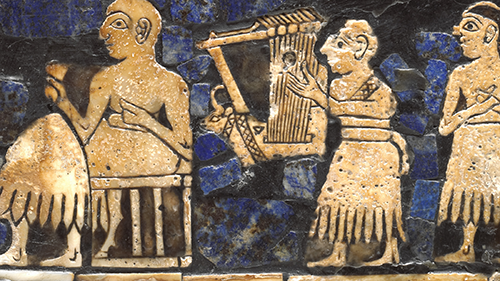
The strongest evidence for this ensemble comes from the Royal Tombs of Ur excavations in Mesopotamia. Artifact: Standard of Ur (inlaid panel – musician register) This panel, dating to around 2600 BCE, depicts a group of musicians in procession. The figures are shown walking and performing in rhythmic sequence. 🪈 Bull-headed lyres and end-blown wind instruments appear together. The lapis lazuli blue background enhances the ceremonial atmosphere. ðŸ•°ï¸ The attire and formation suggest an organized class of professional musicians. 🺠Artifact: Standard of Ur (musician panel) | Museum: British Museum, London Echoes from the Ney on Instagram 
📜 The strongest evidence for this ensemble comes from the excavations of the Royal Tombs in the city of Ur in Mesopotamia. Artifact: Standard of Ur (inlaid panel – musician register) This panel, dating to around 2600 BCE, depicts a band of musicians from the Ur period. 🪈 The figures are portrayed walking side by side in a rhythmic flow while performing. Bull-headed lyres and end-blown wind instruments are seen together. 🪈 🕰️ The lapis lazuli blue background enhances the ceremonial grandeur. 🏺 The arrangement of clothing and posture suggests an organized class of musicians.
|
© Neyzen Zeki Sözen | |