logo Türkçe English

Ney and Neyzen


What is the Ney?

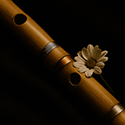
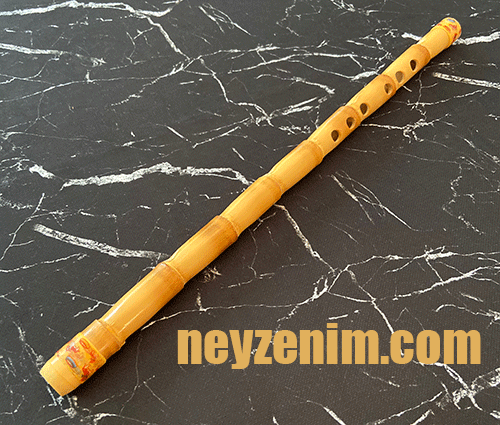
 As a musical instrument, the ney is made by opening seven holes at specific intervals, six on the front and one on the back.

 It is made from Reed Cane (Arundo Donax) and consists of a mouthpiece called a başpare, attached to the upper part to refine the sound,

 with hard rings called parazvane fitted to the upper and lower ends to protect the instrument from damage.

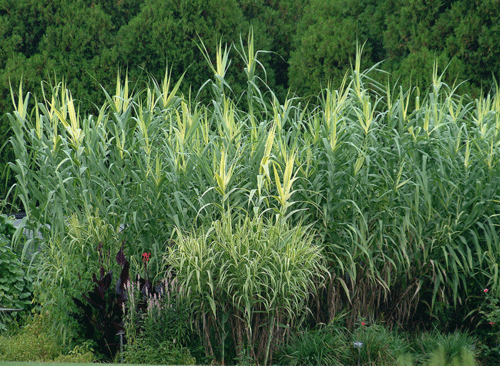
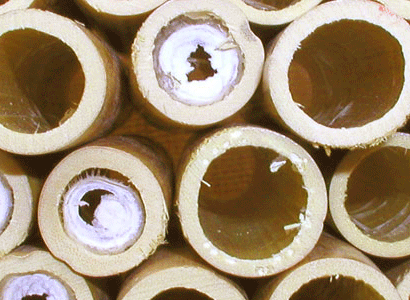
 In the image below, you can see reed canes (Arundo Donax) suitable for making a ney :


Uses of Reed Cane:

 The ney is made from the reed commonly used for musical instruments.

 However, these reeds must be Reed Cane (Arundo Donax).

 Arundo Donax, in addition to ney making, is also used as a raw material in traditional weaving

and handicrafts.

 Furthermore, due to its chemical composition and fibrous properties, it is considered a suitable raw material for the cellulose and paper industries, as well as for composite board production.

 It has also been proven to be a suitable lignocellulosic material for traditional medicine, rayon, paper, paper pulp, particle board production, and bioenergy generation.

Regions Where Reed Cane Grows:

 Reed Cane is considered to be a native species of the Mediterranean countries.

 Due to its various areas of use, it is cultivated in semi-tropical and temperate regions such as India, Burma, China,

North and South America, Australia, North and South Africa, the Nile River region, the Middle East, Southern Europe, and around the Mediterranean.

 This plant, which has been used for various purposes for thousands of years, contributes to productivity thanks to its rapid and easy growth.

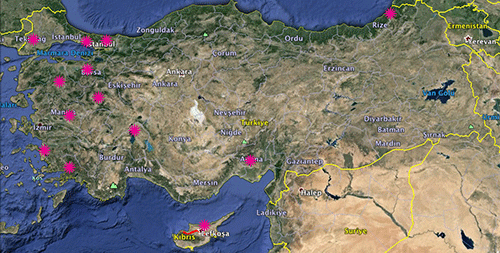
  In our country, Reed Cane naturally grows in the Aegean, Mediterranean, Marmara and Northeastern Anatolia regions.

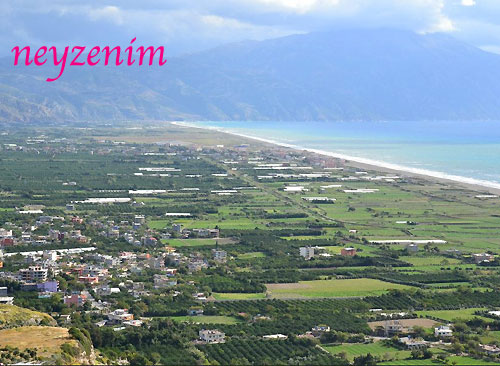
 Today, reeds suitable for ney making are most commonly found around Hatay, Samandağ.

 Even today, ney makers generally obtain their reeds from this region.

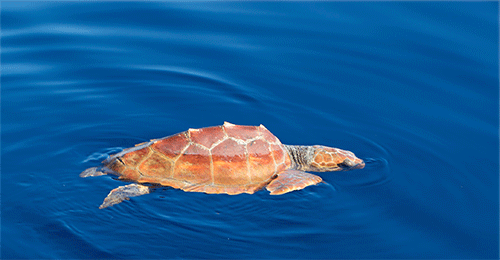
 Samandağ beach is home to two species of sea turtles known as Caretta Caretta and Chelonia Mydas (Green Sea Turtle), which are endangered worldwide.

 These two species continue to nest along the coast of Samandağ.

 Caretta Caretta

Ney and Caretta caretta composition
Ney and Chelonia mydas (green sea turtle) composition
Chelonia mydas

  In order to protect nature, cutting reed cane for ney making is currently not permitted in Samandağ.

 Recently, unfortunately, reeds intended for ney making, which should normally be cut in November and December, have been harvested much earlier.

 We have even encountered people cutting ney reeds in August.

 Following complaints from us and other ney makers, cutting reeds for ney making before November has once again been prohibited in Samandağ.

 Samandağ :

  Samandað

 Ayrıca, Afyon, Kütahya, Adana, Artvin, Aydın, Nazilli, Balıkesir, Bursa, Kocaeli, Manisa, Muğla,

 Tekirdağ and in the Turkish Republic of Northern Cyprus (Kyrenia), there are Reed Canes suitable for ney making.


Chemical Properties of the Ney Instrument:

 The table below provides information about the chemical properties of the ney:

Ham
Mmadde

Yoğunluk (kg/m3)

L.K (mm)/ T.S.
ED (Mpa)
EM (Mpa)
YDÇD
(Mpa)
KA (%)
Tutkal
Miktarı
Kargı Kamış (NEY)
628-758
7.25- 10.60/ 1

9,9-
17,7

1468
3026

0.54-1.31
15.04-35.91
8,UF

 Reed cane suitable for ney making, namely Arundo Donax, belongs to the Arundinoideae subfamily of the Gramineae family.

 Because it can grow under many different environmental and climatic conditions around the world,

it is considered a lignocellulosic

raw material source.

  Reed cane suitable for ney making can grow in wetlands, highly humid areas, gravelly, sandy, heavy clay, and even salty soils,

including low-quality soils.

  Due to its high water storage capacity and root systems that protect the soil from erosion,

it is also known to tolerate severe drought conditions.

  The ney reed, widely distributed around the world, consists of reed stems, nodes, and internodes,

and is an asexually reproducing species. The internodes are hollow, and each node produces a leaf.

Its leaves are 30–100 cm long and 2–7 cm wide.

The hollow reed stems have diameters ranging from 1 to 4 cm.

 The ideal diameter for a ney, depending on its length, ranges between 21 and 28 mm.


 Although the ney reed is a herbaceous plant, its chemical structure resembles wood material and consists of

cellulose, hemicellulose, lignin and extractives.

 The bio-oil produced through the pyrolysis of reed cane contains acids, ketones, furans, benzene compounds, sugars,

 methoxyphenols, dimethoxyphenols and multifunctional compounds,

 while as monosaccharides it contains 62.30% glucose, 33.88% xylose, 2% arabinose, 0.84% galactose,

0.65% 4-O methyl glucuronic acid,

  0.35% mannose,


Reed Cane Becomes the Ney Instrument:

 Arundo Donax, believed to have been used for approximately 5,000 years, has made significant contributions

 to the development of musical culture.

  The origin of the ney is also assumed to date back to around 3000 BC.

 You can find more detailed information about the history of the ney in the History of the Ney section.

  It is also believed that the word “Reed” related to the ney instrument has Biblical origins and that it has been an important instrument in a religious sense.

  As you know, the ney is also an indispensable instrument of Sufi music in Islamic culture.

Can Every Reed Cane or Arundo Donax Become a Ney Instrument?

  The primary reason why Arundo donax is preferred in the production of wind instruments is its strong elasticity and resistance to moisture.

 However, for these reeds to become a ney, they must have 9 nodes and closely spaced intervals.

 In other words, a reed suitable for making a ney must first of all be Reed Cane (Arundo Donax).

 Secondly, it must have nine nodes.

 Finally, its intervals must be closely spaced.


 Boğum


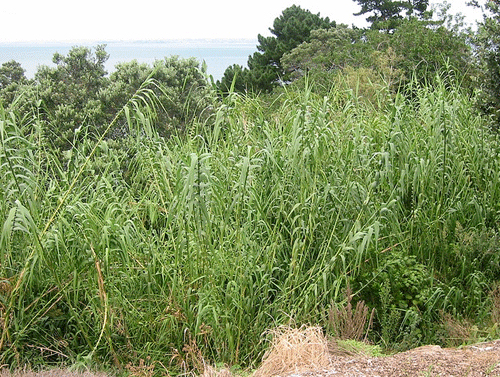
 Arundo Donax leaves

 Although rare, Reed Cane can also grow near marshes or lakes :


 You can access the references from the Sources section of our website.


What Does Neyzen Mean?

 Neyzen is the name given to the person who performs the ney instrument, in other words, the person who blows the ney.

 The term Neyzen originates from the Persian word "zeden," meaning to play or perform, and

combined with the word Ney, it became "Neyzeden."

 Over the years, the word gradually evolved into the modern form Neyzen.

 The term Neyzen is used in expressions such as Neyzen Niyazi Sayın or Neyzen Aka Gündüz Kutbay.

 During the Ottoman period, before the word Ney was commonly used,

the Arabic word Nay was used. People who played the Nay were called Nayi.

 The word Nayi was used in expressions such as Nayi Osman Dede and Nayi Zekai Dede.

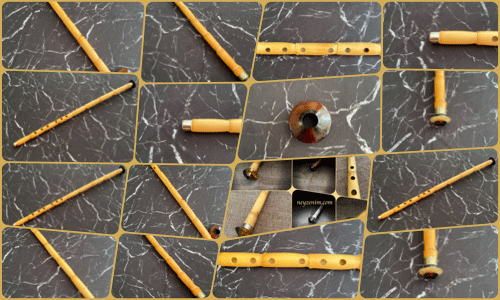
 Our neys, başpares, and ney stand:


 What Does Neyzenbaşı Mean :

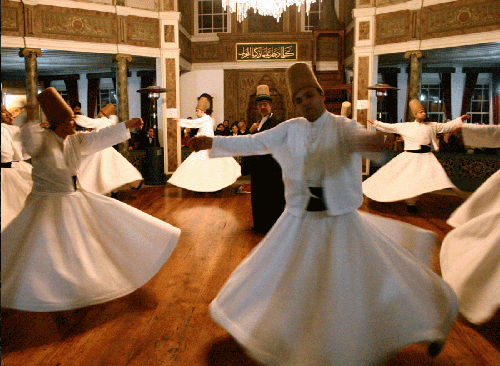
 Neyzenbaşı is the title given to the neyzen who serves as the leading ney player during Mevlevi ceremonies performed in Mevlevihanes or places where Mevlevi rituals are held.

 In other words, the Neyzenbaşı is the first neyzen of the ceremony.

 Neyzenbaşı carries the meaning of a kind of Chief Neyzen.

 Of course, the Neyzenbaşı should be the most skilled, most experienced, or most senior neyzen.

 In Mevlevi ceremonies, the Neyzenbaşı takes position on the far right side within the vocal and instrumental ensemble known as the Mutrip.

 In the past, the expressions Ser-Neyzen or Ser-Nayi were also used for the title Neyzenbaşı.

 Although the ney is generally played while seated, it was also performed standing during Mevlevi ceremonies.

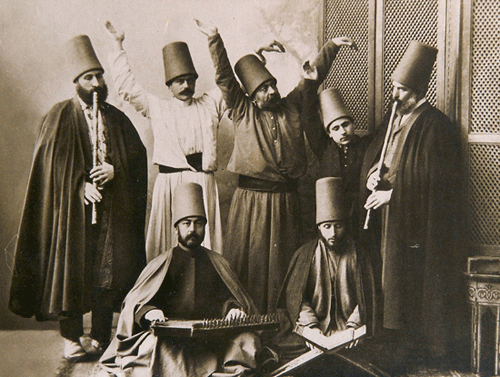
 In the image below, you can see an example of a small Mutrip ensemble:

 For us, the Neyzenbaşı is the neyzen on the right side.


The Ney and the Mesnevi

 There is no doubt that Mevlânâ Celaleddin-i Rumi played a major role in the development and spread of the ney instrument.

 Because he settled in Anatolia, the name Rûmi (Land of Rum) was later added to his name.

 In his greatest work, the Kitâb-ı Mesnevi, Mevlânâ Celaleddin-i Rumi compares the ney instrument to the Perfect Human Being (İnsan-ı Kâmil).

 Another name for this work, which contains more than twenty-five thousand couplets, is Hüsami-Nâme.

 Although it was named Hüsami-Nâme because it was written at the request of Hüsamiddün Çelebi, it is known throughout the world as MESNEVI.


 In one of his rubâis, Hazrat Mevlânâ says :

  Listen to the Ney and hear what it tells.

 It speaks of the hidden secrets of God; though its face has faded, its inside has been hollowed out, its head cut off, or

 left to the breath of the neyzen, it silently and wordlessly says “Hüda, Hüda.”


We may give the following examples

from the important couplets about the Ney found in the Mesnevi:

 The Mesnevi begins with the following couplet :

 "Bişnev in Ney çün î küned, Ez cûdâ yîhâ hikayet mî küned":

 "Listen to how this Ney complains; its melody tells the story of separation."


In another couplet :

 "Kez Neyistan tâ merâ bübrîdeend, Ez nefirem merd ü zen nâlideend."

 "Beni kamışlıktan kestikleri an, Kadın, erkek inledi feryadımdan."


In another couplet :

 "I want a breast torn apart by separation, So that I may tell the tale of the pain of longing."

 "I desire a heart shredded by yearning, So that I may pour out my sorrow with lamentation." he says and continues:

 Those who were separated and torn from their origin, Forever seek the day of reunion again.

 In every gathering I came with sighs and cries, Becoming companion to both the miserable and the fortunate.

 Each one thought he became my friend, Yet none sought the secret hidden within me.

 My secret is not far from my lamentation, Yet eye and ear fail to perceive that light.

 The soul is not hidden from the body, nor the body from the soul; Yet you are not permitted to behold the soul.


In another couplet :

 "This is the fire of the Ney’s cry, not mere air; Whoever does not possess this fire is as if dead."

 "The sound of the Ney is fire, not wind; Whoever lacks this fire may be considered lifeless."


In another couplet :

 "It is the fire of عشق that has fallen into the Ney, It is the fervor of love that has entered the wine."

 "Love has become a fire and poured itself into the Ney, The ecstasy of love has mingled with the wine."


In another couplet :

 "The Ney is the companion of everyone separated from the beloved; Its melodies have torn apart our veils."

 "The Ney is the intimate friend of the one parted from the beloved; Its notes have ripped apart the veils that concealed us." is its meaning.

 The Ney is the companion of the one separated from the beloved.

Its modal tones have torn apart our luminous and dark veils, that is, the veils standing between us and reunion.


In another couplet :

 "Who has ever seen, like the Ney, both poison and remedy?"

 "Who has ever seen, like the Ney, a companion so longing and devoted?"

 "Who has beheld one like the Ney, both venom and cure alike?"

 "Who has seen one like the Ney, both intimate friend and yearning lover?"


In another couplet :

 "The Ney tells of the blood-filled path; The Ney narrates the tales of Majnun’s love."

 "The Ney speaks of roads filled with blood. The Ney tells the story of Majnun’s love." he says.

 Who can understand this reason except the senseless? Is there any confidant of the tongue apart from the ear?

 The days withered untimely in sorrow, The days became companions to burnings.

 What grief is there if my days have passed, since You remain? Remain, for none is equal to You in purity.

 All but the fish became sated with water; The day of the one without portion was delayed and burned away.

 Can the raw ever understand the state of the cooked?

Words must now be brief; peace be upon you.


In another couplet :

 "Though both reeds drank from the same stream, one remained hollow while the other became filled with sugar."

 "Although two different reeds drank water from the same river, one stayed empty, while the other was filled with sweetness."


In another couplet :

 "Whatever you possess, take it and move toward silence. If you wish to become a perfected human being, remain silent,

avoid the act of excessive speech."

 In this couplet, Hazrat Pir says: "Among the people of the Path and Truth,

if you desire to become a virtuous person, do not put yourself forward through needless talk.

Avoid fame and ostentation!" is what he means.

  The concept of the Ney in the couplet you have read above is not used as a musical instrument.

In other words, the couplet has no direct relation to the Ney flute itself.

However, we include this couplet in order to express how important silence is among the people of Sufism.

 

In another couplet :

 "Tâ girih bâ-Ney büved hem-raz nîst, Hem-nişin-î ân leb û âvâz nîst."

 "If the Ney is not jointed, it cannot become a confidant or a close companion (it cannot become a Ney); without lips,

it cannot be played with sound and breath." he says.

 Hazrat Pir, in another of his couplets, while describing the Sultan’s Assembly, wrote:

 "Within that distant assembly, there are friendships within friendships.

 Compassion, ecstasy, and overflowing emotion exist together.

There, you hear no sound other than the melodies of the Çeng and the Ney."


In another couplet :

 "A Neyzen can only play the Ney according to the ability of the Ney, not according to the power of the Neyzen."


 There is also an anecdote about the Ney in the Kitâb-ı Mesnevi :

  "A Neyzen was playing beautifully.

  Suddenly, a gust of wind blew from below.

  The Neyzen then turned the Ney toward the wind from the opposite direction and said: ‘If you can blow better than I can, then take it and play.’"

 Mevlânâ Celaleddin-i Rumi, apart from the Ney, also says the following about the Zurna instrument :

 "Nale-i surna vu tehdid-i dohol Çize ki maned bedan nakur-i gul."

 "The lament of the zurna and the sound of the drum resemble, in some way, the sound of the

trumpet that will be blown on the Day of Judgment."

thus introducing the zurna instrument to us.


  Also regarding the Tanbur instrument:

 "The melodies sung with the tanbur and the voice arise from the revolutions of the heavens."

he stated.

 Hazrat Pir also has the following poem :

 Once the tanbur begins to lament, the heart becomes headless,

 And stands chained at its door without feet.

 For within its string there is a hidden sound,

 It calls out, “Come, O sought companion, come.”

 Source : Commentary on the Mesnevi (Tahir'ül Mevlevi Volumes 1-2-3-4-5-6-7-8-9 and 10.)


 Sound Range of the Ney

 Neyin Ses Alaný

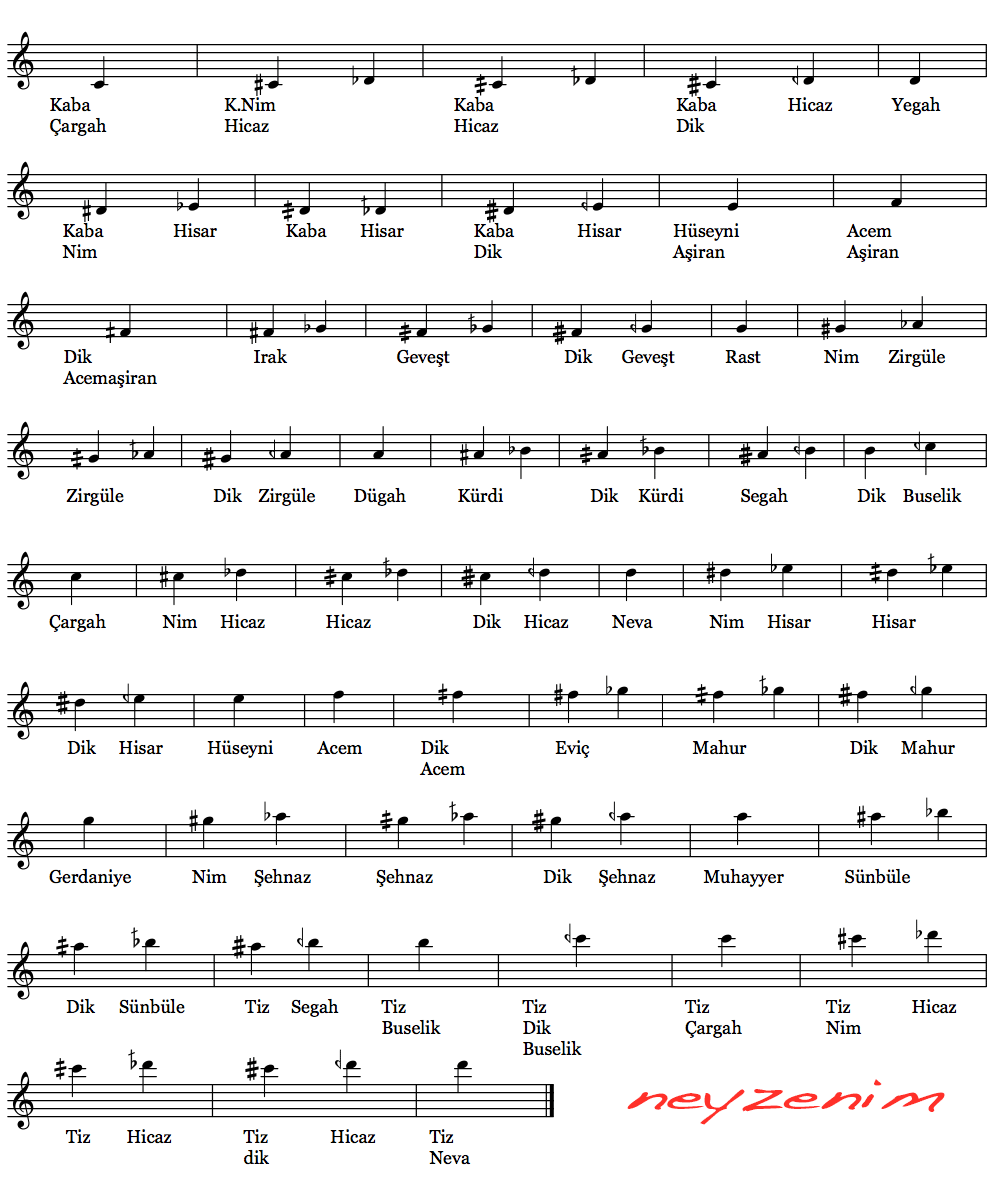
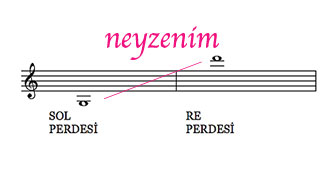
 The ney, which has an approximate range of three octaves, begins from the low G pitch below the porte (Kaba Rast),

 and can reach up to the high D pitch above the porte (Tiz Neva).

 Since its sound range is not as wide as instruments such as the piano or violin, it does not allow for transposition .

 You can learn more detailed information about ney sounds in the Ney Lessons section.


 What Does Dem Sound Mean on the Ney :

 The sounds in the lowest octave produced by the ney instrument are called Dem Sounds.

 Producing dem sounds on the ney is difficult, but these dem sounds have a very impressive tone.

 Ney Taksim in the Saba Maqam consisting of Dem Sounds:


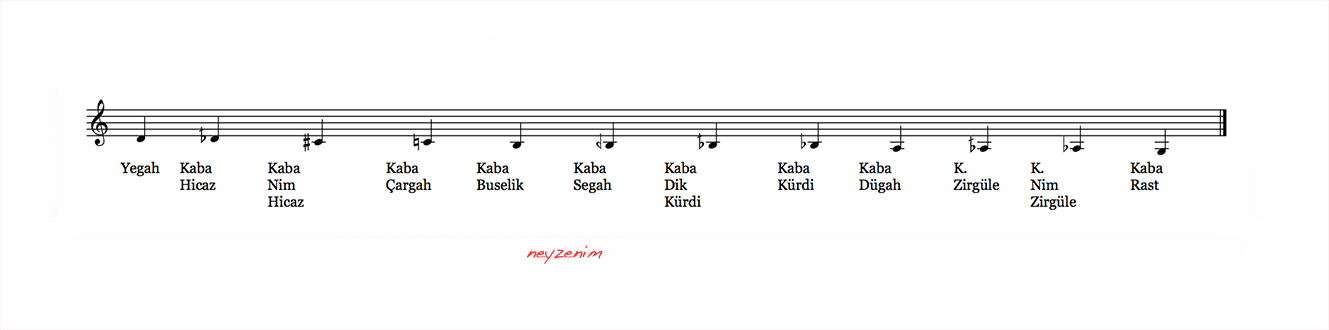
 In the porte below, you can see the Dem Sounds from the Rast pitch to the Yegah pitch :

 You can enlarge the picture by clicking on it.

Ney Dersleri 9 – Dem Sesler

 In the porte below, you can see the Dem Sounds from the Yegah pitch to the Kaba Rast pitch :

 You can enlarge the picture by clicking on it.

Ney Dersleri 9 – Dem Sesler 2

 We will also cover the subject of Dem Sounds separately in Lesson 14 of our Ney Lessons section.

 On the music sheet below, you can see the sounds from the C pitch below the porte to the D pitch above the porte :

 You can enlarge the picture by clicking on it.

Ney Dersleri 9 – Sesler

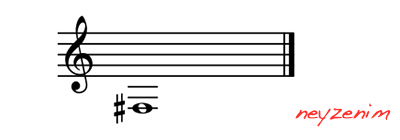
 In fact, a skilled Neyzen can lower the G pitch below the porte even further

  and produce the F sharp pitch below the porte (Kaba Eviç)

however, this sound is generally not used in orchestral performances.

 The F sharp pitch below the porte (Kaba Eviç) :


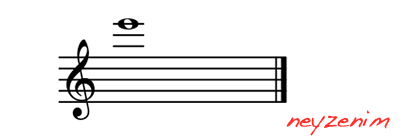
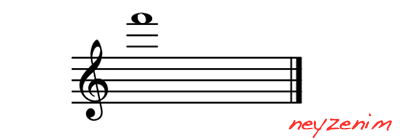
 Likewise, in the high pitches, the Mi pitch above the porte (Tiz Hüseyni),

 and the Fa pitch above the porte (Tiz Acem ) can also be produced depending on the Neyzen and the Ney, however

as I mentioned, they are generally not used in orchestral performances.

 These extremely high and very low sounds produced by Neyzens usually do not match the sounds of other instruments.

 The Mi pitch above the porte (Tiz Hüseyni) :


  The Fa pitch above the porte (Tiz Acem ) :


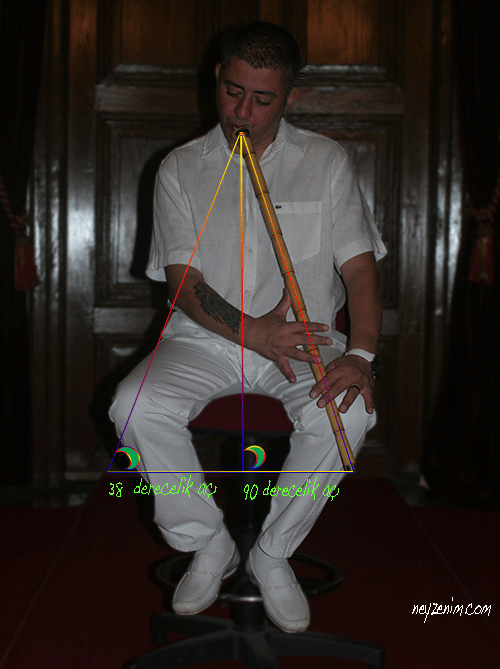
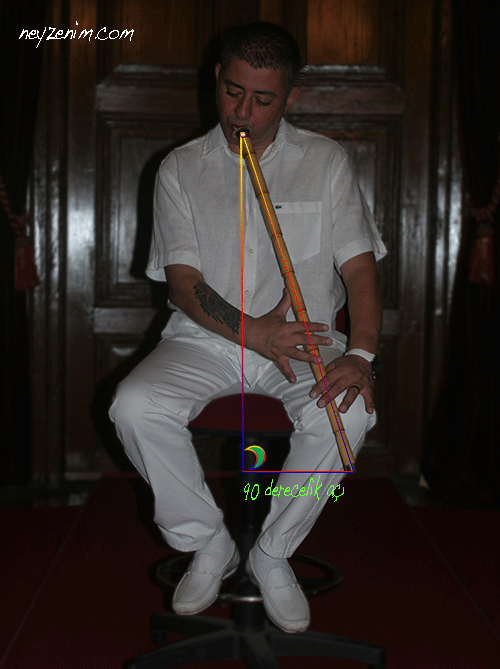
  The Neyzen plays the Ney by holding it at an angle of approximately 40–45 degrees.


  As you can see, to give an example from myself,

  I play at an angle of approximately 45 degrees.

  In fact, there is no standard angle for blowing the Ney, nor can there be one.

  If a Neyzen can produce all sounds according to his own blowing angle and plays in the correct position,

 we cannot criticize him by saying he bends his head too much or keeps it too upright.

  For a better visual appearance, we simply should not bend our heads too far downward while playing the Ney.

  This is usually a habit acquired during the early stages of learning to play the Ney.

  Again, to give an example from myself, I especially


  Reed cane intended for ney making must have nine nodes. In addition, it should be yellow in color, hard, densely fibrous, straight, and not bent.

  Due to these characteristics, not every reed can become a Ney.

  Ney ve Baþpare

  Reeds intended for ney making are cut in autumn and dried for approximately three months.

  After this first drying process, the reeds are cut by two nodes from both the lower and upper ends and then placed back into drying.

  This second drying process, carried out in a closed area, lasts at least one year.

  Images of the reeds before drying:


  After this waiting process, the reeds reach the stage of becoming a Ney. The reeds are taken out after drying,

  the bent and irregular ones are separated, and the good reeds suitable for becoming a Ney are selected.

  Ney makers determine and mark in advance the holes to be opened on these Neys, and

  carefully drill the reed at specific points. The reed has now become a Ney and awaits a Neyzen who will embrace it.

  Images of the reeds after drying :


  If the drying process is insufficient, the Ney may later develop bends and shrinkage on the outer surface of the reed.

  However, we cannot immediately understand whether the reed has been fully dried simply by looking at the Ney.

  This becomes noticeable only after playing the Ney for a certain period of time.


  IMPORTANT NOTE :

  Some Ney makers, in order to produce Neys in a shorter time or to earn more

money, secretly

dry the reeds for Ney making by burning them over picnic gas stoves and even dip them into hot oil

to darken their color.

  As in every sector, there are unfortunately many ill-intentioned people in the Ney making industry as well.

  Be careful when purchasing a Ney :

  We should purchase our Ney from a place we can trust.

 When purchasing a Ney, we should clearly state something like: "If it bends in the future, I will bring it back."


 What is a Başpare ?

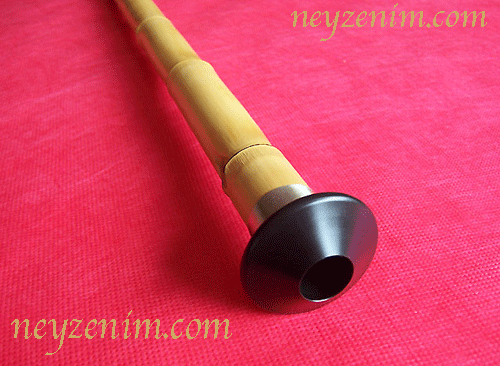
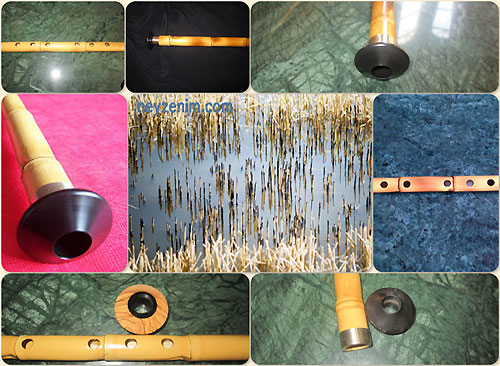
  An apparatus called a BAŞPARE is attached to the upper end of the Ney in order to produce a clearer and sharper sound.

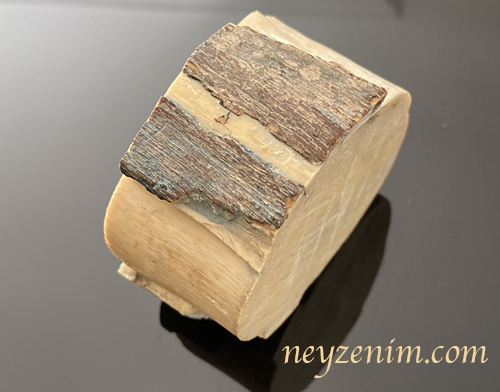
  In the images below, you can see a mammoth tusk that is a candidate for becoming a başpare.


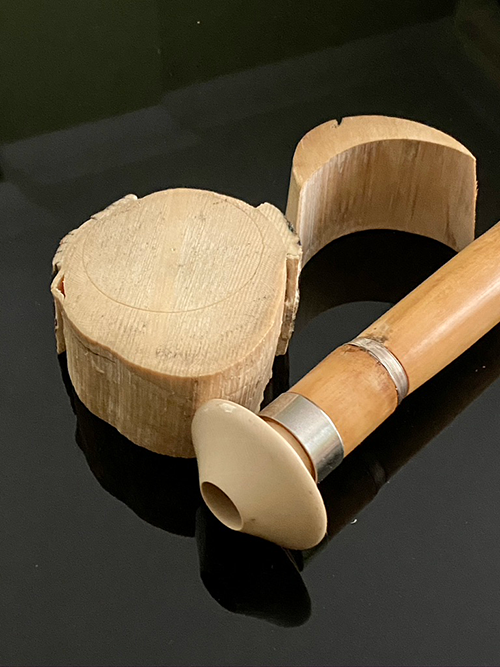
  In the image, you can see this mammoth tusk after it has been made into a başpare.


  The performance we obtained from a başpare made of mammoth tusk was equivalent to that of buffalo horn.

I believe, humbly speaking, that I may be the first among Neyzens to try this.

I also do not think that our Neyzen sultans, such as Sultan Selim III and Mehmet V,

used mammoth tusk başpares

because no such başpare is displayed in any palace or museum.
 

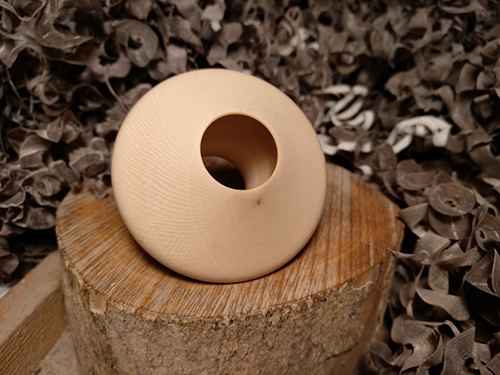
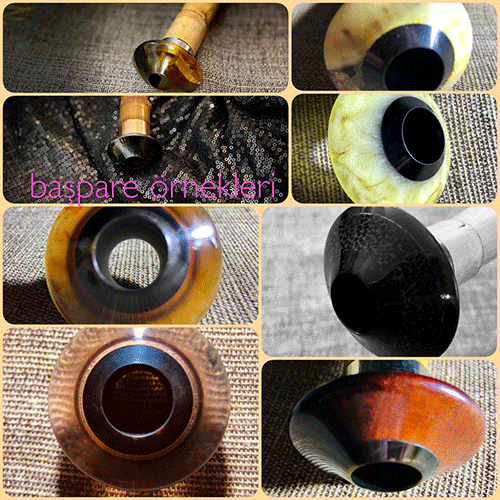
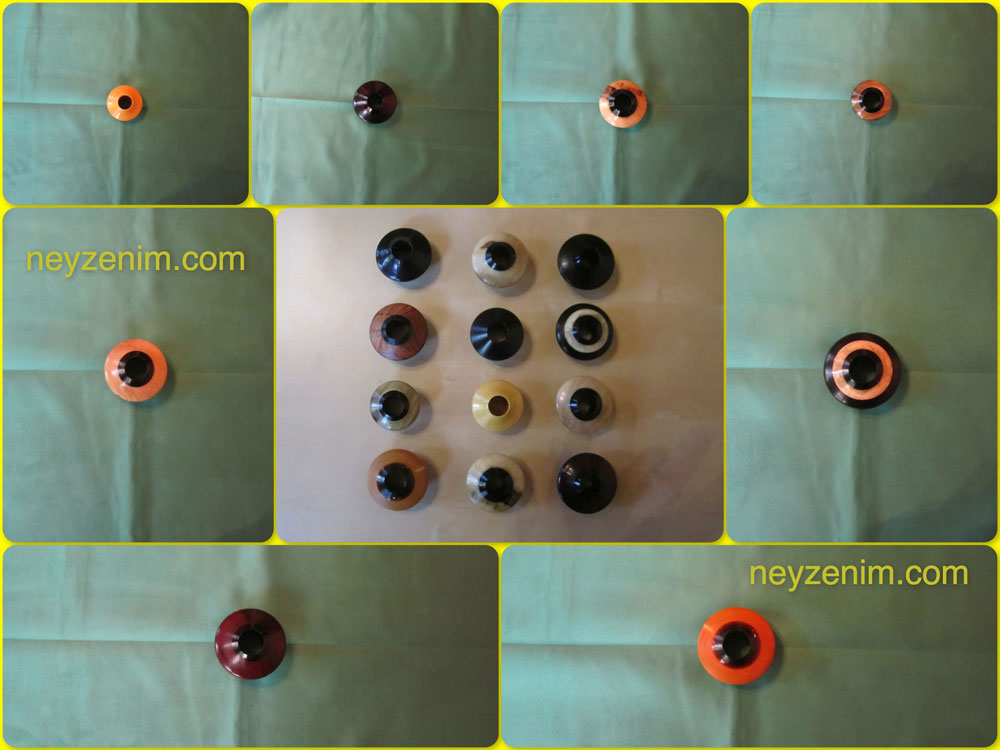
  In the image below, you can see examples of başpares.

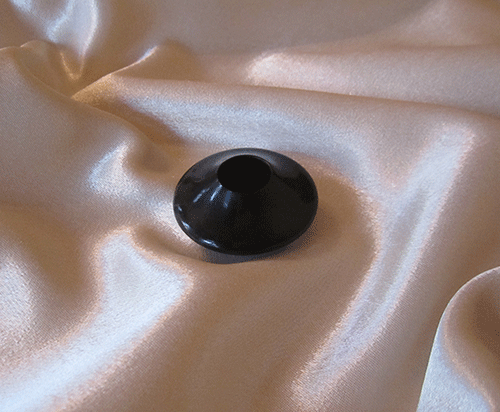
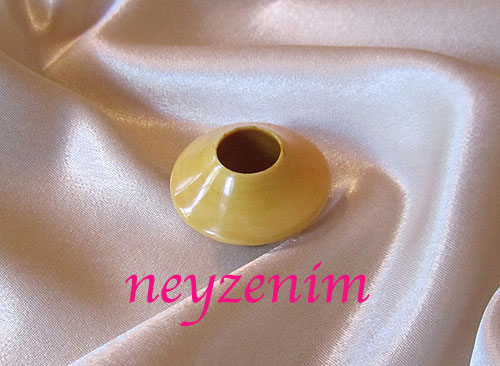
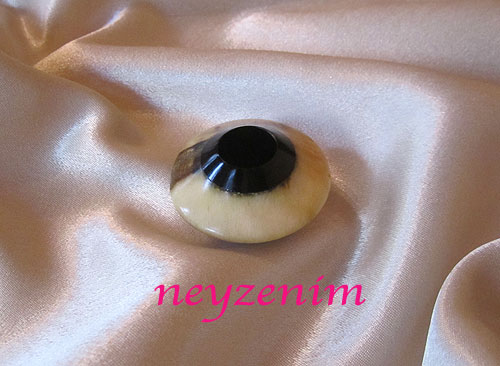
 In the making of the Başpâre, buffalo horn, ivory, ram horn, and rhinoceros horn are used.

 Among woods, ebony, olive wood, hard African woods, teak wood,

 and hard woods such as rosewood are also used.

 Among these, the one considered to provide the best performance is buffalo horn:

In the image below, you can see a Başpare made of ivory:

Ivory Başpare

In the image below, you can see a Başpare inlaid with ram horn:


  Neys and Başpares:


The outer rim diameter of the Başpâre that touches the lips, the depth of the inner chamber (cup), and its outer dimensions are not standardized.

The measurements may vary according to the Neyzen’s lip structure and thickness.

The Başpâre helps produce a stronger and fuller sound.

The Başpâre is a tradition unique to Turkish Neyzens.

For example, Ney players of Arab origin generally play small Neys described as nısfiye or piccolo,

therefore they rarely use a Başpâre.

 In recent times, DELRIN or DERLIN Başpares have also been used because of their lower cost:

 Derlin, which belongs to the group of thermoset plastics,

is a material widely used in many fields due to its high mechanical strength.

 With a working temperature range of -50 / +110 °C, this material has a wide range of applications, and because it is easy to process,

it is also used in the making of Başpares.

 You may click on the image to see more Başpares.

Başpare görseli


 What is a Parazvane:

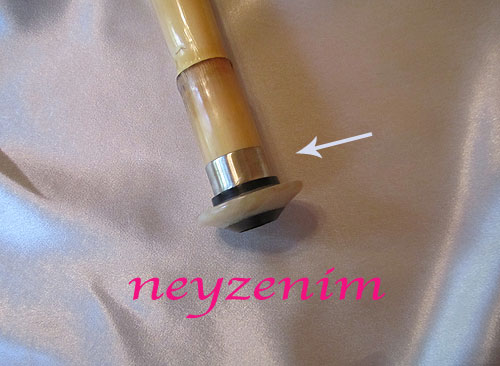
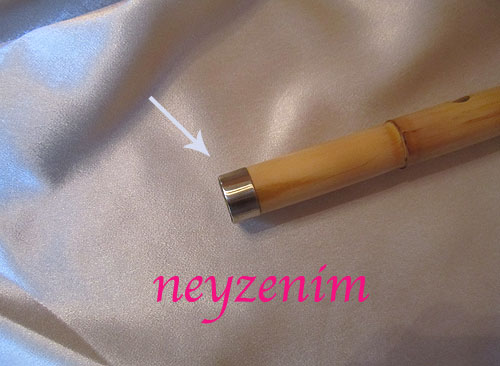
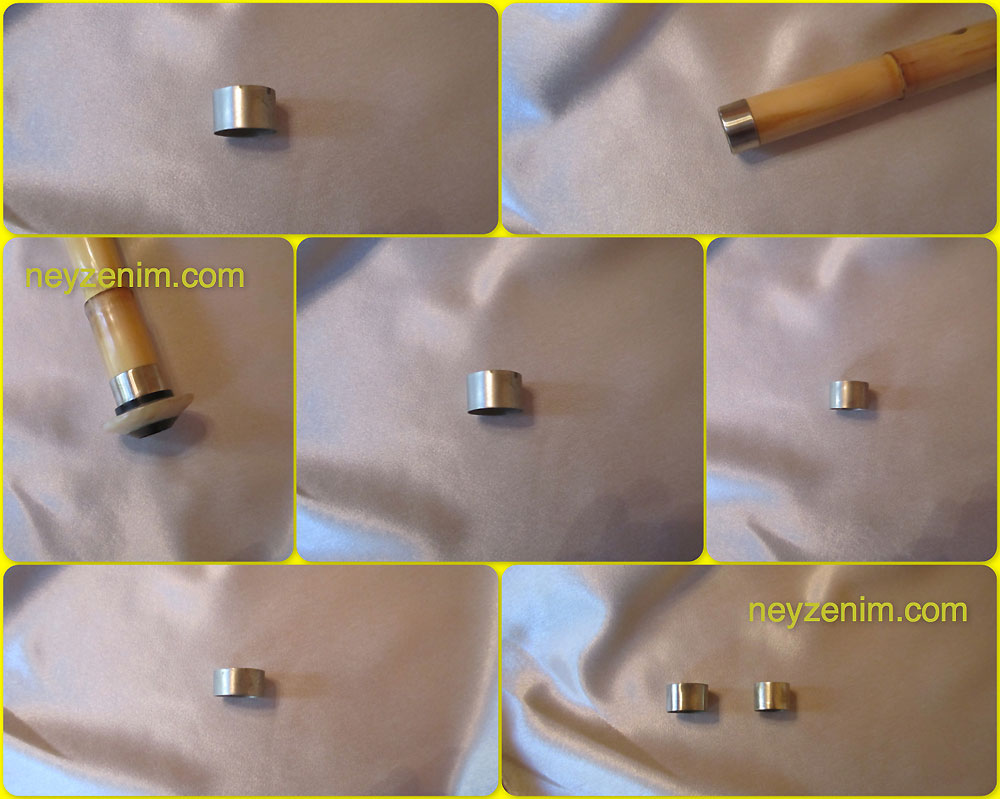
An apparatus called a Parazvana or Parazvâne is attached to both ends of the Ney in order to prevent cracking.

The Parazvâne protects the Ney from impacts and accidental damage.

Especially the Parazvâne attached to the upper part is effective in preventing the reed from cracking while fitting the Başpare onto the Ney.

The Parazvane attached to the upper part of the Ney:

These fittings are generally made of bafon, silver, copper, bronze, or another hard alloy material.

Such choices depend on the preference of the Neyzen or the Ney maker, as well as on cost considerations.

Likewise, the Parazvane attached to the lower part is also effective in protecting the Ney from impacts.

The Parazvane attached to the lower part of the Ney :

 You may click on the image to view different types of Parazvane.

Parazvaneler görseli

 In order to produce the microtonal pitches known as koma tones in Turkish music, a Neyzen may play the Ney in different positions

 by covering the holes halfway or partially with the fingers.

 For certain tones, the Neyzen finds the microtonal sounds through slight head movements to the left or right.


 The Ney, one of the two principal instruments of Mevlevi music (the other being the Kudüm), is also widely used in secular musical genres.


 There are Neys of various sizes, and each one has its own distinct name.

 From low pitch to high pitch, their names are: Bolahenk, Davut Mabeyn, Davut, Şah, Mansur Mabeyn,

Mansur, Kız Mabeyn, Kız, Yıldız, Müstahsen, Süpürde, Bolahenk Mabeyn, and Bolahenk Nısfiye.

 These names are also the names of the tonalities used in Turkish Music.

 Seven of them are tuned to natural tones, while five are tuned to microtonal intermediary tones, making a total of twelve different types of Ney.

 If you visit the Ney Types section, you will find more comprehensive information.

 The Neys whose lengths are half as short as these twelve types and which sound one octave higher are called Nısfîye Neys.

 Nısfiye Neys resonate exactly one octave higher, that is, in a higher register.

 If we also include the Nısfiye or Piccolo Neys, we may say that there are twenty varieties of Ney.

 In the image below, you can see an example of a Mansur Nısfiye (A) Ney.


  By clicking on the image below, you may visit our Ney Types page.

 Ney Types

  For these very long and difficult-to-play Neys, such as the Bolahenk and Davut, their nısfiye versions are more commonly used.

  Neys whose fundamental tones are flat notes are called Mabeyn Neys.

  The general name for Neys tuned to A-flat, B-flat, D-flat, and E-flat is Mabeyn Neys.

  For the Ney instrument, the expression “to blow the Ney” is used instead of “to play the Ney.”

  Here, the act of blowing carries a symbolic meaning.

  The reason comes from the belief in Islam that,

  God created the human being by breathing the soul into him.

E-mail contact

Back to Top

© 2026 www.neyzenim.com — Neyzen Zeki Sözen