Ney Lessons
Ney Lessons - 10 -
Modes (Makams) Introduction and Simple Mode'ss and Explanations
In this lesson we will talk about Modes (Malkams).
We will learn simple modess and perform various works.
However, we need to learn some theoretical information before the modes.
Let's start at the position with the description of the authority.
What is Mode (Makam)?
The music cues that fit in a certain period in the Turkish Music and have a special course in a spectrum established from appropriate voices
The lining that he brings to the square is called the Authority.
Authorities are indexes that determine the tonalities of saz works or verbal works.
Authorities generally have three things in common:
1-) Each authority consists of four, five, or eight li indexes.
The authority, the hanging decision in these indexes, is formed by the use of powerful and stop curtains.
For example;
Some contemporary composers coming from Western music,
They used dummy or non-existent sequences in their works but they could not use their authorities.
Because they do not care about the tone of my office's hanging,
because they do not know their decision and strong voices.
2-) Each authority enlarges its own eight by enlarging it from the treble curves or pest curtains.
This is called expansion of authority.
3-) Each makam has the characteristics of Extractor, Extractor or Inserting as the course.
Finally,
It is a place to stroll and bring about the importance of strength and strength,
with the condition of being connected to certain rules.
The Principles and Principles of Turkish Musikishi and the Velas of the Kudüm:
İsmail Ozkan P: 94
On the subject of Authorities, M.Ekrem mentioned in the book
"The Theory and Principles of Turkish Music of the Black Sea"
The number of authorities we can identify by examining the works that are today 's notes is 150.
Some of these are the combined authorities. Some of them are the second ones,
which are separated from the original ones by very few flavor differences.
The number of our primary key authorities, which we can determine as well as their course and notes,
do not exceed 100.
The richness of this authority in our music,
It is a clear statement that our Turkish music is based on a rich culture.
In Western Music there are 24 gamut or 24 masters.
Sol Major, Re Major, La Major, Mi Major, Si Major, Fa Major Major, Do Major Major, Fa Majorr,
Si Bemol Major, Mi Bemol Major, Re Bemol Major,
Sol Bemol Major, Do Bemol Major, La Bemol Major, La Minor, Mi Minor ...
We will not enter the concepts of Major and Minor in detail in order not to distribute our class more.
In order to better understand the authorities we should also know the following concepts;
Last Note;
At the end of any work, sometimes at the end of the music cycle,
It is the grade performed on grade 1.
It's like the end of the word because it gives a feeling of complete ending.
We can say that the dot sign (.) Is the counter value.
Sansibly;
1 full sound or half sound from the decimal point is called the Name of the Name given below.
For example, the seventh of the Hüseyni makam is Rast.
Like the left flank on line 2 ...
The whole decision is the most important part of an authority.
Yarım karar;
In simple makams, the curtain is strong at the attachment of the dishes that bring the order of the makam.
In some compound makams he took the third degree of strength.
It is also an 8th degree percussion instrument, except in exceptional cases.
Half decisions are made on the strong pitch of each maker.
The duty is close to the perimeter of the station.
Half decisions do not give a strong ending feeling.
The speech is like half the sentences in our language.
It is in a style that says that some of the words are over, but there are more things to say.
We can resemble accents such as comma (,) and semicolon (;) at dots.
Half decisions are usually made at the end of the grounds of the works ..
Seyir;
The upper curtains of the lower curtains at the back of a makam,
or the lower curtains of the upper curtains.
For example, the Rast authority is the initiator.
That's what it means:
The Rast car moves through the left flank of the 2nd line and then exits the upper fence.
Therefore, the authority is evident with a cruising reputation.
The authorities consist of three navigators, the inferential, the inferior, or the inferential inferior.
Every office has a course.
The strong Perde of the authority;
The strong faction of the authority is the name most commonly used in the work.
In simple makams, this is usually the concatenation of the 4th or 5th voice in octal.
For example, we can say that the authority is strong for the Re (Neva) period in the
position of the authority of the Rach, who will also deal with his position.
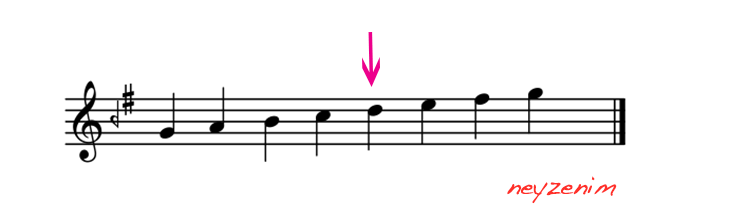
Mode's Mi (Hüseyni) note is için mode's strong.
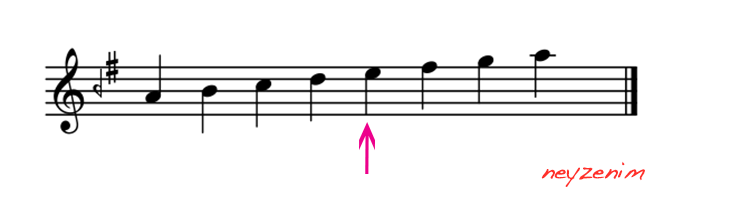
Asma karar;
It is not certain which curtain will be built. It depends on each makam.
Since the high-pit stall is strong in the stitching, the curtain of the main stitch
becomes one of the stitching curtains.
Other hanging decisions are usually more than one at each office and vary for each office.
The sense of ending by hanging decisions is weaker than half the dark.
It wakes up the suspense.
Question, exclamation, address etc. and is found at the end of this type of music cues.

There are three kinds of Modes (Makam):
1-) Simple modes.
2-) Şed modes
3-)Unified Modes
Basit Makamlar :
Thirteen:
1-) Çargah Makamı ,
2-) Buselik Makamı ,
3-) Kürdi Makamı ,
4-) Rast Makamı ,
5-) Uşşak Makamı ,
6-) Hüseyni Makamı ,
7-) Neva Makamı ,
8-) Hicaz Makamı ,
9-) Hümayun Makamı ,
10-) Uzzal Makamı ,
11-) Zirgüleli Hicaz Makamı ,
12-) Karcığar Makamı ,
13-) Basit Sûzinak makamlarıdır.
Şedd Modes (Makams) :
Fourteen:
-) Mahur Makamı ,
2-) Acemaşiran Makamı ,
3-) Nihavent Makamı ,
4-) Ruhnüvaz Makamı ,
5-) Sultanî Yegâh Makamı ,
6-) Kürdili Hicazkâr Makamı ,
7-) Aşk’efzâ Makamı ,
8-) Ferhnuma Makamı ,
9-) Zîrgûleli Sûzinâk Makamı ,
10-) Hicazkâr Makamı ,
11-) Evcârâ Makamı ,
12-) Suz-i Dil Makamı ,
13-) Şedarabân Makamı ,
14-) Reng-i Dil makamlarıdır.
Unified Modes (Makams) :
1)Nişabur, 2)Segâh, 3)Segah Mâye, 4-)Müstear,
5-)Hüzzâm,
6-)Vech-i Arazbar, 7-)Bileşik Gülizâr, 8-)Bileşik Isfahan,
9-)Isfahânek,
10-)Beyati Arabân, 11-)Acem 12-)Acem Kürdî, 13-)Hisâr,
14-)Hisâr Buselik,
15-)Şehnâz, 16-)Arazbâr, 17-)Sâba, 18-)Dügâh,
19-)Kûçek, 20-)Sipihr, (Eski Sipihr, Yeni Sipihr
)
21-)Gerdâniye, 22-)Muhayyer Sünbüle, 23-)Dügâh Mâye,
24-)Sultân-ı Irâk, 25-)Nişâbûrek, 26-)Nikriz, 27-)Nev'eser,
28-)Pesendîde, 29-)Güldeste, 30-)Tarz-ı Nevin, 31-)Nihâvend-i
Kebir,
32-)Zâvil, 33-)Pençgâh, 34-)Sûz-i Dilârâ, 35-)Büzürk, 36-)Sâzkâr,
37-)Rehâvî, 38-)Şevk-i Dil, 39-)Irâk, 40-)Eviç, 41-)Bestenigâr,
42-)Beste-Isfahan, 43-)Râhatü'l-Ervâh, 44-)Dikleş-Hâverân, 45-)Rûy-i
Irâk,
46-)Revnâk-Nûma, 47-)Hüzzâm-ı Cedîd, 48-)Ferahnâk,
49-)Şevk-u
Tarab, 50-)Şevk'efzâ, 51-)Şevk-âver, 52-)Tarz-ı Cedid,
53-)Hüseynî Aşirân, 54-)Bûselik Aşîrân, 55-)Aşiran Zemzeme,
56-)Nühüft, 57-)Can-feza, 58-)Sâba Aşiran, 59-)Hicaz Aşiran,
60-)Zirefkend, 61-)Ferahfeza, 62-)Dilkeşîde, 63-)Lâlegül,
64-)Sultânî Segâh, 65-)Şive-Nümâ, 66-)Şeref-Nûmâ, 67-)Yegâh, 68-)Acem'li
Yegâh,
69-)Anber-efşan, 70-)Feyz-i Yekta,
71-)Hicaz-ı Muhalif,
72-)Dil-efza,
modes.
Dear Neyzens, among us,
we will refer to the ones most used today and the ones most suitable for Ney.
Buselik Mode
Stall: It is the façade of the Dug (2nd Round La).
CYCLE: It is the pitcher.
Series: On-site buselik is the authority formed by the addition of the kürdi quartet or the hijaz quartet
on the fifth day of the hüseyni period.
Strength: 4th Hüseyni perdes of the month.
La Minor is the opposite of the authority in the western music.
Suspended Decision Curtains: Hüseyni, Neva ve Çargah curtains.
Expansion: Expands by using the buselik position on the screen.
Equipment: The authority does not receive a malfunction sign.
Sansibly: The balance in the second line is the Diad Sol fret.
In the meantime, let's look at the two scenes you will see for the first time:
Naturel Si Note
In classical Turkish music, this name is the name Buselik or Puselik.
Memorize the name of the notary in this way.
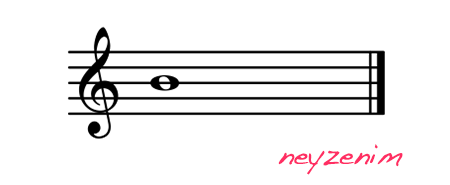
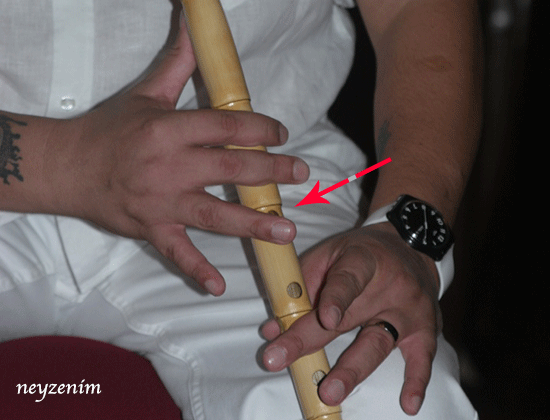
We will close Curtains:
RIGHT HAND: Head Finger, Sign
Half of our fingers, middle fingers and ring finger.
LEFT EL: Middle Fingers.
Review the picture below:
Video
Sol Sharp:
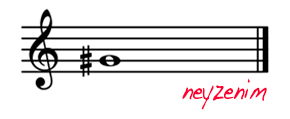
We will close Curtains:
RIGHT HAND: Head Finger, Sign Finger, Middle Finger and Ring Finger.
LEFT EL: Sign Finger,, Middle Finger and Ring More than half of our finger.
You may enlarge by clicking the picture
Video:
Navigating: Starting from the stop pace, that is,
He decides half in various curtains and decides in the Düğâh perdes.
Series of Authority:
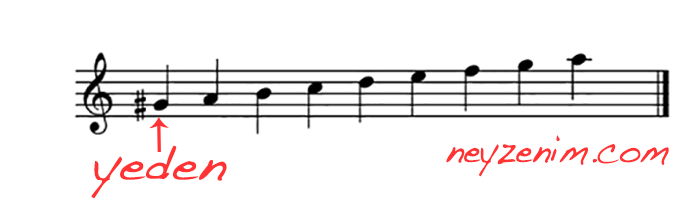
You can enlarge by clicking the note
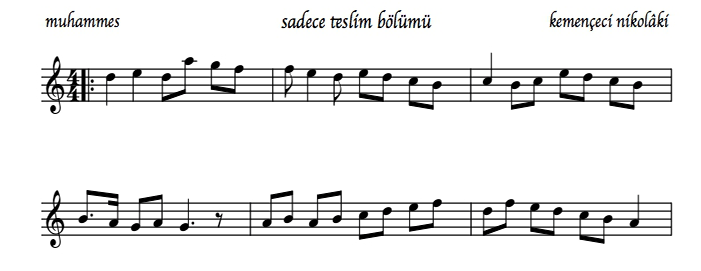
Metronom: 62
Video:
You may enlarge by clicking the picture
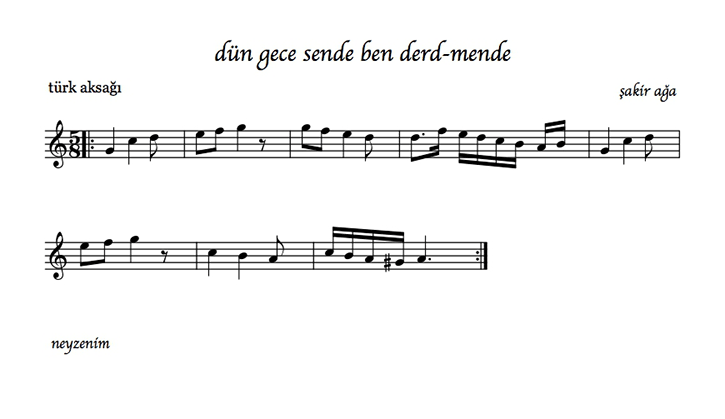
Video:
You may enlarge by clicking the picture
Metronom: 90
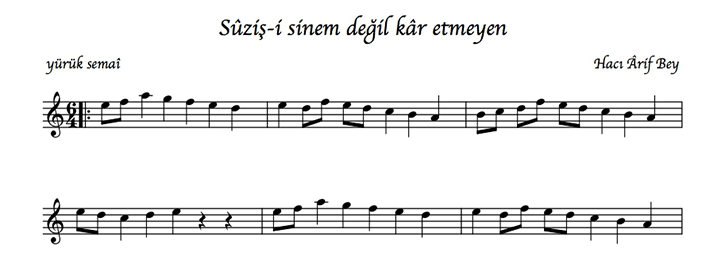
Video:
Bayati Mode (Makam)
Stall: It is the façade of the Dug (2nd Round La).
CYCLE: It is the ascetic-inflexible.
Series: In the place of the Uşak quartet, Neva has been crowded with the addition of the nobility.
Strength: As in the Uşşak mode,
The Weeks quadruple and the Neva perdesid at the base of the
Buselik quintet and the half-decree with the Buselik quintuple are made.
Suspended Decision Curves: Segah perdesid is the important hanging decision area for this office.
Instead of this curtain, Si curtain is used in the curtain, Si curtain is printed more.
It is decided on the curtain by hanging with Segah and Ferahnak fives or Segah triple.
The other hanging decree of the municipal authority are: Neva, Acem, Hüseyni and Çargah curtains.
Expansion: The bayonet almost always expands from the treble side,
and with this feature it leaves the Uşşak position.
Equipment: As in the Uşşak makam, coma flat navy is written only for Si perdes.
Reward: Sol.
Navigate: Neva starts around the curtain and decides on the edge of the Duvet.
Makamın Dizisi :

You may enlarge by clicking the picture
Metronom: 60
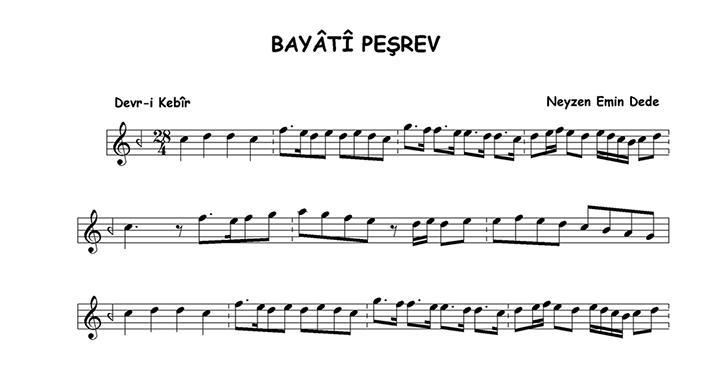
Video:
You may enlarge by clicking the picture
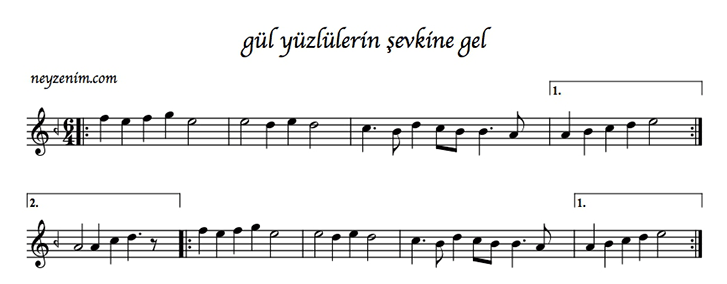
Video:
You may enlarge by clicking the picture
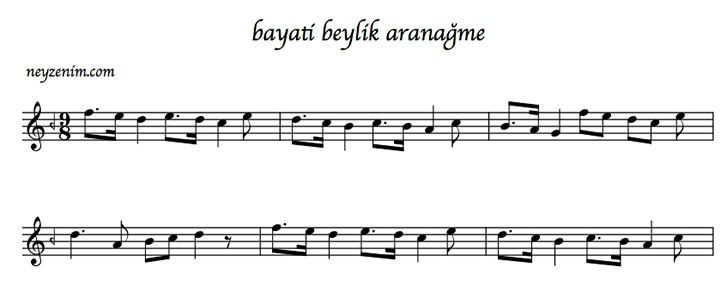
Video:
Uşşak Mode(Makamı)
Stall: It is the façade of the Dug (2nd Round La).
CYCLE: It is the pitcher.
Dizi: In the place of Uşşak quartet, Re and Si has come to the point of adding the quintet.
Strength: Re note.
Suspended Decision Curtains:
The Si and Re curtains are important hanging deciding curves for this office.
Expansion: The voices start around the La.
NOTE :
In the practice, the Si fence in the buccal position is printed more hard.
You can see 1 side by side of the flat.
However Si pest is printed more pest.
A small Ney taxi is being prepared for the Ussak Authority:
You may enlarge by clicking the picture
Metronom: 60
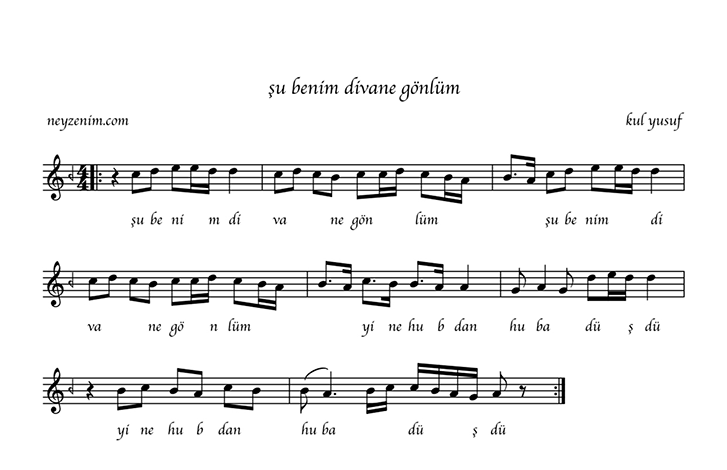
Video:
You may enlarge by clicking the picture
Metronom: 60
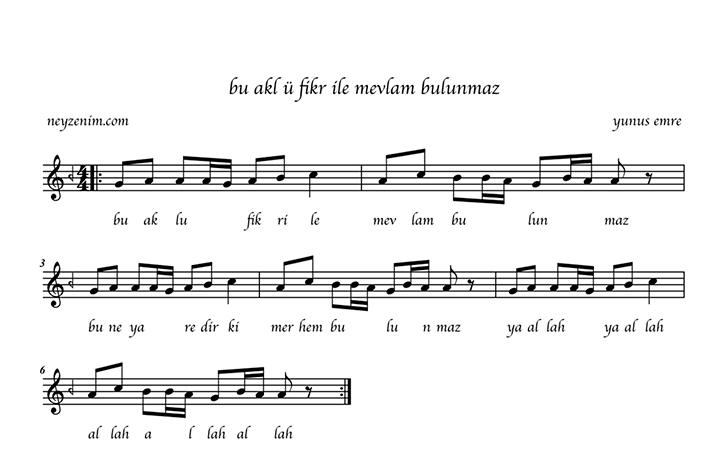
Videomuz:
Hüseyni Mode (Makam)
Stall: La
Cruising: In-Out
Series: Mi
Powerful:Mi
Mi, Do
Expansion: It is a makam that is allowed to expand from the treble side.
Equipment:Si, Fa
Reward: Sol
Cruise: Mi
Huseyni:

You may enlarge by clicking the picture
Metronom: 100
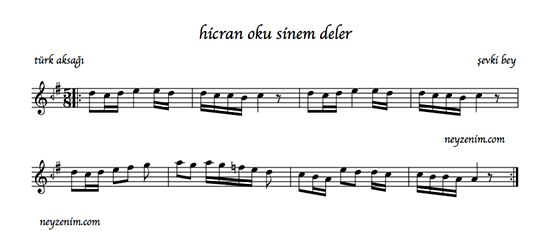
Video:
You may enlarge by clicking the picture
Metronom: 80
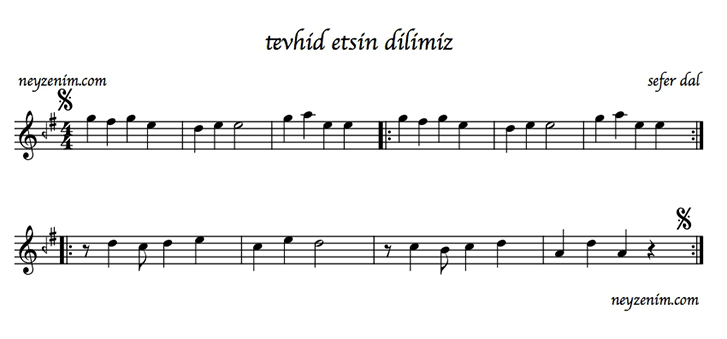
Video:
You may enlarge by clicking the picture
Metronom: 65
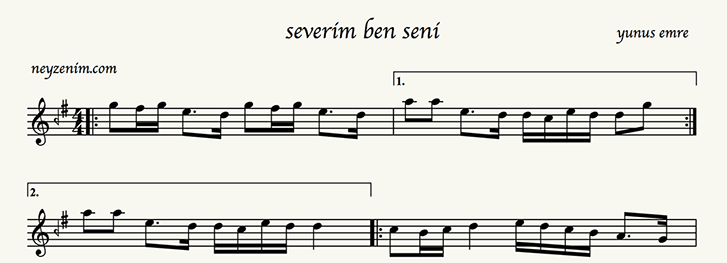
Video:
Muhayyer Mode (Makam)
Stall: La
Cruising: In-Out
Series: Mi
Powerful:Mi
Mi, Do
Expansion: It is a makam that is allowed to expand from the treble side.
Equipment:Si, Fa
Reward: Sol
Cruise: Mi
Muhayyer:
You may enlarge by clicking the picture Metronom: 80
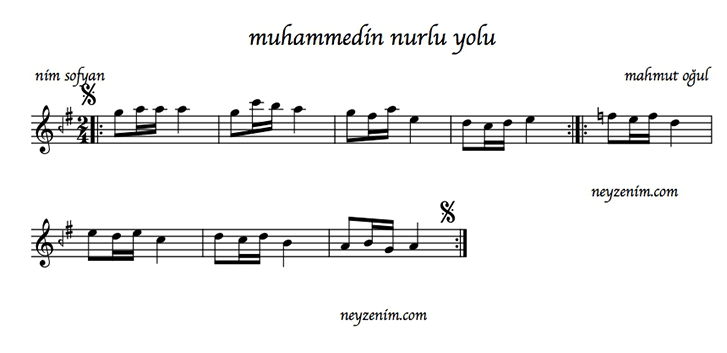
Video:
You may enlarge by clicking the picture
Metronom: 60
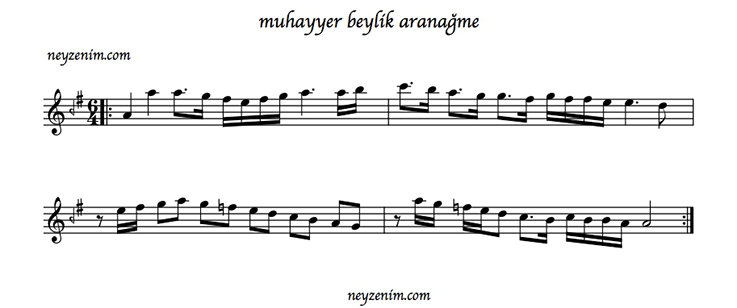
Video:
You may enlarge by clicking the picture
Metronom: 120
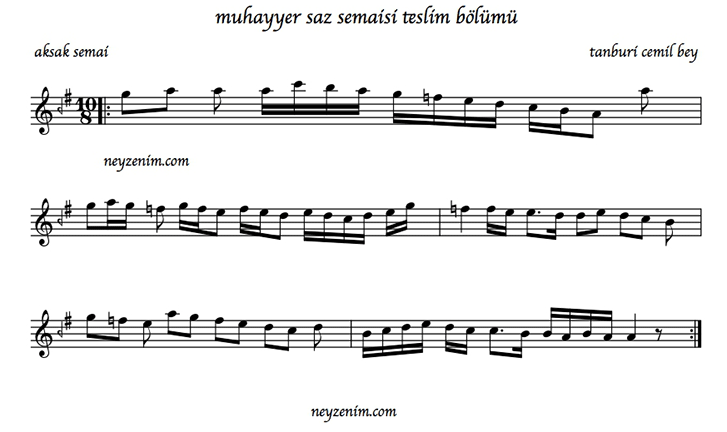
Video:
Karcığar Mode (Makamı)
Stall: La.
CYCLE: Inserting-extracting
Series: Around Re
Powerful: Re
Hanging Decision Curtains: Re, Do
Expansion: It is a makam that is allowed to expand from the treble side.
Equipment: Coma flat for Si, residual flat for Si, and balance diagonal for Fa.
Flesh:Sol
Navigate: Re
It decides on the perimeter of the chest by doing nikrisy stays on the chess piece.
Muhayyer:

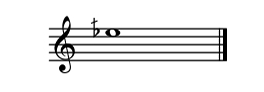
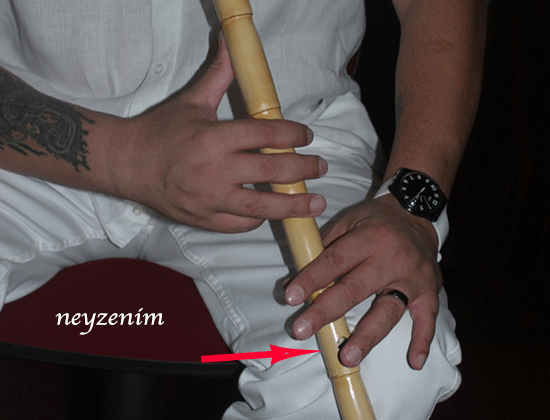
We will close Curtains:
RIGHT HAND: Head Finger, Sign Finger, Middle Finger and Ring Finger.
LEFT EL: Head, Middle Fingers, approximately half of our ring finger, half full.
Review the picture below:
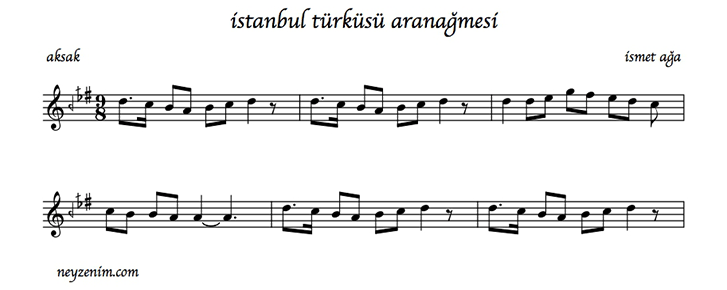
Video:
You may enlarge by clicking the picture Metronom: 75
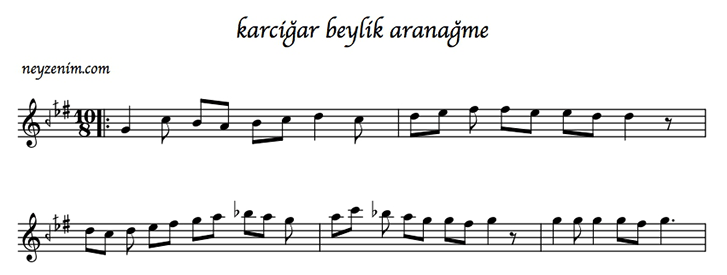
Video:
You may enlarge by clicking the picture Metronom: 80
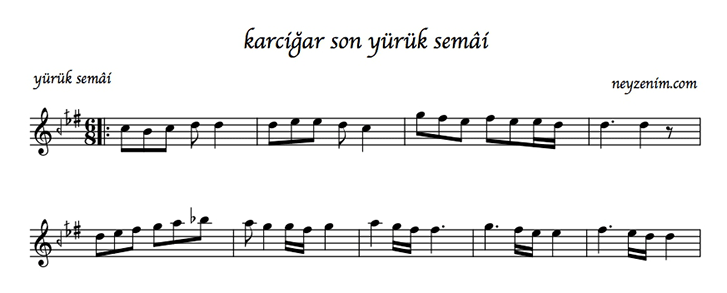
Video:
You may enlarge by clicking the picture
Metronom: 80
Video:
Hicaz Mode:
Stall: La
CYCLE: It is used as in-out or just as an inference.
Sol, Re
Strength: Re
Suspended Decision Curves: Re Do sharp, Si bemol
Expansion: The shrill or pes may expand from the side of the machine.
Equipment: Balance of Si balance, Balance of Do and Fa is written in the balance.
Reward: Sol
Navigating: Around the perimeter of the dug, the curtain starts and decides on the same notes.

Do sharp:
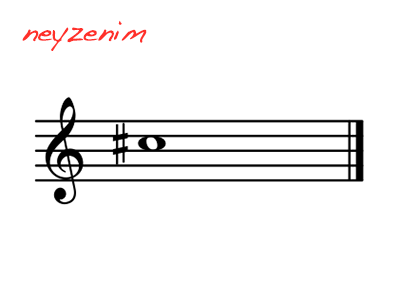
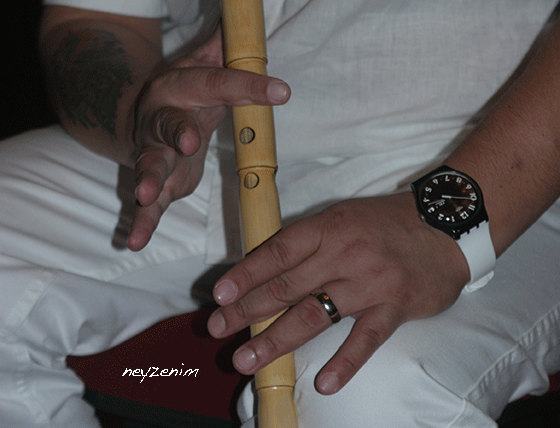
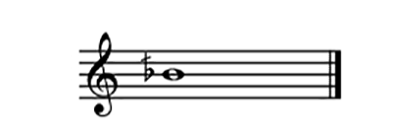
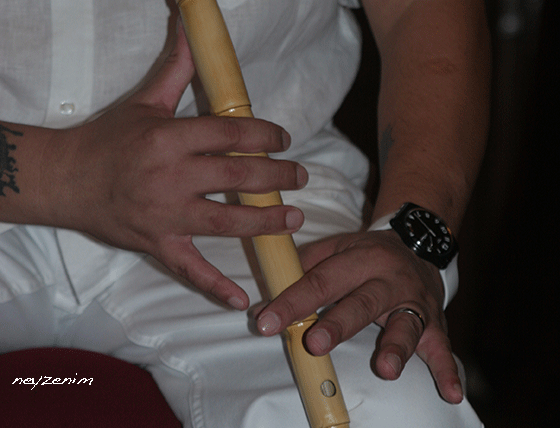
Si Flat :
Klasik Türk Müziğinde bu perdenin ismi
DİK KÜRDİ perdesidir .
You may enlarge by clicking the picture
Metronom: 75
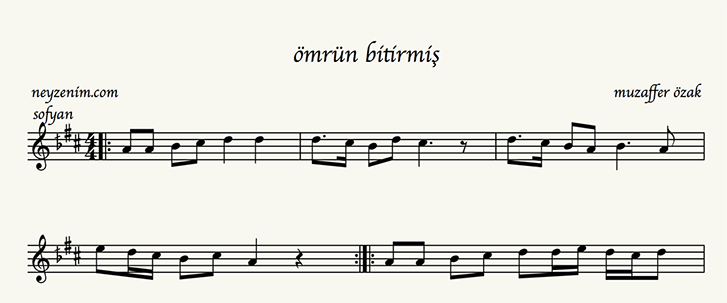
Video:
You may enlarge by clicking the picture
Metronom: 60
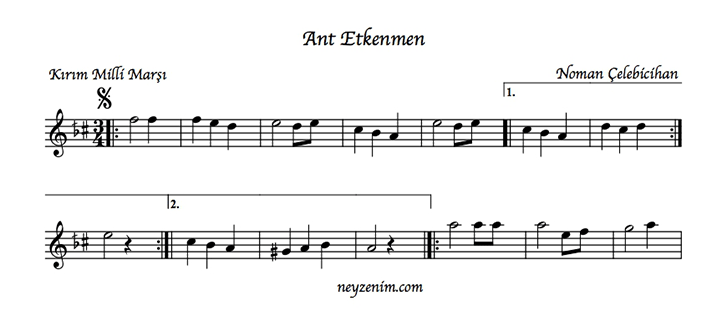
Videomuz:
You may enlarge by clicking the picture
Metronom: 80
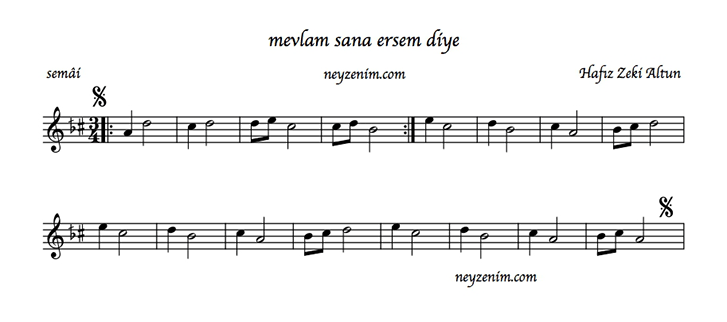
Video:
Rast Makamı
Stop: Rast (2nd line left) Perdesidir.
CYCLE: It is the pitcher.
Series: A Rast in place has come to the quintile of adding a Rast quadruple in Nevada.
Powerful: Re Note.
Hanging Decision Curtains: Neva ve Segâh curtains.
Expansion: Starting from the perimeter of the Rast range,
it expands from the Pest side to the rast five in Re.
Equipment: For the makam Si faction, the coma is flat and the balance for fa perd is taken.
Sansibl: Fa sharp
Seyir : Sol

You may enlarge by clicking the picture
Metronom: 66
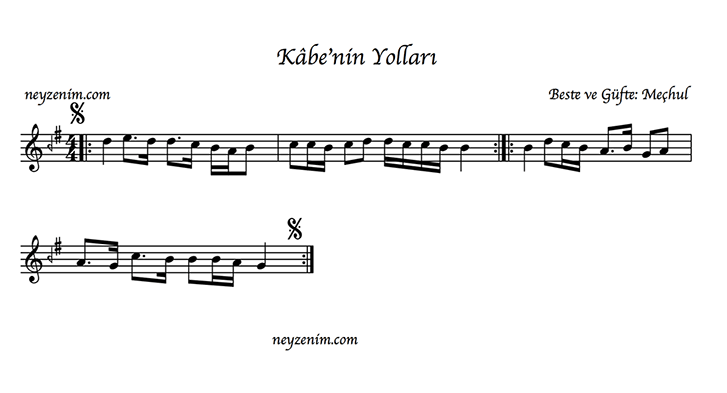
Video:
For the first time in this song, we will learn Porte six re notation:
Re:
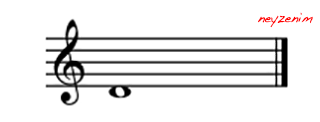
We will close Curtains:
RIGHT HAND: Farewell and Middle Fingers.
LEFT EL: Middle Fingers.
Review the picture below:
Re:
Metronom: 74
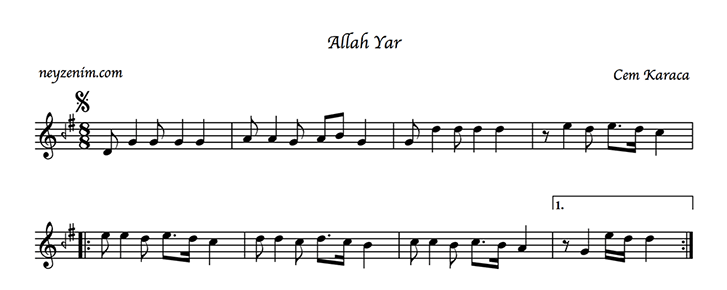
Metronom: 74
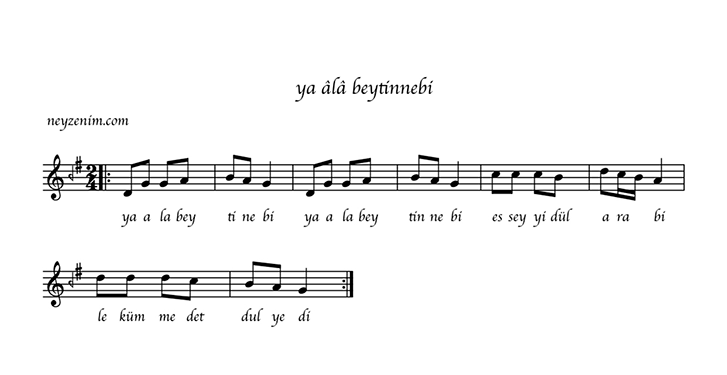
Notayı tıklayarak büyütebilirsiniz.
Metronom: 70
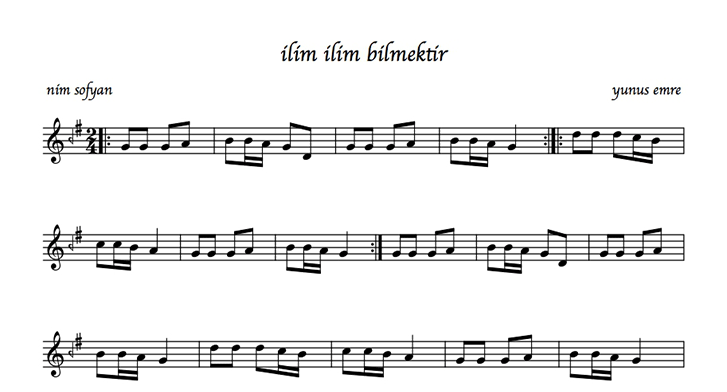
Video:
For now, it is enough to learn so much of the simple makams that we started with the Beyati makam.
In our other lesson, we will examine the Şed (Abandoned) Authorities.

www.neyzenim.com Neyzen Zeki Sözen
|