logo Türkçe English

Ney Lessons

1 2 3 4 5 6 7 8 9 10 11 12 13 14 15

Ney Lessons - 11 -

Transposed (Şed) Makams and Their Explanations

Transposed (Şed) Makams:

Şed means to transpose or to move.

Şed Makam means taking any tetrachord, pentachord, or a makam scale from its original place,

that is, from its tonic, and transferring it onto another pitch.

Şed Makams are the general name of makams that are transposed to another pitch,

by accepting another note as tonic, without changing their intervals and applying the necessary alterations.

Let us review once again the Şed makams we mentioned before:

Çargah Makam Transpositions:

There are two:

1-) On Rast pitch: Mahur makam.

2-) On Acem Aşiran pitch: Acem Aşiran makam.

Buselik Makam Transpositions:

There are three:

1-) On Rast pitch: Nihavend makam.

2-) On Hüseyni Aşiran pitch: Rühnuvaz makam.

3-) On Yegah pitch: Sultani Yegâh makam.

Kürdi Makam Transpositions:

There are three:

1-) On Rast pitch: Kürdi'li Hicazkar makam.

2-) On Hüseyni Aşiran pitch: Aşkefza makam.

3-) On Yegah pitch: Ferahnuma makam.

Zirgüleli Hicaz Makam Transpositions:

There are four:

1-) On Rast pitch: Zirgüleli Suzinak and Hicazkar makams.

2-) On Irak pitch: Evcara makam.

3-) On Hüseyni Aşiran pitch: Suz-i Dil makam.

4-) On Yegah pitch: Şedd-i Araban makam.

Neveser Makam Transposition:

There is one:

On Acem Aşiran pitch: Reng-i Dil makam.

Segâh Makam Transposition:

There is one:

1-) On Nim Hicaz pitch: Heft-gah makam

Now let us examine the ones we consider important and more suitable for the Ney:

Acemaşiran Makam

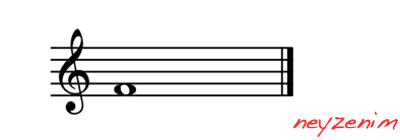
Tonic: Acem Aşiran (1st interval Fa) pitch.

Course: Descending.

Scale: The descending form of the Çargah scale on the Acem Aşiran pitch.

Dominant: First level dominant is Acem pitch.

A half cadence with Çargah flavor is made on it.

The second level dominant is Çargah pitch where the main scale connects.

A suspended cadence with Çargah flavor is made on this pitch.

Expansion: Achieved by transposing the Çargah pentachord to the upper register.

Accidentals: A 5-comma flat is written for Si.

Leading tone: Hüseyniaşiran pitch.

Melodic progression: Begins around the upper Acem pitch and resolves on Acem Aşiran.

Now let us look at the Acemaşiran pitch:

1st INTERVAL FA NOTE: In Classical Turkish Music, this pitch is called ACEM AŞİRAN.

Finger Positions:

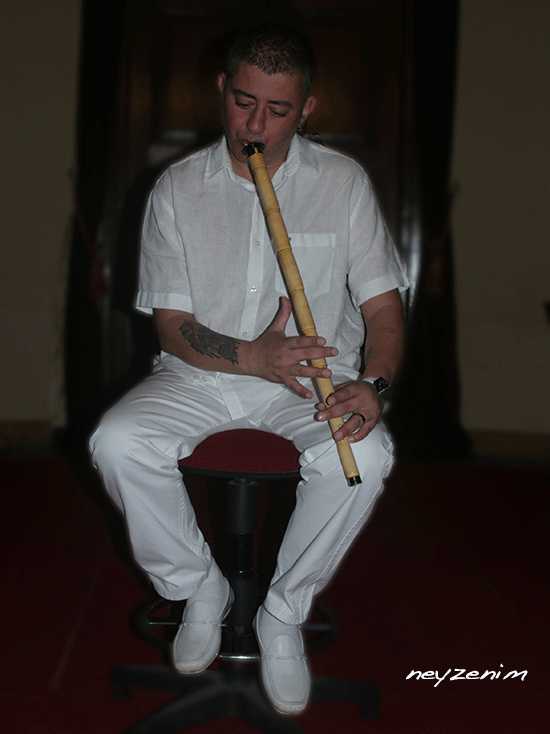
RIGHT HAND: All fingers open.

LEFT HAND: All fingers open.

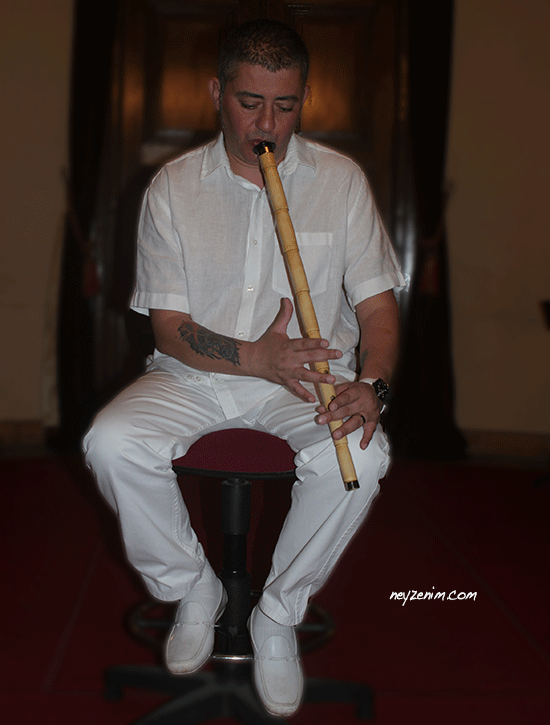
We hold the ney using the middle fingers.

Keep the head in normal blowing position, do not tilt left or right.

Examine the image below:

 Hüseyniaşiran Aşiran Pitch

 Video:


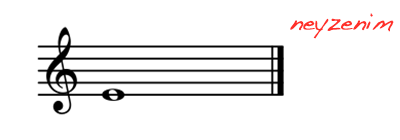
1st LINE E NOTE: In Classical Turkish Music, this pitch is called HÜSEYNİ AŞİRAN.

Memorize the name of this note in this way.


Finger Positions:

RIGHT HAND: All fingers open.

LEFT HAND: All fingers open.

To hold the ney, we use the middle finger of the right hand and the middle finger of the left hand.

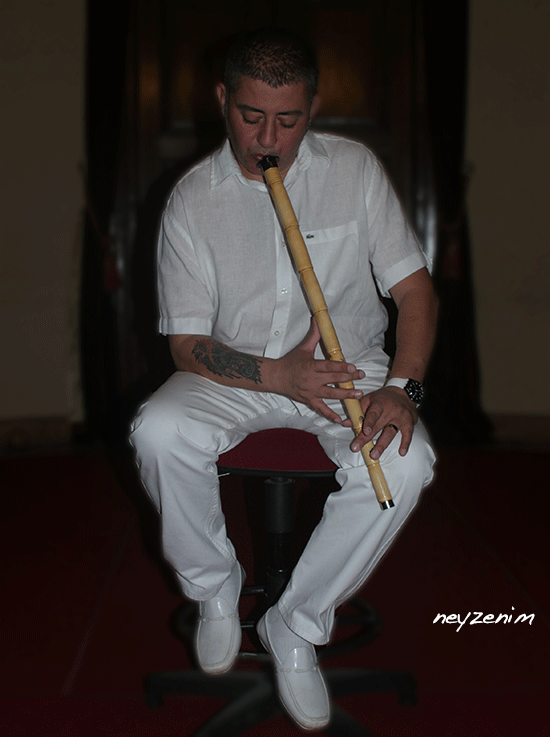
 In the image below, you see our normal blowing position:

 Normal Blowing Position

 To produce the Hüseyniaşiran pitch, we should direct our head slightly to the left and blow:

 Hüseyniaşiran Aşiran Pitch

 Video:


 Scale of the Makam:

 Acem Aşiran Makam Scale

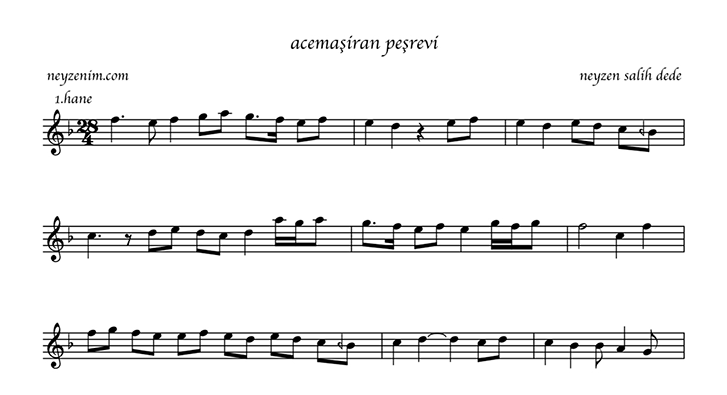
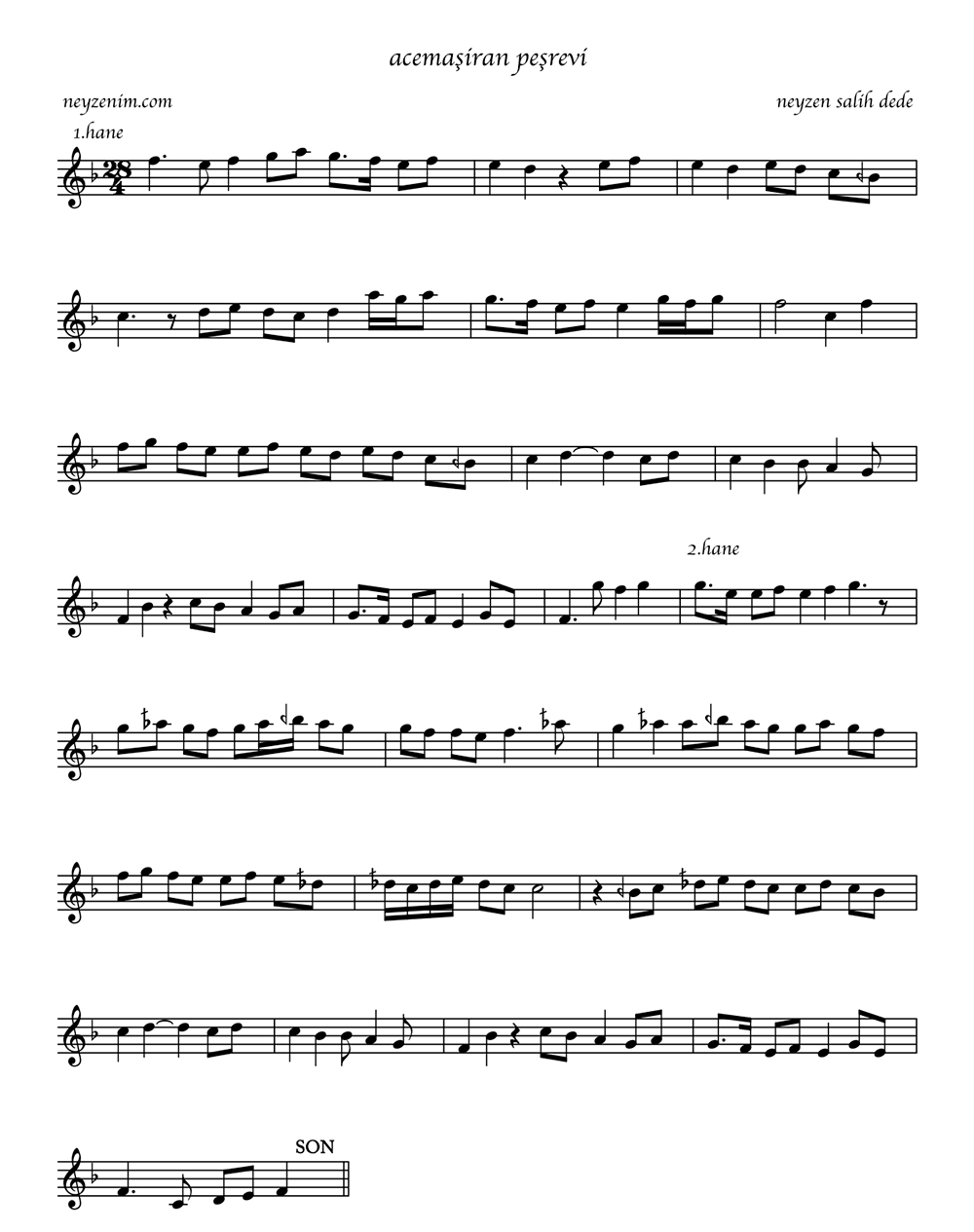
 Let us go through one sample piece in Acemaşiran makam:

This peşrev in Acemaşiran makam by Neyzen Salih Dede

is considered very important by our ney teachers.

 You can enlarge the notation by clicking on it.

 Metronome: 70


 Video:


Difficult pitches used in Acemaşiran Makam:

 E flat Pitch:

 In Classical Turkish Music, this pitch is called the Nim Hisar pitch.

 Memorize the name of this note in this way, that is, as Nimhisar.

 E flat Pitch

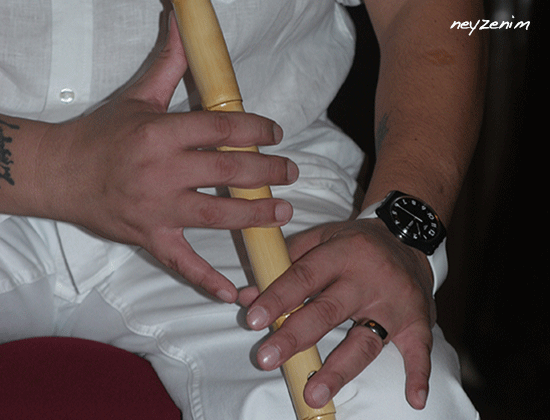
Finger Positions:

RIGHT HAND: Thumb, Index Finger, Middle Finger, and Ring Finger.

LEFT HAND: Index Finger, Middle Finger, and more than half of the Ring Finger.

 Examine the image below:

 Kaba Nim Zirgüle Pitch

 The E flat that we describe as Nim Hisar usually remains sharp on our ney.

 Therefore, by covering more than half of the ring finger of the left hand and

by turning our head slightly to the left, we obtain this sound.

 Video:


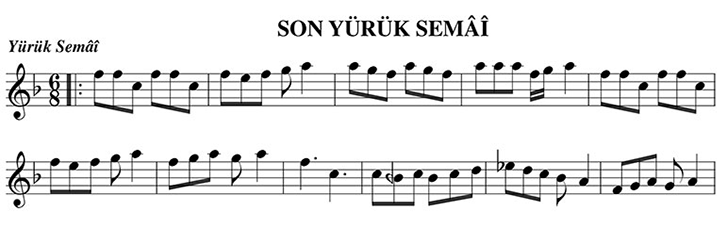
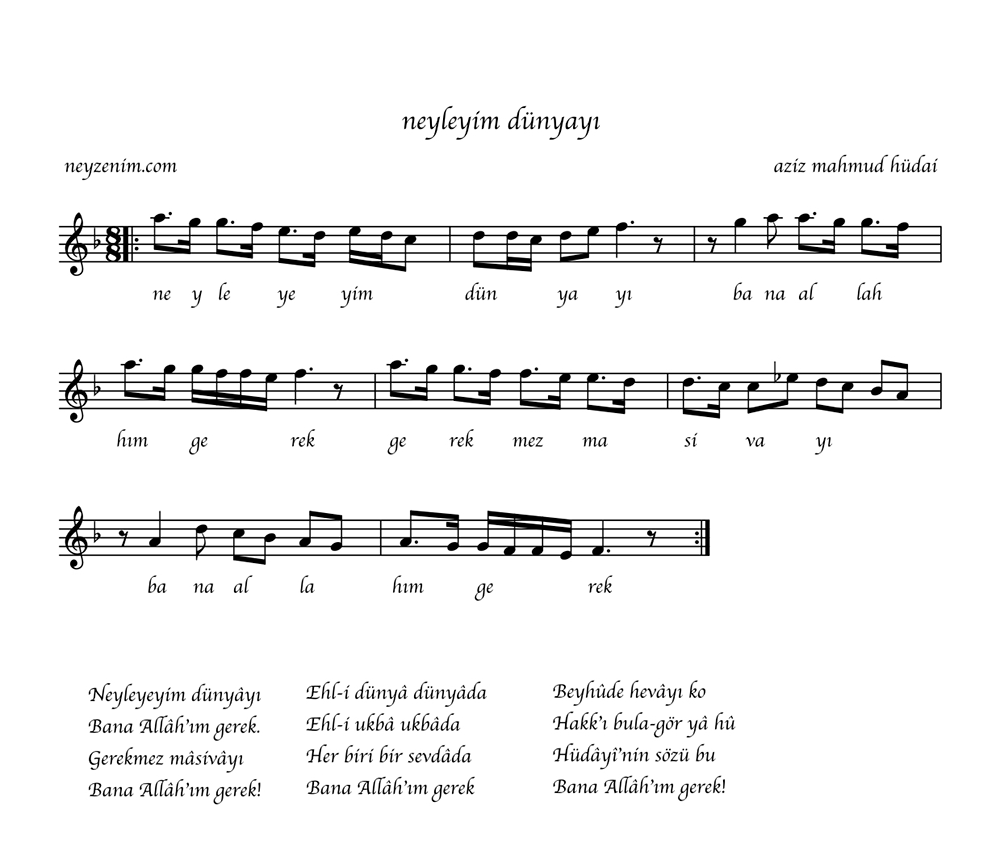
 Sample notation:

 Video:


 You can enlarge the notation by clicking on it.

 Video:


Nihavent Makam

 Tonic: Rast pitch.

 Course: Descending - Ascending.

 Scale: It is the transposition of Buselik makam onto Rast pitch.

The scale of the makam is formed by adding a Kürdi or Buselik scale on the Neva pitch

to the Buselik pentachord on the Rast pitch.

 Dominant: The first-degree dominant is the Neva pitch.

 Suspended Cadence Pitches: Nim Hisar (E with a small mücennep flat), Kürdi, and Dügah pitches.

 Expansion: The makam can expand into both the high and low registers.

 Key Signature: A 5-comma flat for B and a 5-comma flat for E are written in the key signature.

 Leading Tone: Irak Pitch.
 Course: It begins around the Neva pitch and makes a Buselik-flavored cadence on the Rast pitch.

 Scale of the Makam:

 Nihavent Makam Scale

Difficult pitches used in Nihavent Makam:

 E flat Pitch:

 In Classical Turkish Music, this pitch is called the Nim Hisar pitch.

 Memorize the name of this note in this way, that is, as Nimhisar.

 E flat Pitch

Finger Positions:

RIGHT HAND: Thumb, Index Finger, Middle Finger, and Ring Finger.

LEFT HAND: Index Finger, Middle Finger, and more than half of the Ring Finger.

 Examine the image below:

 Kaba Nim Zirgüle Pitch

 The E flat that we describe as Nim Hisar usually remains sharp on our ney.

 Therefore, by covering more than half of the ring finger of the left hand, we obtain this sound.

 Video:


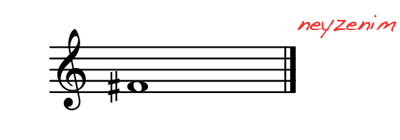
FOUR-COMMA 1st INTERVAL F SHARP NOTE:

In Classical Turkish Music, this pitch is called IRAK pitch.

Memorize the name of this note in this way.


Finger Positions:

RIGHT HAND: All fingers open.

LEFT HAND: All fingers open.

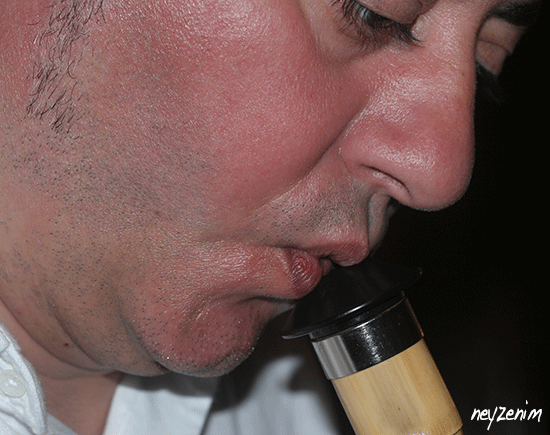
 Producing this pitch is one of the most difficult pitches on the ney.

 In the image below, you see our normal blowing position:

 Normal Blowing Position

 To produce the Irak pitch, we must tilt our head to the left and make the sound even sharper:

 Irak Pitch

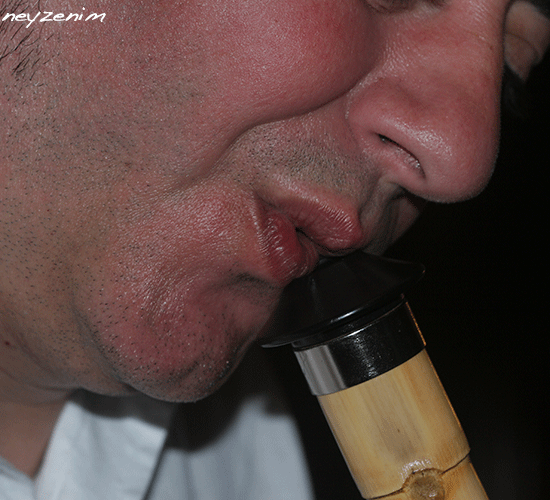
 While our lip position in normal blowing is as follows:

 Normal Lip Position

 To produce the Irak pitch, we must pull our lips to the right and make the sound even sharper:

 Geveşt Pitch

 Video:


 You can enlarge the notation by clicking on it.

 Metronome: 75

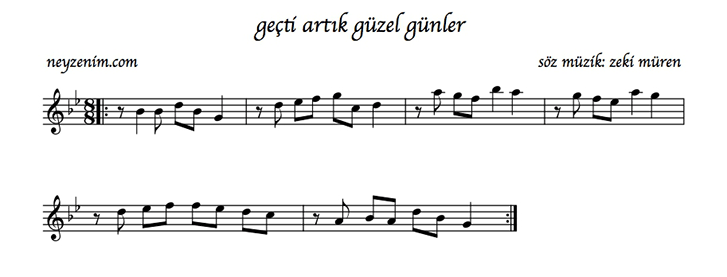
 Geçti Artık Güzel Günler

 Video:


 You can enlarge the notation by clicking on it.

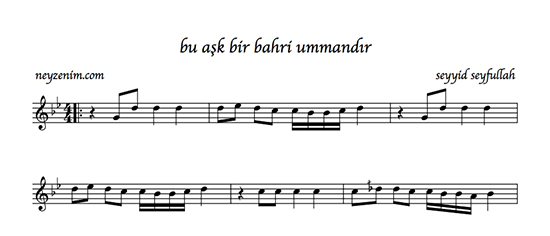
 Bu Aşk Bir Bahri

 Video:


 You can enlarge the notation by clicking on it.

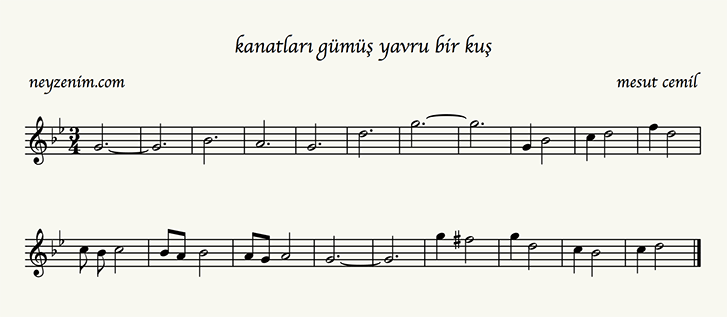
 Kanatları Gümüş

 Video:


Sultanî Yegâh Makam

 Tonic : Yegâh Pitch.

 Course : Descending.

 Scale : The descending form of the Buselik makam scale on the Yegâh pitch.

 Dominant : The first-degree dominant is the Neva pitch.

 Suspended Cadence Pitches : Neva, Dügah, Kürdi and Acemaşiran pitches.

 Expansion : The Buselik pentachord on the Yegâh pitch or

the entire scale is transposed symmetrically to the upper tonic.

 Key Signature : A 5-comma flat for B and a 5-comma flat for C are written in the key signature.

 Leading Tone : The C sharp below the staff, that is, the Kaba Nim Hicaz Pitch.

 Course : It begins around the upper tonic Neva pitch and resolves on the Yegâh pitch.

New notes we will use in Sultanî Makam:

1st LINE E NOTE : In Classical Turkish Music, this pitch is called HÜSEYNİ AŞİRAN pitch.

Memorize the name of the note in this form.


Finger Positions :

RIGHT HAND : All fingers open.

LEFT HAND : All fingers open :

To hold the ney, we use the middle finger of the right hand and the middle finger of the left hand.

 In the image below, you see our normal blowing position :

 Normal Blowing Position

 To produce the Hüseyniaşiran pitch, we should direct our head to the left and blow :

 Hüseyniaşiran Aşiran Pitch

 Video:


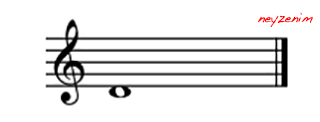
LOWER STAFF RE NOTE : In Classical Turkish Music, this pitch is called YEGÂH pitch.

Memorize the name of the note in this form.

 Yegâh on the staff

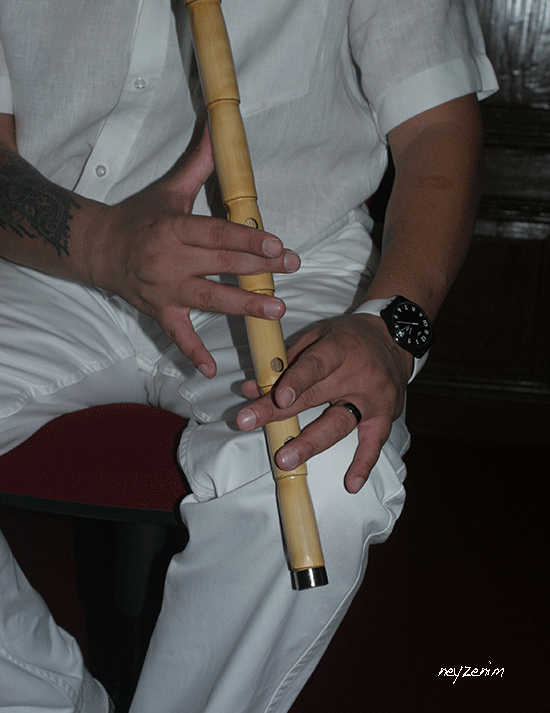
Finger Positions :

RIGHT HAND : Aşiran Pitch and Middle Finger.

LEFT HAND : Middle Finger.

 Examine the image below :

 Yegâh Pitch

 Video:


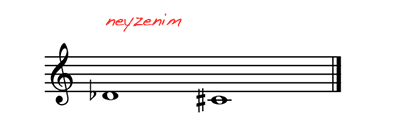
LOWER STAFF C SHARP NOTE: In Classical Turkish Music, this pitch is called KABA NİM HİCAZ pitch.

Memorize the name of the note in this form.

 Kaba Nim Hicaz on the staff

Finger Positions :

RIGHT HAND : Aşiran Pitch, Thumb.

LEFT HAND : Middle Finger.

 Examine the image below :

 Kaba Nim Hicaz Pitch

 Video:


 Scale of the Makam :

 Sultani-Yegâh Makam Scale


  You can enlarge the notation by clicking on it.

 Metronome: quarter note = 60

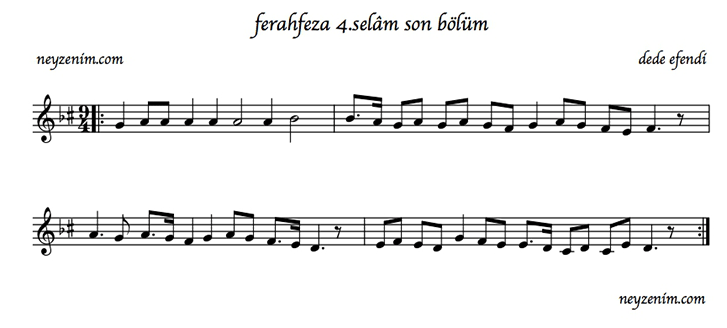
 Ferahfeza Final Section

 Video:


  You can enlarge the notation by clicking on it.

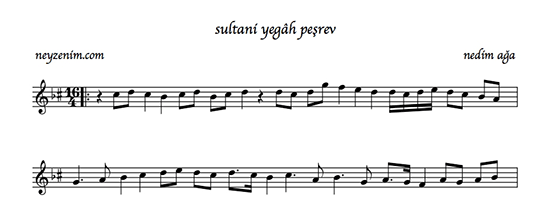
 Sultani Yegah Peşrev

 Video:


  You can enlarge the notation by clicking on it.

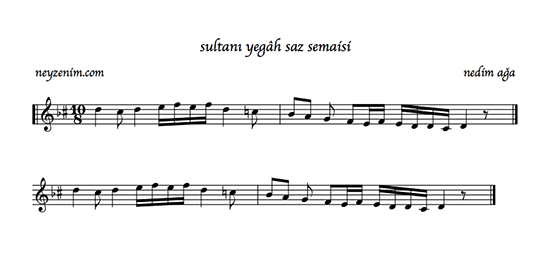
 Sultani Yegah Saz Semaisi

 Video:


Mahur Makam

 Tonic : Rast (2nd Line G) Pitch.

 Course : Descending.

 Scale : It is formed by adding a Çargah tetrachord on the Neva pitch

to the Çargah pentachord within the Rast pentachord.

 Dominant : The high G, Gerdaniye Pitch.

 Suspended Cadence Pitches : Gerdaniye, Neva and Çargah pitches.

 Expansion : It expands in the upper register by means of a Çargah pentachord on the Gerdaniye pitch.

 Key Signature : A five-comma small mücennep sharp is written in the key signature for the Fa pitch.

 Leading Tone : Geveşt Pitch.

 Scale of the Makam :

 Mahur Makam Scale


Difficult pitches used in Mahur Makam :

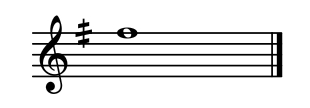
  First of all, since the Fa sharp we see in Mahur makam is 5 commas, it is played sharper:

  Mahur pitch position

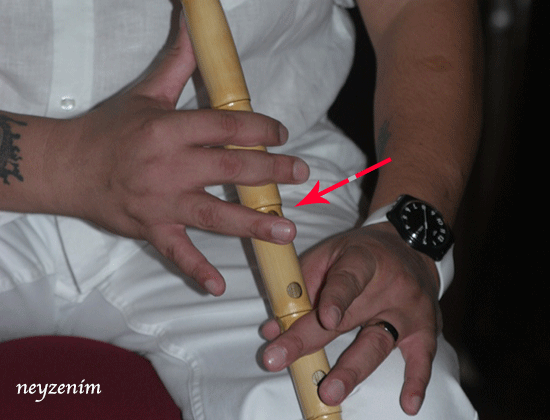
  Finger Positions :

  RIGHT HAND : Thumb, Index Finger

  Middle Finger, and half of the Ring Finger.

  LEFT HAND : Our Middle Finger.

  Examine the image below :

  Finger position

 Video:


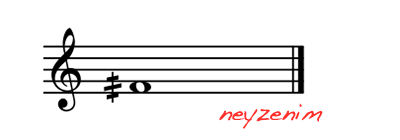
FIVE-COMMA 1st INTERVAL FA SHARP NOTE :

In Classical Turkish Music, this pitch is called the GEVEŞT pitch.

Memorize the name of the note in this way.

 Geveşt pitch on the staff

Finger Positions :

RIGHT HAND : All fingers open.

LEFT HAND : All fingers open.

 Producing this pitch is one of the most difficult pitches on the ney.

 In the image below, you see our normal blowing position :

 Normal blowing position

 To produce the Geveşt pitch, we must tilt our head to the left and make the sound sharper as we blow :

 Geveşt Pitch

  While our lip position in normal blowing is as follows :

 Normal Blowing Position

  To produce the Geveşt pitch, we must pull our lips to the right and make the sound even sharper :

 Geveşt Pitch

 Video:


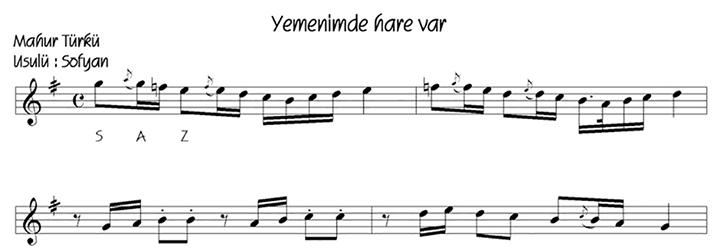
  You can enlarge the notation by clicking on it.

 Metronome: 80

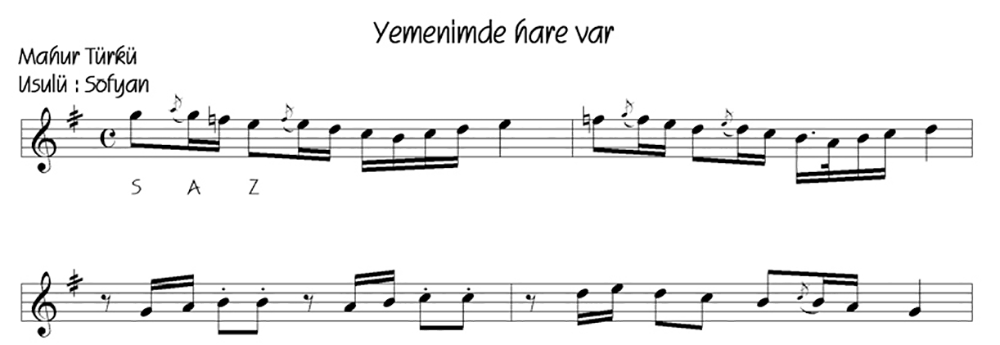
Yemenimde Hare Var

 Video:


  You can enlarge the notation by clicking on it.

 Metronome: 70

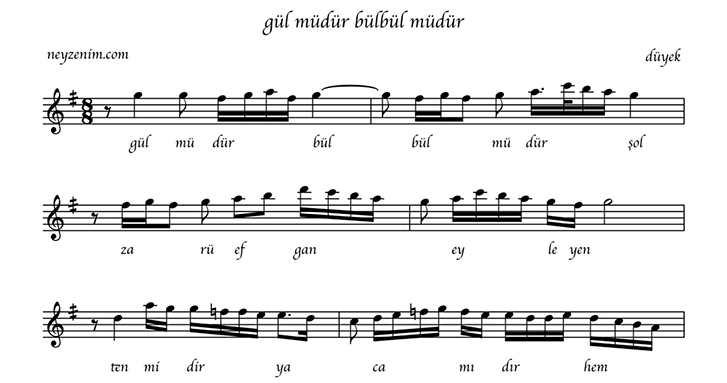
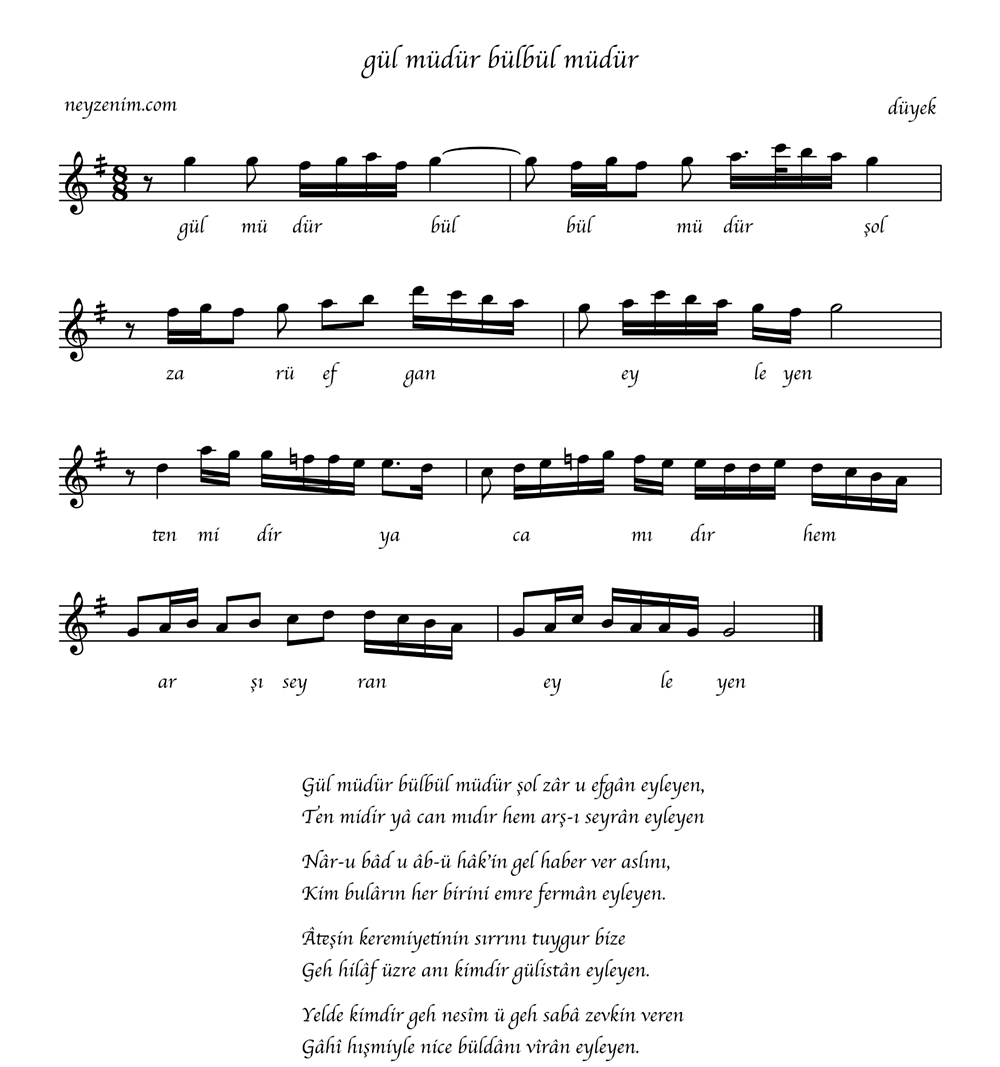
Gül müdür

 Video:


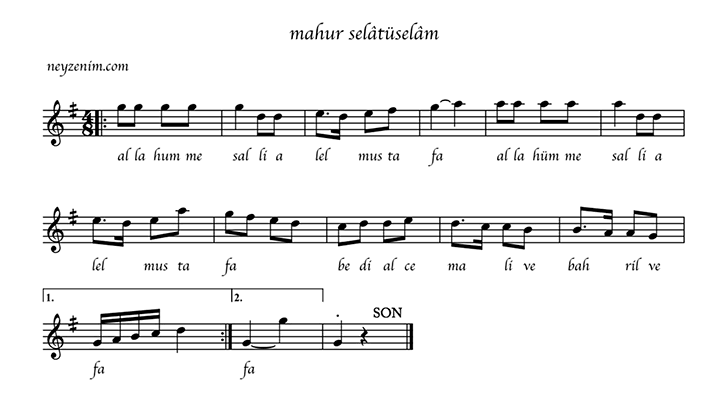
  You can enlarge the notation by clicking on it.

 Metronome: 80

Mahur Salatüselam

 Video:


Kürdî'li Hicazkâr Makam

 Tonic : Rast (2nd Line G) Pitch.

 Course : Descending.

 Scale : It is the transposed form of the Kürdi makam scale on the Rast pitch.

 Dominant : Gerdaniye and Çargah Pitch.

  Suspended Cadence Pitches : Gerdaniye, Çargah and Neva pitches.

 Expansion : It expands by transposing the flavor above the tonic

that is, it expands upward by making Kürdi on the Gerdaniye pitch.

 Key Signature : A small mücennep flat is written for the Si, Mi, and La pitches.

 Leading Tone : Acemaşiran Pitch.

 Course : It begins around the upper tonic Gerdaniye pitch and makes a Kürdi-flavored cadence on the Rast pitch.

 Scale of the Makam :

 Kürdîli Hicazkâr Makam Scale

 We may say that it is the most difficult makam for the ney.

  Mi flat and La flat pitches are especially troublesome.

  They generally tend to remain sharp.

  We had said that Kürdî'li Hicazkâr Makam is difficult;

there is an alternative way to avoid risky pitches such as La flat and Mi flat.

  This is to perform the piece on a ney one whole tone lower, and play it as if it were in Kürdi makam.

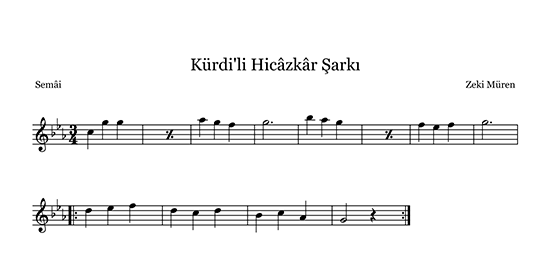
Let us explain the matter;

Manolyam notation

  Let us assume that we will play this piece with our Kız Ney.

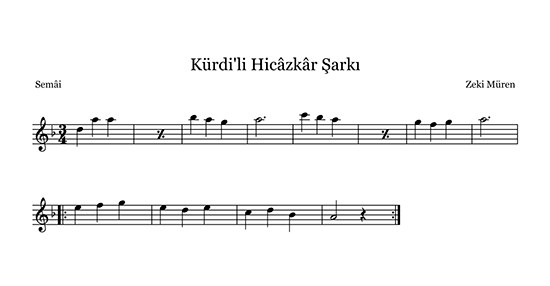
  As I mentioned just now, in order to get rid of the flats, we should perform it with a ney one whole tone lower,

that is, by playing it with a Mansur Ney.

 Of course, in that case our notation will be as follows :

Manolyam transposed notation

 Metronome: 100

 Video:


 In this way, we can avoid La flat and Mi flat and play it as if it were Muhayyerkürdi or Kürdi makam, with only Si flat.

For this, we need to read every note one whole tone higher than written.

  In order to read every note one whole tone higher, it is necessary to practice this separately as well.

  In recordings made in professional sound studios, Kürdî'li Hicazkâr Makam is performed in this way.

  Just to help you read notes one tone higher, I recommend that you sight-read Western works written not in treble clef but in C clef.

  Since works in Western format are more technical, we progress quickly.

 For example, instruments such as the viola, bassoon, and trombone play from the C clef.

  In very general terms, they play one whole tone higher than the note they see.

If the written note is Do, they play Re; if the written note is Sol, they play La, and so on…


  You can enlarge the notation by clicking on it.

 Metronome: 100

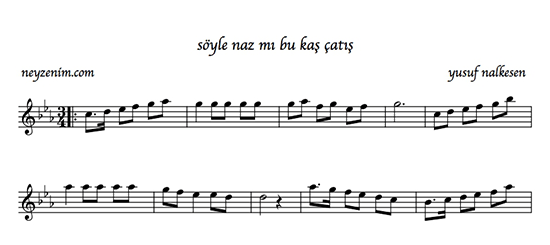
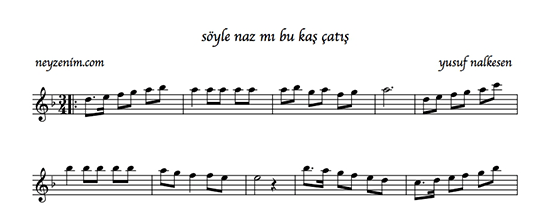
 Söyle Naz mi

  As I stated, in order to get rid of the flats, we should perform by blowing into a ney one whole tone lower, that is,

by using a Mansur Ney.

 Of course, in that case our notation will be as follows:

 Söyle Naz mı transposed notation

 Video:


  You can enlarge the notation by clicking on it.

 Metronome: 80

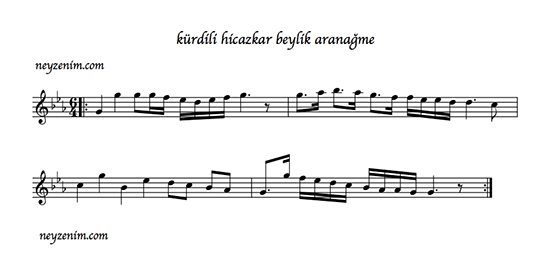
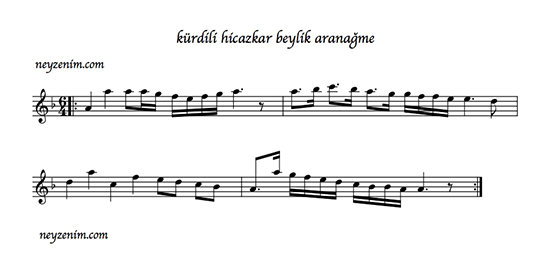
 Kürdili Beylik aranağme notation

  As I stated, in order to get rid of the flats, we should perform by blowing into a ney one whole tone lower, that is, by using a Mansur Ney.

 Of course, in that case our notation will be as follows:

 Kürdili Beylik aranağme transposed notation

 Video:


  You can enlarge the notation by clicking on it.

 Metronome: 60

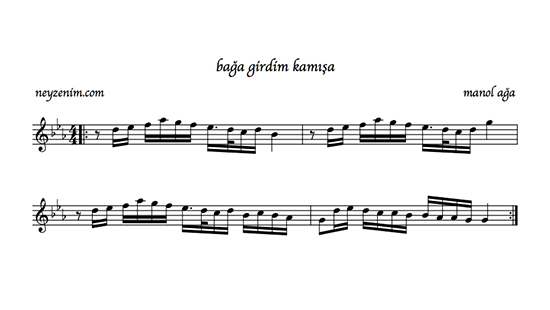
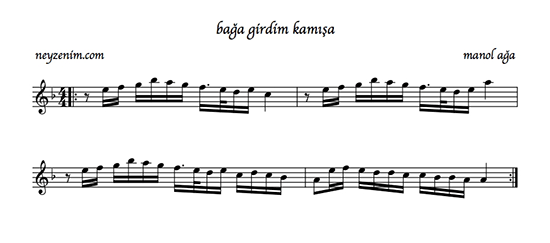
 Bağa girdim kamışa notation

  As I stated, in order to get rid of the flats, we should perform by blowing into a ney one whole tone lower, that is, with a Mansur

Ney.

 Of course, in that case our notation will be as follows:

 Bağa girdim kamışa transposed notation

 Video:


 For now, it is enough for us to learn this much of the transposed makams that we started with Acemaşiran makam.

In the next lesson, we will examine Compound Makams.

 Important Note: Practice the pieces in the videos until you memorize them.

Reach a level where you can play without looking at the notation.

Practice again and again, and begin to play the pieces from memory.

Send Email

1 2 3 4 5 6 7 8 9 10 11 12 13 14 15

© www.neyzenim.com Neyzen Zeki Sözen