Ney Lessons
Ney Lessons - 8 -
High Sounds
8. In our class, we will learn the RE
notes on top of the portraits Si, Do, Do, and porte which we call
as high-pitched.
Voices from the Si fret over the porte
to the Re fret over the porte are called Treble Voices.
Treble Sounds:

Name's :
Important note :
We have to blow even more violently
to make these voices sound even harder.
Our nose will shrink a little more when
we blow hard.
Now I see these voices on the notes.
Double Si :
It mean's tiz segah.
Si Top on Porte:
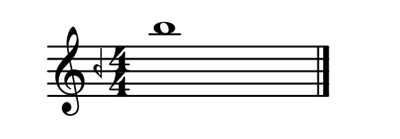
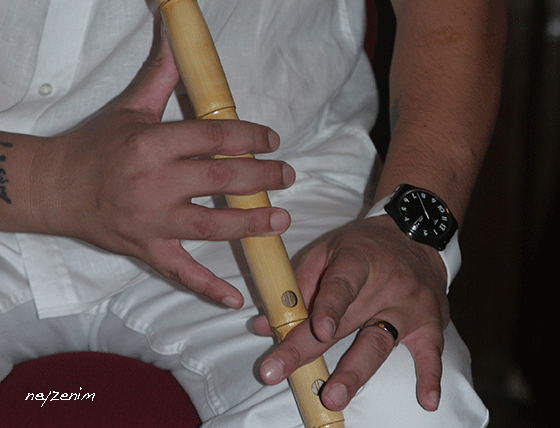
We will close Curtains:
RIGHT HAND: Head, Sign, Middle and Ring
Fingers.
LEFT EL: Middle Fingers.
Review the picture below:
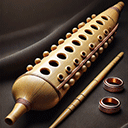
Video:
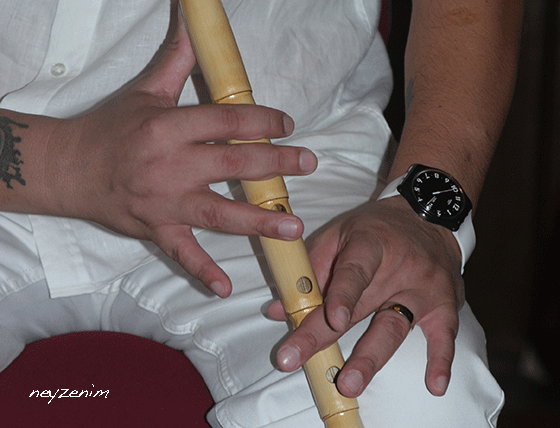
DOUBLE DO :
It mean's T�Z �ARG�H .
Double DO:
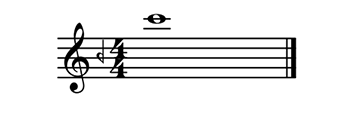
We will close Curtains:
RIGHT HAND: Head, Sign and Middle Fingers.
LEFT EL: Middle Fingers.
Review the picture below:
Video:
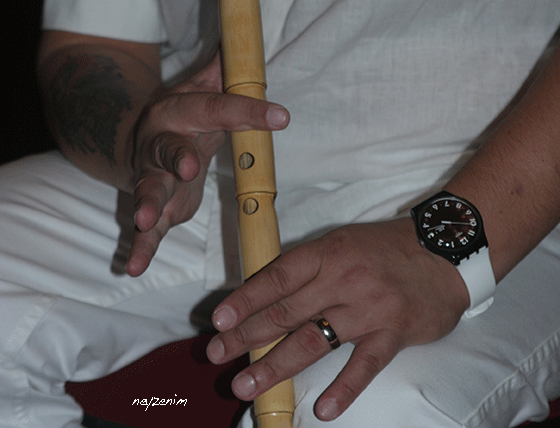
DOUBLE DO DIESIS :
It mean's T�Z N�M H�CAZ.
# Do :
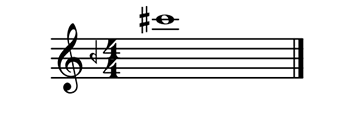
We will close Curtains:
SA� EL : RIGHT HAND: Head and Pointing
Fingers.
SOL EL : LEFT EL: Middle Fingers.
Review the picture below:
Video:
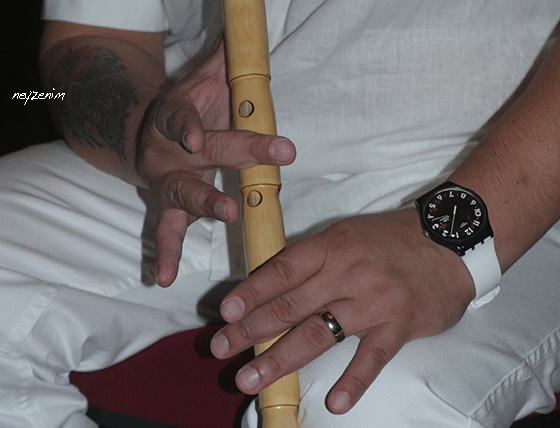
DOUBLE RE :
Klasik It mean's T�Z NEVA .
Double Re :
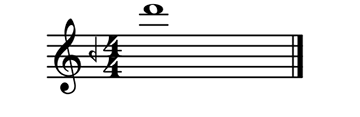
We
will close Curtains:
RIGHT
HAND: Head and Middle Fingers.
LEFT
EL: Middle Fingers.
Review
the picture below:
Video:
These voices are high in frequency and
are easier to hear than the other sub-voices.
Instead of blowing the treble sounds
for a long time now,
I would suggest to you that you can still blow
the middle and lower curtains long.
However, we must definitely memorize
the names, locations and positions of the shrines.
We have to make these voices.
Try to make the sounds on the treble
curtains sound and robust.
The following few studies will enhance
your dominance in your shrines:
Mi Notation Work - 1 - :
Metronom: 90

Video:
Mi Notation Work - 2 - :

Video:
Fa :
Metronom: 90

Video:
Notation Work - 1 - :
Metronom: 90

Video:
Sol Notation Work - 2 - ::

Videomuz:
La :
Metronom: 90
La Notation Work - 1 -:

Video:
La Notation Work - 2 -:
Metronom: 80

Video:
Overtone for Ney :
Let me first mention the meaning of
harmony:
Harmony:
Two or more voices are a combination
of voices that resonate together and do not disturb the ear.
Harmonic sounds are:
It is the sound that can be propagated
through an audio source and whose frequency is exactly the frequency
of the vibration main mode.
Depending on this description we determine
a main voice;
For example, the 2nd line is the left
voice;
The harmonics of Do voice will be left
in the top of the portraits of the quintet of 5 and re.
Let's take La perdes in the same way,
and let's think of 5 lisi, which will be the curtain scale.
The quadruple of the perimeter will
be la perdes.
As a result, 5 lisi and ninth of a main
voice are harmonic voices.
In the examples below you can be sure
that you will have a better understanding of this topic.
As with all instruments, the Ney instrument
has main sounds and harmonic voices. In other words,
Ney's instrument sounds a few different
sounds from a position, like most instruments.
Otherwise we only had 7 sounds because
there are 7 curtains in us.
Different voices from the same position,
We can remove it by blowing it softer
or harder and by squeezing or loosening our lip a bit more.
As we blow harder and tighten our mouth
more, the notes will shrivel.
The sounds will pacify as we softerly
blow and soften our mouths more.
Think of a trumpet!
There are only three pistons, but three
and a half, depending on the trumpet player, there are four octaves
of sound.
Because when you press a pattern, multiple
sounds are emitted.
If a trompette is blowing without touching
the screen at all,
2. the left on the line, the doe on
the third, the fourth, the porte on the left, the porta on the top.
These voices are hard, harder and much
harder (blowing) and licked out.
We can watch how many voices are emitted
from this three-piston instrument in the videotape;
and two trumpet virtuoso Arturo Sandoval
and Dizzy Gillespie:
The situation is the same in our ney
bowl, that is, as mentioned before, more than one sound comes out
of a curtain.
In the meantime, Ney is not a chromatic
instrument, so we can not make haste like the video.
As we watched on the videotape, there
are also very high-pitched curtains in our Nest.
The purpose of sharing the magnificent
performance above was to give an example of how many different sounds
can come out of the plunger 1 plunger.
Depending on the skill of the trompette
artist, we can hear 3rd and 4th octave treble curves.
Since we have a structure that can not
update itself, the voice range can not expand any more.
We make different sounds by blowing
to our normal, hard and harder blows and squeezing my mouth.
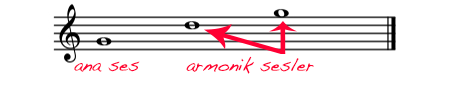
The left voice in the 1st line in the
picture below is the main voice.
Re and left voice are harmonic voices.
Now let's look at these harmonic voices:
Main Sound and Harmonic Voices from
the Left Peripheral Voices:
The harmonic voices that emanate from
the left pit: Re and Sol (above the porte) are the pitches.
Our notes:
Video:
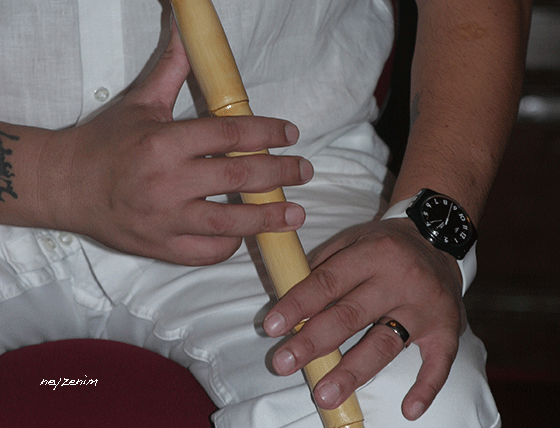
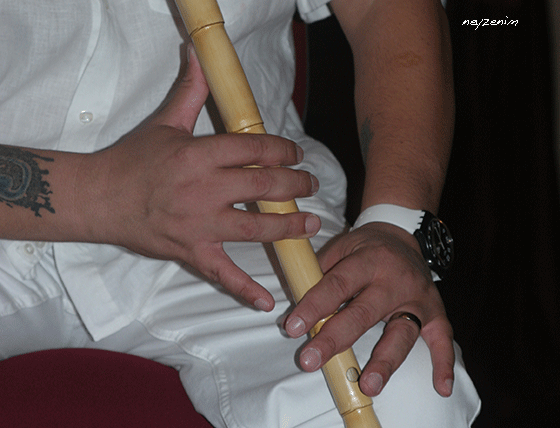
Different sounds from LA :
Different
sounds from LA: : Mi ve La (double) .
Notes:

Video:
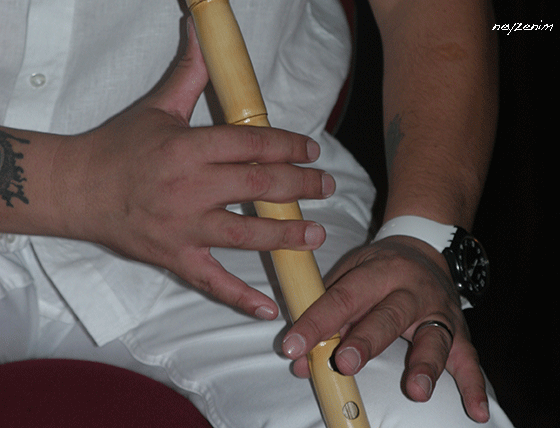
Different sounds from LA sharp:
Notes :

Alttaki Resim :
Video:
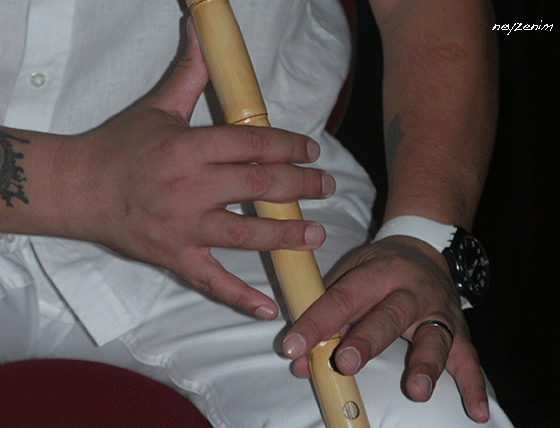
Different sounds from Si flat:
Notes:

Video:
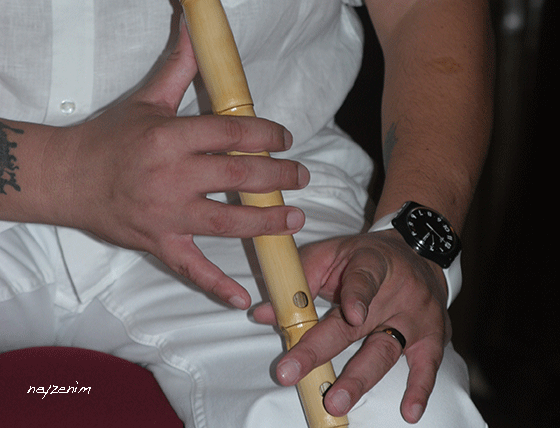
Different sounds from Si:
Notes :

Alttaki Resmi inceleyiniz :
Video:
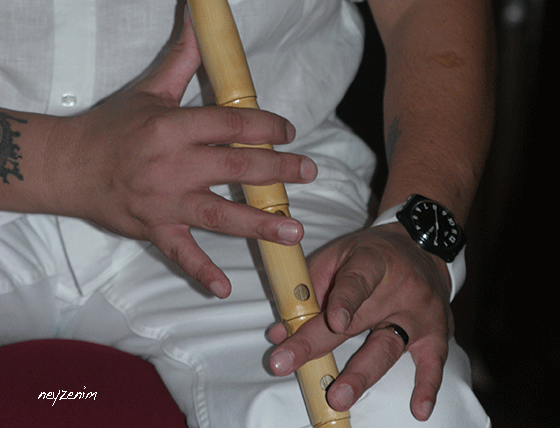
Different sounds from Do:
Notes:

Video:
Different sounds from Do sharp :
Notes :

Alttaki Resim :
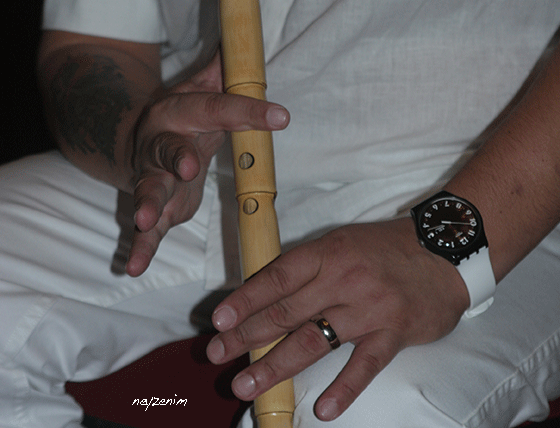
Video:
Different sounds from Re :
Notes:
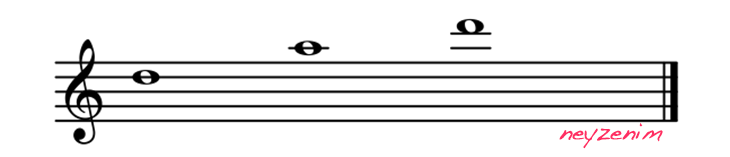
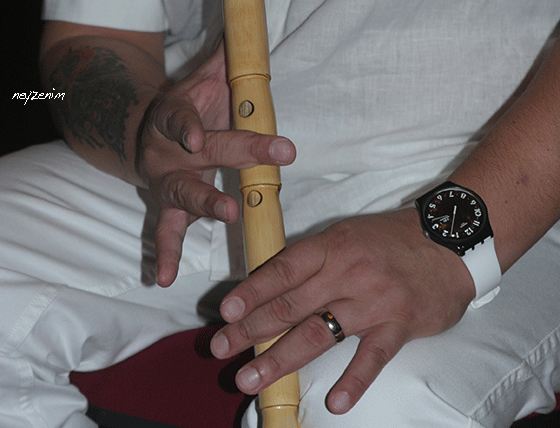
Video:
As I mentioned before, blowing these different sounds harder and
we squeeze our lips a bit and take it off.
Our aims at the end of the lesson:
- To learn the names, locations and positions of the treble curtains.
- Memorizing and blowing harmonic sounds in what !!!
- Never and never switch to another lesson before completing one lesson completely.
www.neyzenim.com Neyzen Zeki Sözen |