We can remove the same voice from different
positions as well as in other instruments.
In fact, we can approximate the work of extracting
the same voices from different positions approximately as Flajoleye
(Flageolets).
I repeat, Flajole (Flageolets) does not remove
the same voices from different positions.
Flajole (Flageolets),
It is the general name of the harmonic voices
that are obtained by tapping the telegraph with the finger in the
stringed instruments and pulling the arc without pressing it.
The following video can give you an idea:
In universal music, there is no music term
used to extract the same voices from different positions.
That's why we likened Flajoleye (Flageolets)
to the process of extracting the same voices from different positions.
Now let's hear these voices;
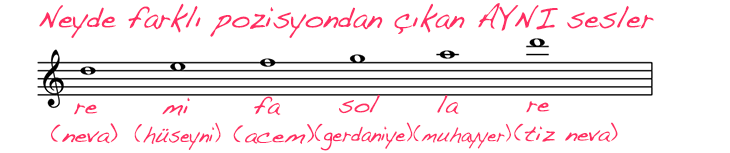
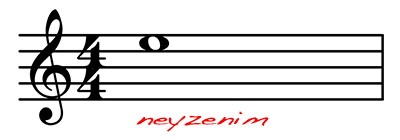
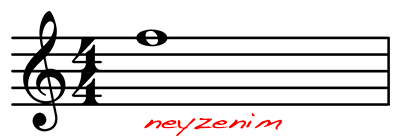
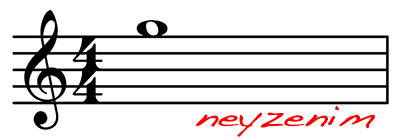
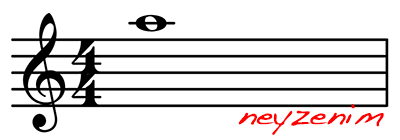
These sounds are correct to the pest ti:
Re in the fourth line, Mi in the fourth interval, Fa in the fifth
line,
Porte Above Left, Porte Above La and Porte
Above Re curtains.
You will see more detail in the picture below.
Click Link to remember the line and range
issues on the port.
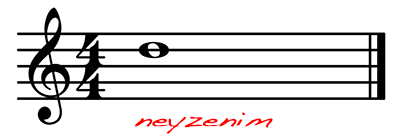
Let's start with the Re note from the lesson
of removing the same voices from different positions.
Removing the Re note from a different position:
Re:
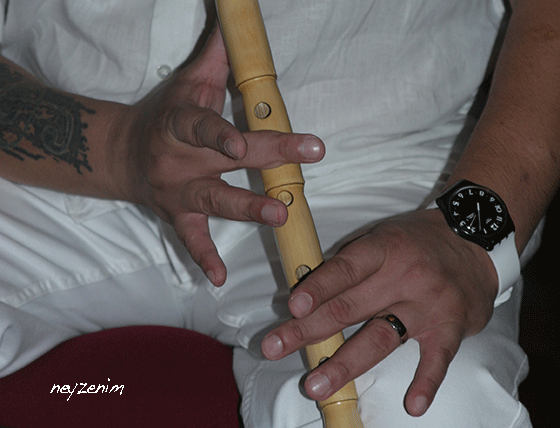
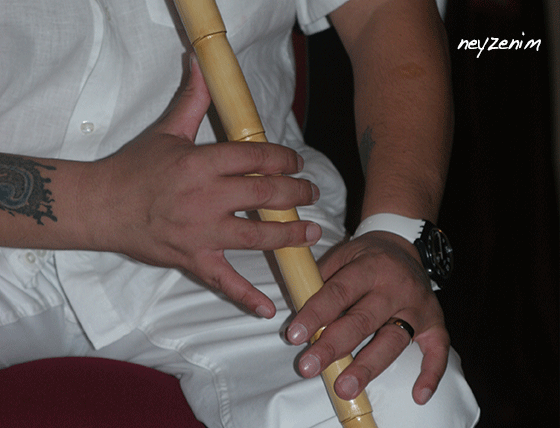
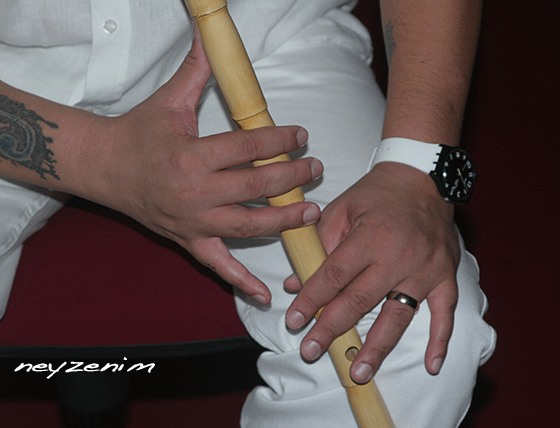
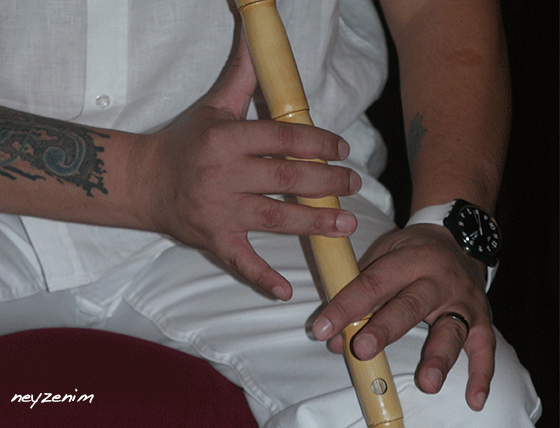
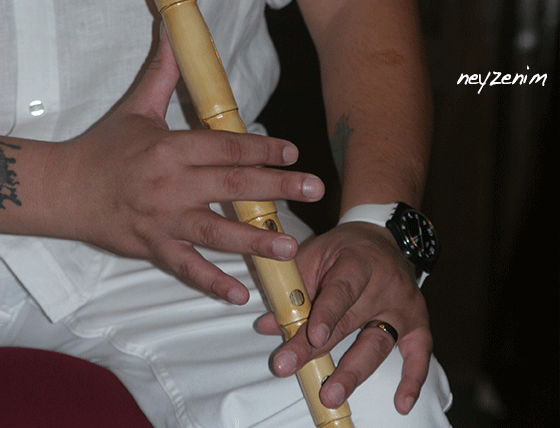
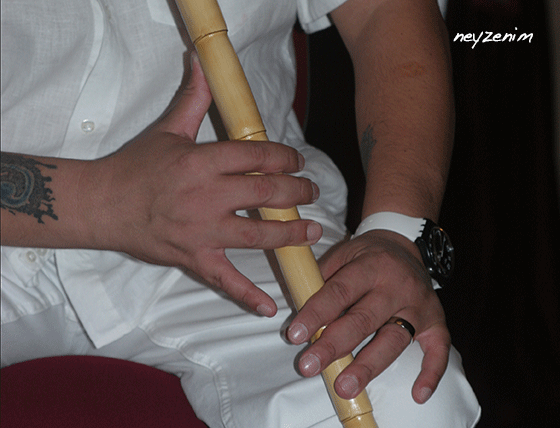
As you will remember, we will close Curtains:
We are too busy.
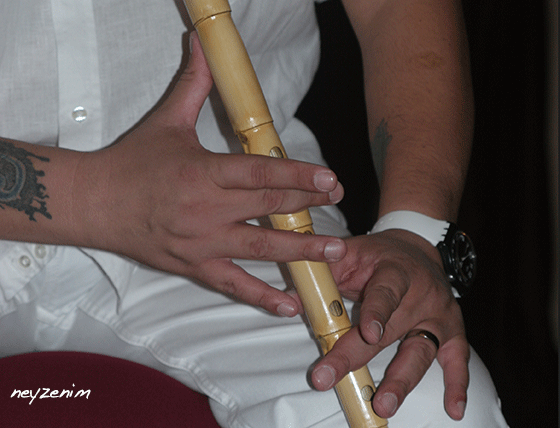
RIGHT HAND: Head and middle finger.
LEFT EL: Middle Fingers.
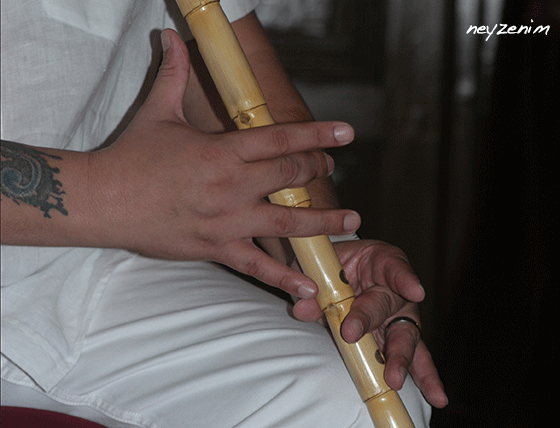
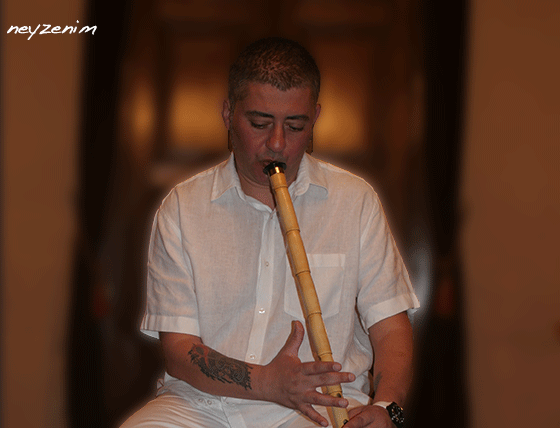
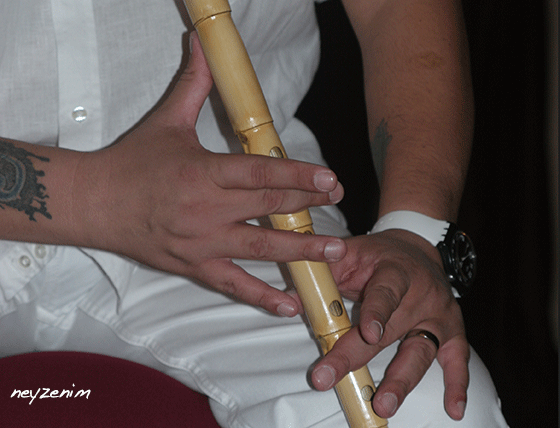
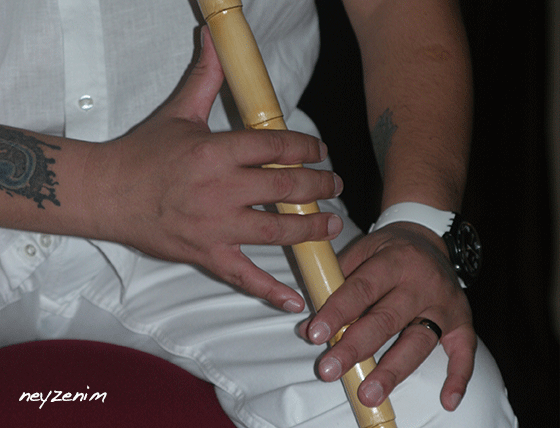
You will remember the image below:
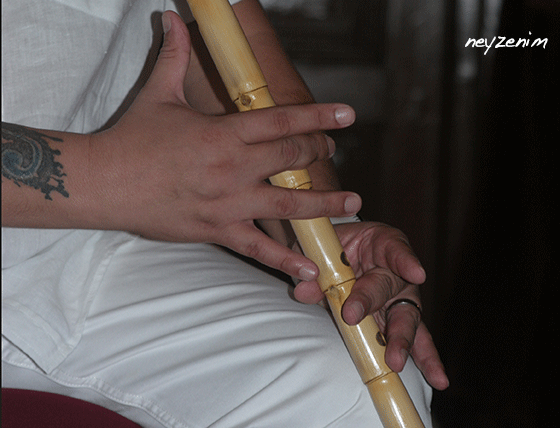
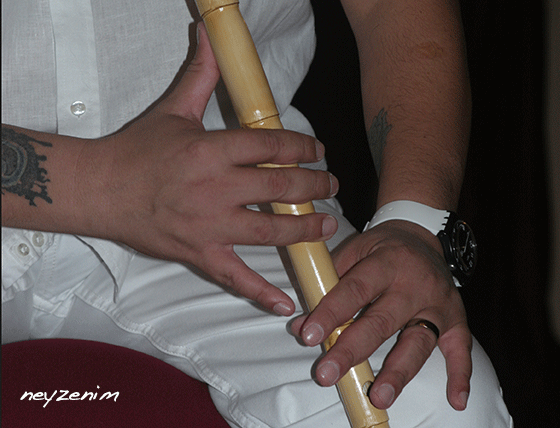
Diferrent position same voice:
Movie:
Mi:
As you know, the peri-peri was closed and
our five fingers were closed;
so six of our fingers will be closed:
We can also remove this note from all the
outer curves outside our middle fingers:
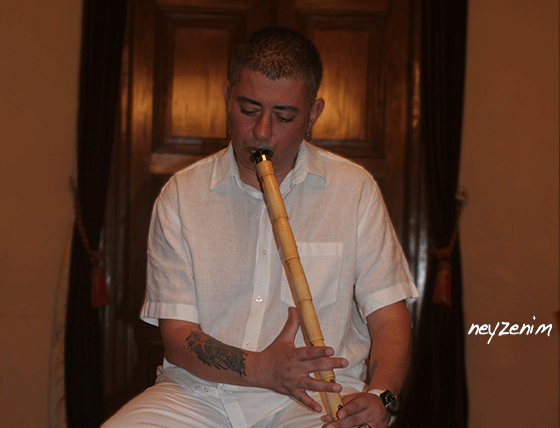
Our normal blowing position was this way:
We pull our head to the left to remove the
Mi pad:
Movie:
Fa:
Position:
For the Fa note we do not turn our head to
the right or to the left,
we are obviously blowing our fingers:
Movie:
Sol:
Position:
We can also remove the left voice, all the
curtains off:
Movie:
La:
Position:
Diferrent Position:
Movie:
Double Re:
Position:
In fact, all the curtains (except for Peril)
must be open.
But to make the notes easier, we were holding
two fingers holding the middle fingers closed.
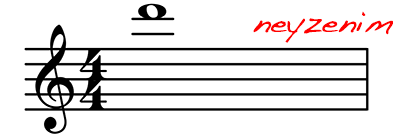
The Treble Neva or the Re-note above the
Porte is the sound of all our
fingers being closed at the same time:
Of course we have to blow hard to make this
sound.
Diferrent Position:
Movie:
These exercises, at this stage, believe, we should do these studies to learn very important curtains.
Names in Turkish Music:
In Turkish music, there are intermediate
voices called koma.
Certain names have been given to indicate
how many coma this intermediate sounds are.
For example ;
? Naturel si perdesine: Buselik ? 1
consecutive si perdesine: Segah
? 2-3 consecutive si perdesine: Uşşak
? 4 coşses si perdesine: Dik Kürdi
? The names of Kürdi were given to 5 combers.
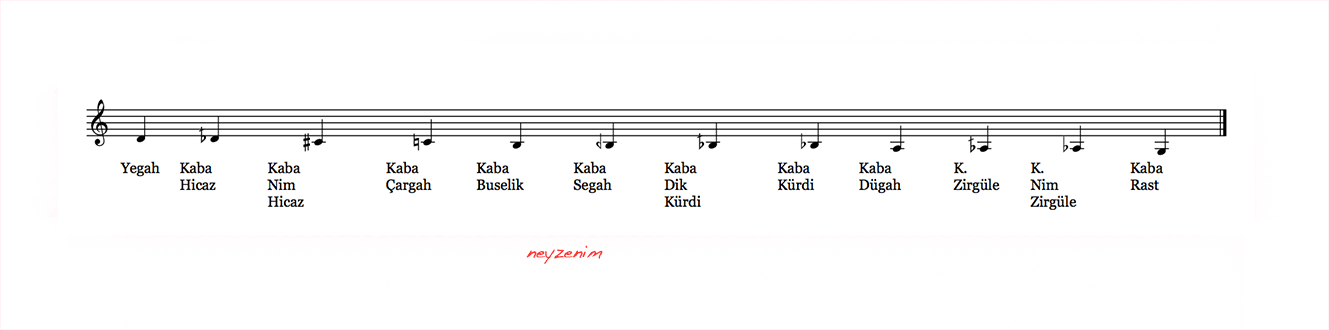
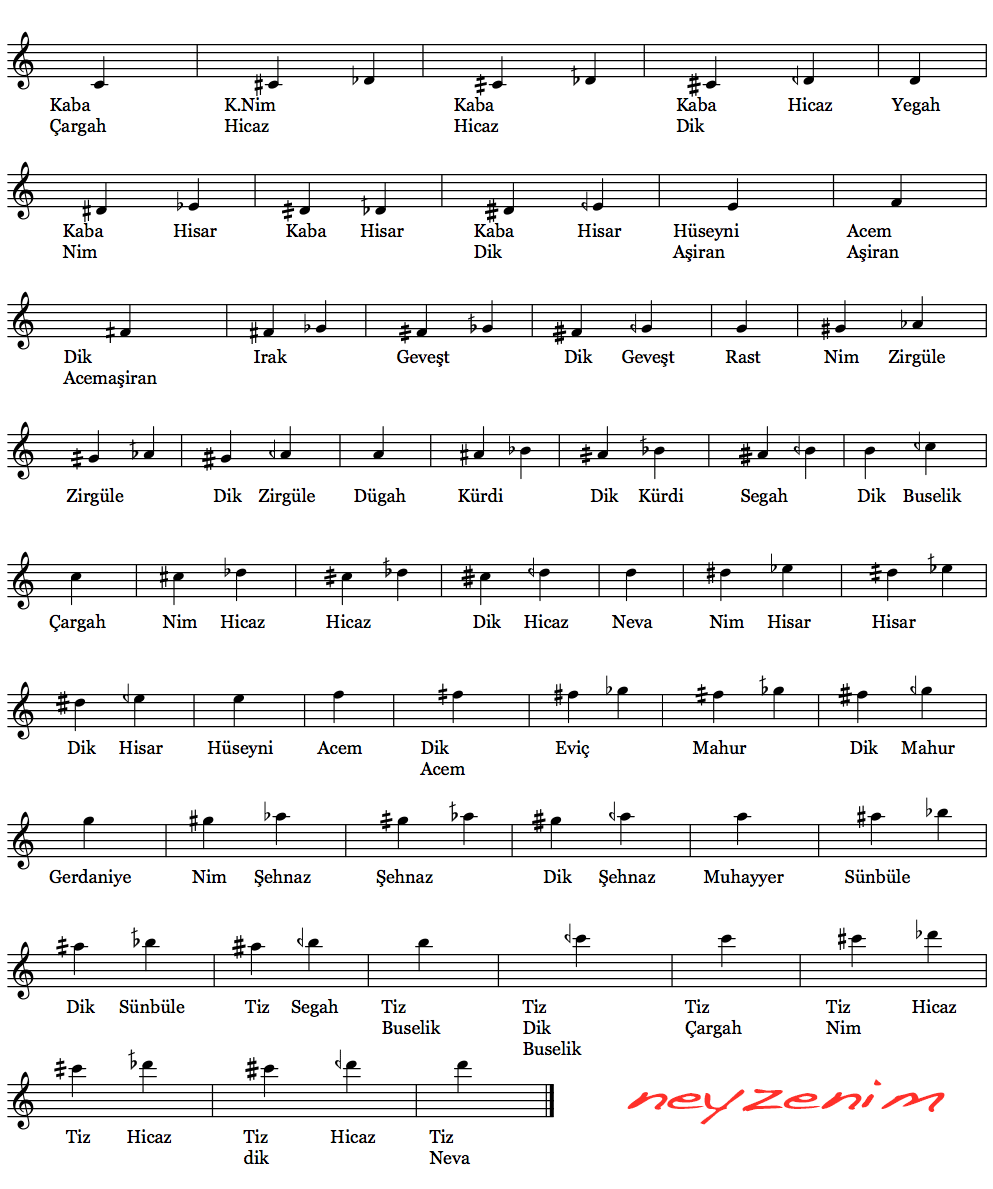
Each note in the Turkish Music has a name.
You can enlarge it by clicking picture:
Bassos:
You can enlarge it by clicking picture:
You can enlarge it by clicking picture:
In our other lessons, we will learn Turkish Music Procedures and
frequently used makams and perform them with notes.
Friends, in order to finish this lesson and move on to our other lesson,
we must have the following information:
- We know what and how to keep.
- We can now make the Rast sound loud.
- We know the note values.
- We can recognize the notes.
- We know sharps and flat sounds and we can get them out of our ney.
- We know the signs of hush and we know their value.
- We know which position the notes correspond to in our Ney.
- We can remove treble curtains and we know which note they correspond to.
Please proceed to the next lesson after completing these topics.