Ney Lessons
Ney Lessons - 13 -
The rhythms used to date in Turkish music
What is Rhythm?
Made up of specific sequences, the measure in the form of a mold is called a rhythm.
Rhythms; simple rhythms and large rhythms two kind of.
Simple Rhythm?
Between 2 timing with 15 timing.
32 Rhythm:
SIMPLE Rhythms USING TODAY IN THE TURKISH MUSIC:
1 - Nim Sofyan : 2 Adet birim Zamana sahip.
2 - Semai (Vals) : 3 Adet birim Zamana sahip.
3 - Sofyan : 4 Adet birim Zamana sahip.
4 - Türk Aksağı : 5 Adet birim Zamana sahip.
5 - Yürük Semai : 6 Adet birim Zamana sahip.
6 - Darb-ı Usûl : 6 Adet birim Zamana sahip.
7 - Devr-i Hindi : 7 Adet birim Zamana sahip.
8 - Devr-i Turan : 7 Adet birim Zamana sahip.
9 - Düyek : 8 Adet birim Zamana sahip.
10 - Müsemmen : 8 Adet birim Zamana sahip.
11 - Darb-ı Bulgar : 8 Adet birim Zamana sahip.
12 - Aksak : 9 Adet birim Zamana sahip.
13 - Evfer : 9 Adet birim Zamana sahip.
14 - Raks Aksağı : 9 Adet birim Zamana sahip.
15 - Oynak : 9 Adet birim Zamana sahip.
16 - Üçleme : 9 Adet birim Zamana sahip.
17 - Aksak Semai : 10 Adet birim Zamana sahip.
18 - Aksak Semai Evferi : 10 Adet birim Zamana sahip.
19 - Lenk Fahte : 10 Adet birim Zamana sahip.
20 - Ceng-i Harbi : 10 Adet birim Zamana sahip.
21 - Tek Vuru ş : 11 Adet birim Zamana sahip.
22 - Frenkçin : 12 Adet birim Zamana sahip.
23 - Nim Çember : 12 Adet birim Zamana sahip.
24 - İkiz Aksak : 12 Adet birim Zamana sahip.
25 - Mazmuri : 12 Adet birim Zamana sahip.
26 - Nim Evsat : 13 Adet birim Zamana sahip.
27 - Şark-ı Devr-i Revanı : 13 Adet birim Zamana sahip.
28 - Bektaşi Devr-i Revanı : 13 Adet birim Zamana sahip.
29 - Devr-i Revan : 14 Adet birim Zamana sahip.
30 - Devr-i Turki : 14 Adet birim Zamana sahip.
31 - Musabba: 14 Adet birim Zamana sahip.
32 - Raksan : 15 Adet birim Zamana sahip.
33 - Bektaşi Raksanı : 15 Adet birim Zamana sahip.
Big Rhythms ?
Between 16 timing with 120 timing.
BIG Rhythms USING TODAY IN THE TURKISH MUSIC:
1 - Bektaşi Raksı : 16 Adet birim Zamana sahip.
2 - Çifte Düyek : 16 Adet birim Zamana sahip.
3 - Fer : 16 Adet birim Zamana sahip.
4 - Nim Berefşan : 16 Adet birim Zamana sahip.
5 - Nim Hafif : 16 Adet birim Zamana sahip.
6 - Darb-ı Turki : 18 Adet birim Zamana sahip.
7 - Nim Devir : 18 Adet birim Zamana sahip.
8 - Fahte : 20 Adet birim Zamana sahip.
9 - Durak Evferi : 21 Adet birim Zamana sahip.
10 - Hezec : 22 Adet birim Zamana sahip.
11 - Şirin : 22 Adet birim Zamana sahip.
12 - Çenber : 24 Adet birim Zamana sahip.
13 - Nim Sakil : 24 Adet birim Zamana sahip.
14 - Evsat : 26 Adet birim Zamana sahip.
15 - Beste Devr-i Revanı : 26 Adet birim Zamana sahip.
16 - Şark-ı Devr-i Revanı : 26 Adet birim Zamana sahip.
17 - Devr-i Kebir : 28 Adet birim Zamana sahip.
18 - Frengifer : 28 Adet birim Zamana sahip.
19 - Remel : 28 Adet birim Zamana sahip.
20 - Devr-i Sagir : 30 Adet birim Zamana sahip.
21 - Hafif : 32 Adet birim Zamana sahip.
22 - Berefşan : 32 Adet birim Zamana sahip.
23 - Muhammes : 32 Adet birim Zamana sahip.
24 - Darb-ı Hüner : 38 Adet birim Zamana sahip.
25 - Sakil : 48 Adet birim Zamana sahip.
26 - Nim Zincir : 60 Adet birim Zamana sahip.
27 - Hâvi : 64 Adet birim Zamana sahip.
28 - Darb-ı Fetih : 88 Adet birim Zamana sahip.
29 - Zincir : 120 Adet birim Zamana sahip.
Today, most of these rhythms are not used.
Below we provide information on what we need to know:
NİM SOFYAN USÛLÜ :
The smallest and simplest method in Turkish music is called Nim Sofyan.
There are two orders of magnitude 2/8 and 2/4.
Two units are timed and two strokes.
STILL: Düm 1, Tek 1
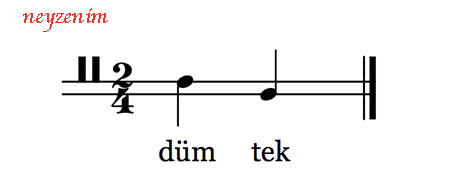
You can enlarge it by clicking on our Sample Note.
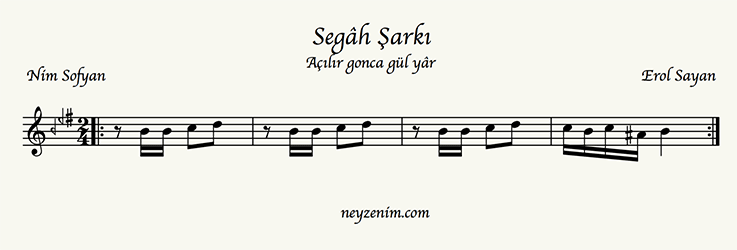
Movie:
SEMAİ USÛLÜ :
Düm 1, Tek 1, Tek 1,
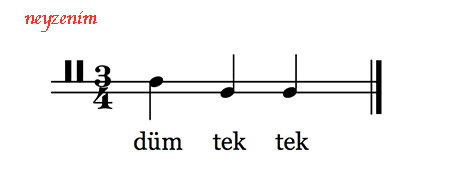
You can enlarge it by clicking on our Sample Note.
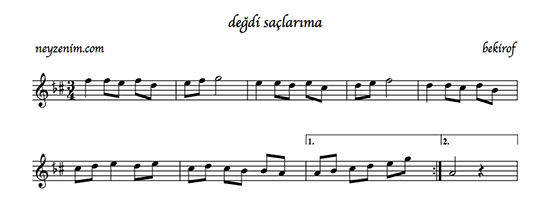
Video:
SOFYAN:
Still: DÜM 2, TE 1, KE 1 /p>
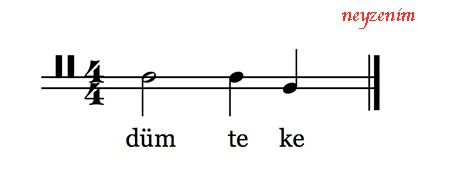
You can enlarge it by clicking on our Sample Note.
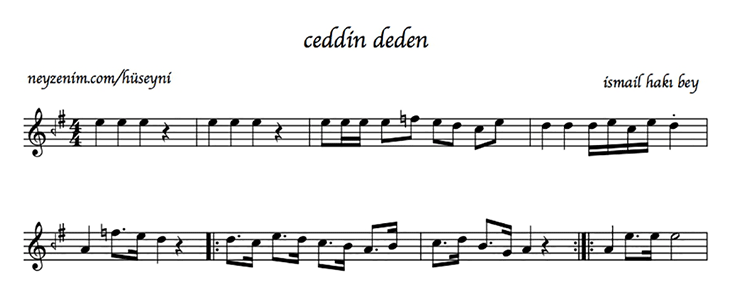
Video:
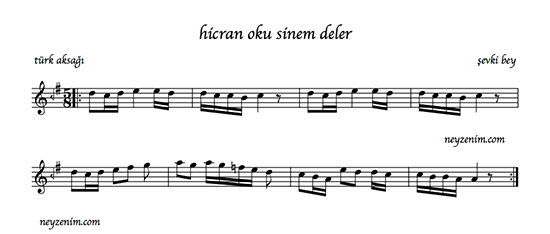
TÜRK AKSAĞI:
Vuruluşu: DÜM 2, TEK 2, TEK 1
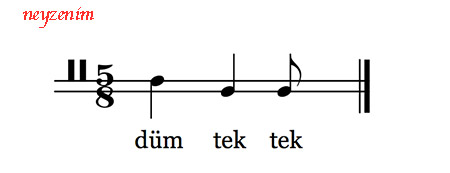
You can enlarge it by clicking on our Sample Note.
Video:
YÜRÜK SEMAİ USÛLÜ :
Vuruluşu : DÜM 1, TEK 1, TEK 1, DÜM 1, TEK 2
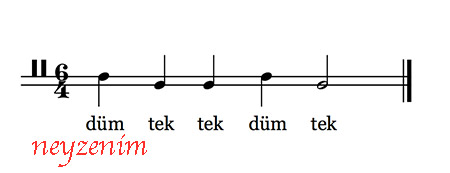
You can enlarge it by clicking on our Sample Note.
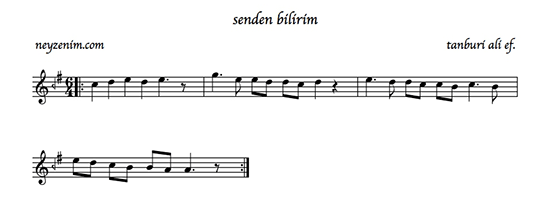
Video:
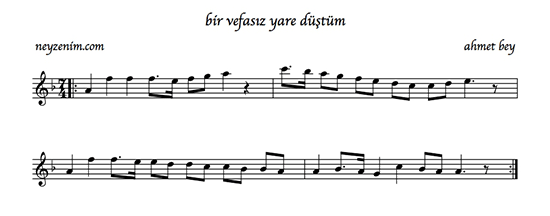
DEVR-İ HİNDİ:
Düm 1, Tek 1, Tek 1 ,Düm 2, Tek 2
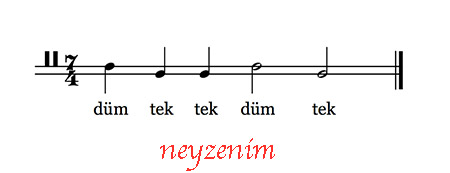
You can enlarge it by clicking on our Sample Note.
Video:
DÜYEK USÛLÜ :
Rhythm is syncopation.
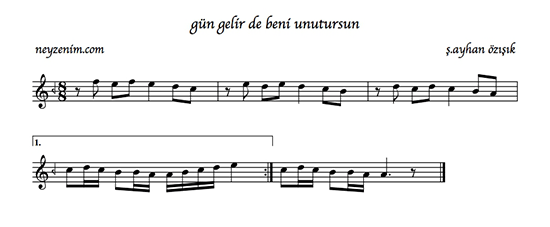
DÜM 1, TEK 2, TEK 1, DÜM 2, TEK 2
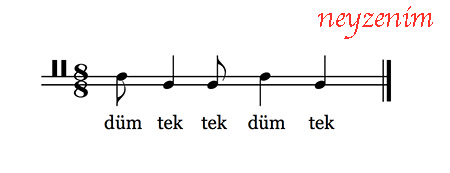
You can enlarge it by clicking on our Sample Note.
Video:
You can enlarge it by clicking on our Sample Note.
Video:
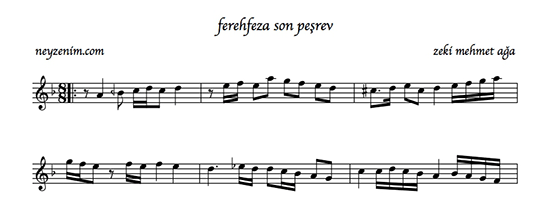
This rhythm is the most used method today.
AKSAK USÛLÜ :
Vuruluşu : DÜM 2, TE 1, KE 1, DÜM 2, TEK 2, TEK 1
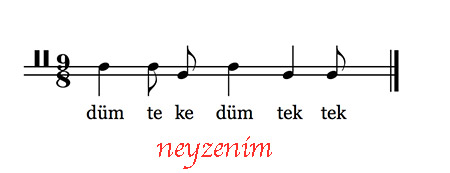
You can enlarge it by clicking on our Sample Note.
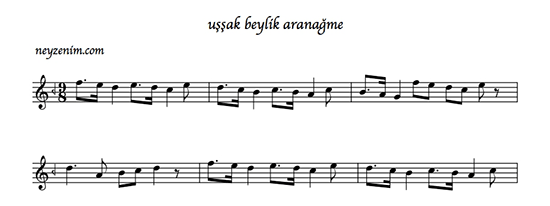
Video:
he first order of the Aksak method is called Yürük Aksak or Çifte Sofyan.
The more heavily performed one is called Aydın. The name of the second order is Aksak.
HEAVY DUTY SHAPE:
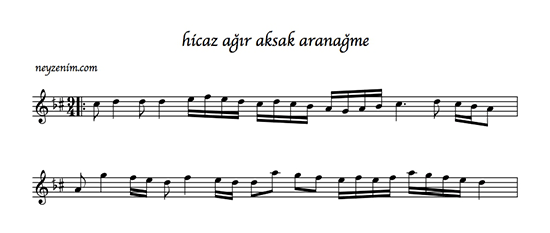
The third order of the Aksak procedure is called the Heavy Aksak with its 9/4.
The most important feature of this method is that all of the Düm at the beginning of the procedure and
half of the Te following it are marked with Es (Sus).
We call it Motherland.
Anakruz: To enter a work from anywhere in the middle or without the beginning of the method.
Oral works in the Heavy Aksak Method begin at Anakruz.
In the following work, you can see a Heavy limp music note.
You can enlarge it by clicking on our Sample Note.
You can enlarge it by clicking on our Sample Note.
Video:
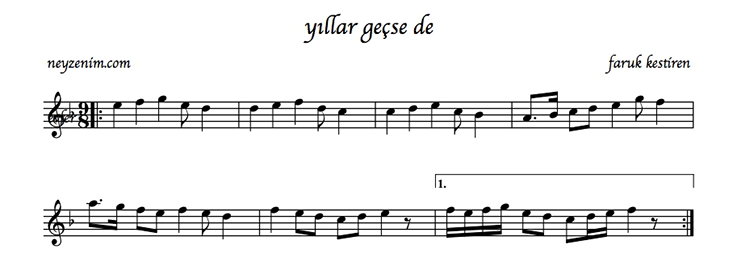
EVFER:
Vuruluşu: DÜM 2, TE 1, KE 1, DÜM 2, TEK 1, TEK 2
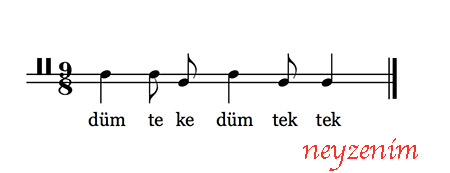
You can enlarge it by clicking on our Sample Note.
Video:
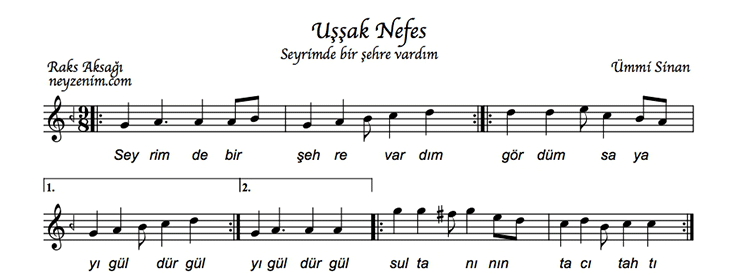
RAKS AKSAĞI:
STEEL: DÜM 2, TEK 3, DÜM 2, TEK 2
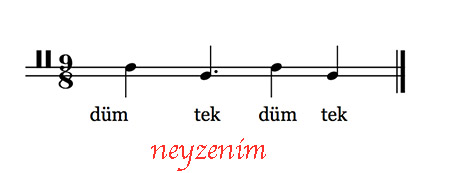
You can enlarge it by clicking on our Sample Note.
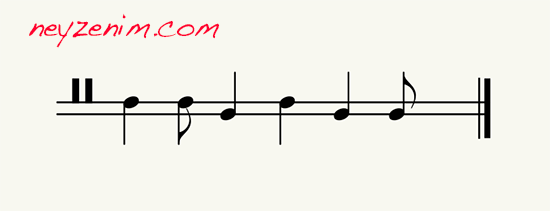
AKSAK SEMAİ:
DÜM 2, TE 1, KÂ 2, DÜM 2, TEK 2, TEK 1
AKSAK SEMAİ EVFERİ:
DÜM 2, TE 1, KÂ 2, DÜM 2, TEK 1, TEK 2
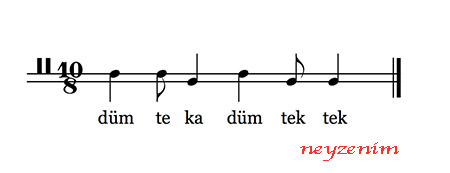
You can enlarge it by clicking on our Sample Note.
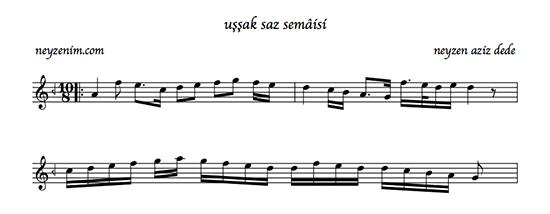
Video:
In most of the works in the form of Saz Semaisi in Turkish Music, in Embroidery Semai,
It has been used frequently in Köçekçe, Play Airs and Songs.
The first order of the procedure, 10/16, is called Curcuna.
The third order of 10/4 is called the Heavy Aksak Semai.
AKSAK SEMAİ EVFERİ:
DÜM 2, TE 1, KÂ 2, DÜM 2, TEK 1, TEK 2
DEVR-İ REVAN:
DÜM 3, DÜM 2, TEK 2, DÜM 3, TEK 2, TEK 2
You can enlarge it by clicking on our Sample Note.
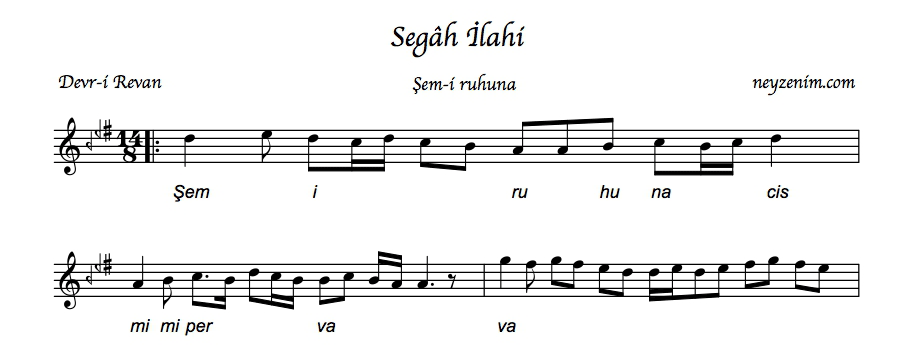
Video:
RAKSAN:
DÜM 3, DÜM 2, TEK 2, DÜM 3, TEK 2, TEK 2
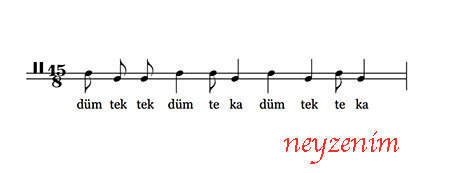
You can enlarge it by clicking on our Sample Note.
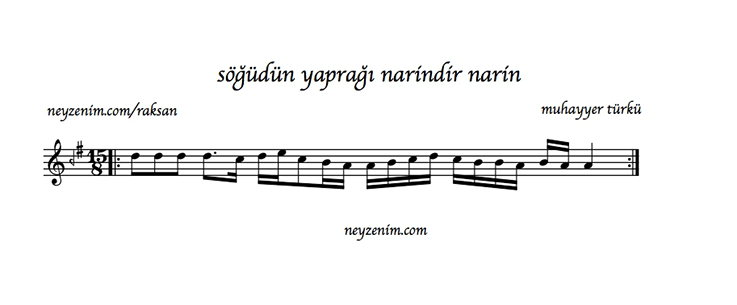
Video:
Our Objectives at the end of this lesson:
Memorize the Rhythms.
To memorize sample songs.
To have completed the tiny exercises.
After completing these objectives, you can go to the other Level

www.neyzenim.com Neyzen Zeki Sözen
|