Ney Lessons
Ney Lessons - 6 -
Middle Sounds;
The concept of flat in curtains and
Turkish music
In this lesson, we will refer to the
medium curtains and Flats.
The notes we call middle curtains in
the Ney instrument:
Re, Mi flat, Fa, Fa sharp, Left, La
flat and La notes.
You can see the locations of the notes
on the middle curtain in the following portals.
In the following portals, you will see
the natural notes in the middle.
Re, Mi, Fa, Sol and La notes:

In the following port, you will see the flat
and sharp notes in the middle.
Notes :

Finalyl:
As we do not learn the notes, I do not mention
their names here again.


In the middle hole, Locations:
Note:
We
have to blow it a bit harder to get these voices.
Our
nose will shrink a little more when we blow hard.
REFERENCE:
We already know this note from previous lesson.
But
this time, we'll blow Re's voice off all the curtains.
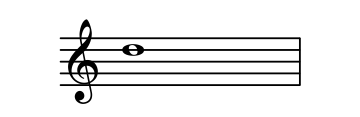
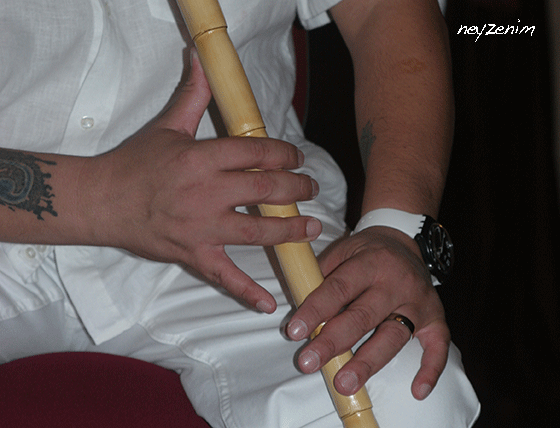
We will close the holes:
RIGHT HAND: Head, Sign, Middle and Ring
Fingers.
LEFT EL: Head, Sign, Middle and Ring
Fingers.
In other words, all our fingers are
closed.
Review the picture below:
ATTENTION !!
If you recall the Neva perdes we were
removing from the position:
We will close the curtains as follows:
RIGHT HAND: Head and middle finger.
LEFT EL: Middle Fingers.
Review the picture below:
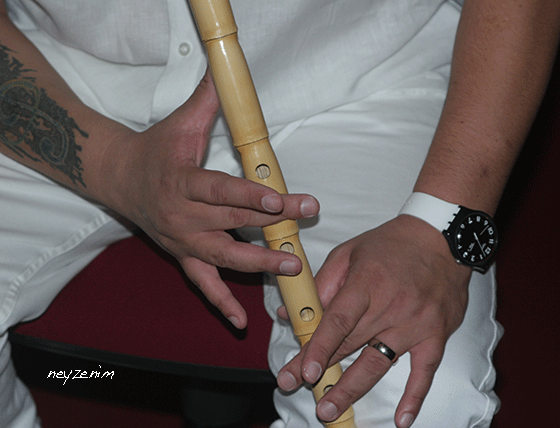
So we can remove the Re field in the
4th line from two different positions.
Please review the following video:
MI FLAT NOTE :
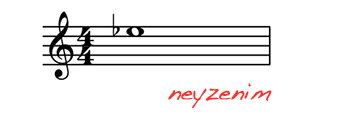
We will close Holes:
RIGHT HAND: Head, Sign, Middle and Ring
Fingers.
LEFT EL: Sign, Middle and Ring We close
3/4 of our fingers.
Review the picture below:
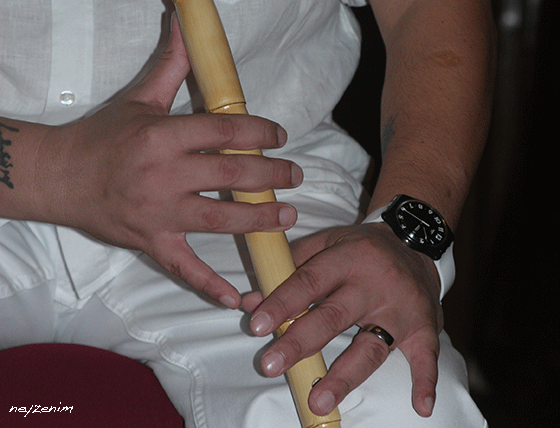
Note: We also turn our head slightly
to the left to remove the Mi flat.
Normally this curtain is always upright
so the sound is sharper.
So we turn our head to the left and
pause the sound even more.
Movie:
Note: We also slightly turn our head to the left to remove the Mi flat curtain.
Normally, this curtain is always upright, so the sound is higher.
So we turn our head to the left and pest the sound even more.
Our Videos:
Re, Mi flat:
Mi flat:
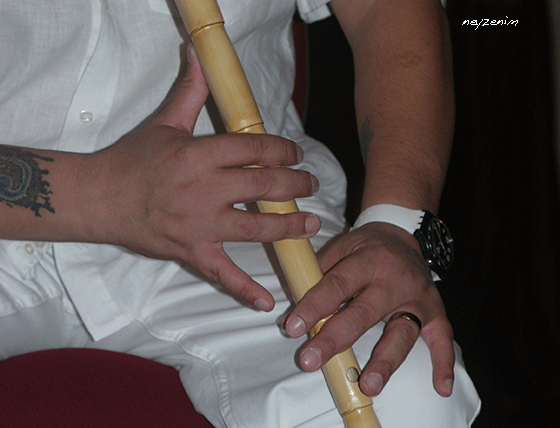
MI NOTE
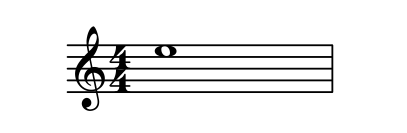
We will close Curtains:
RIGHT HAND: Head, Sign, Middle and Ring
Fingers.
LEFT EL: Sign and Middle Fingers.
Review the picture below:
Movie:
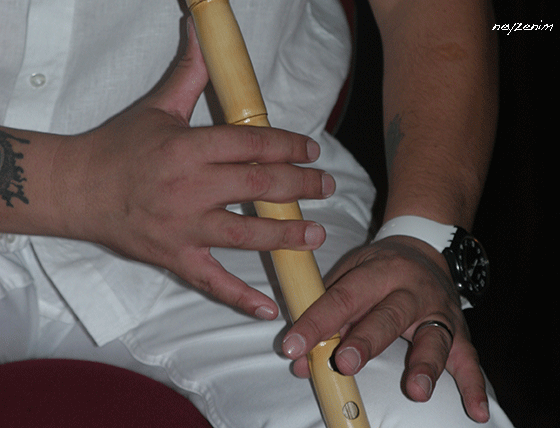
FA NOTE
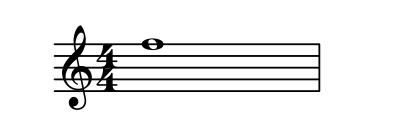
We will close Curtains:
RIGHT HAND: Head, Sign, Middle and Ring
Fingers.
LEFT HAND: Our Sign Fingers.
Review the picture below:
Video:
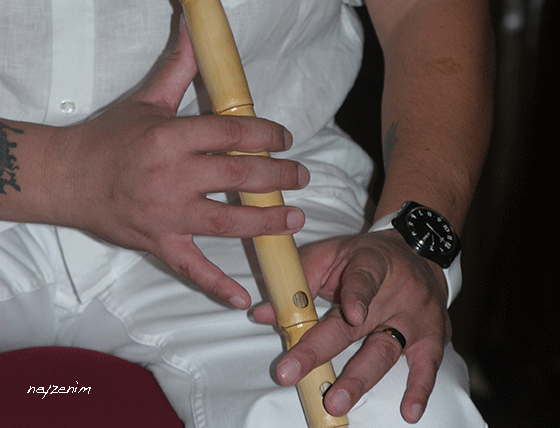
FA SHARP NOTE :
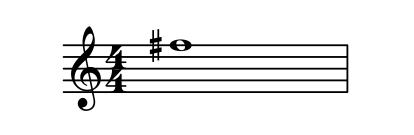
We will close Curtains:
RIGHT HAND: Head, Sign, Middle and Ring
Fingers.
LEFT EL: Middle Fingers.
Review the picture below:
Movie:
SOL NOTE:
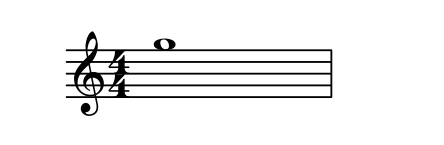
We will close Curtains:
RIGHT HAND: Head, Pointing Finger and
Middle Finger.
LEFT EL: Middle Fingers.
Review the picture below:
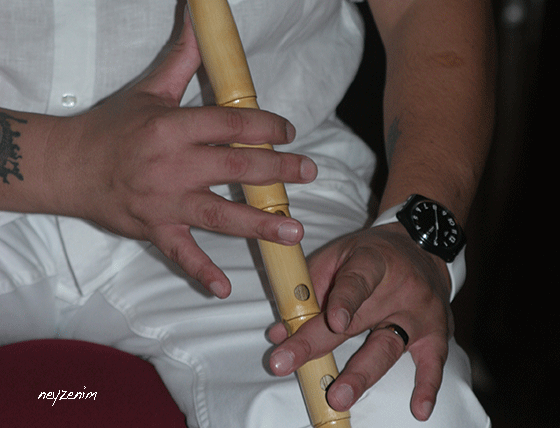
Movie:
A FLAT NOTE :
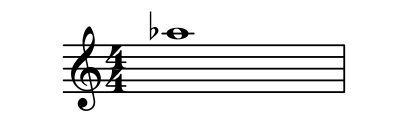
We will close Curtains:
RIGHT HAND: Head and Point Fingers.
LEFT EL: Middle Fingers.
Review the picture below:
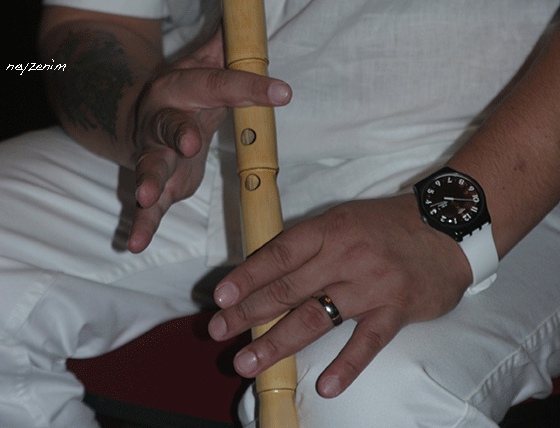
Movie:
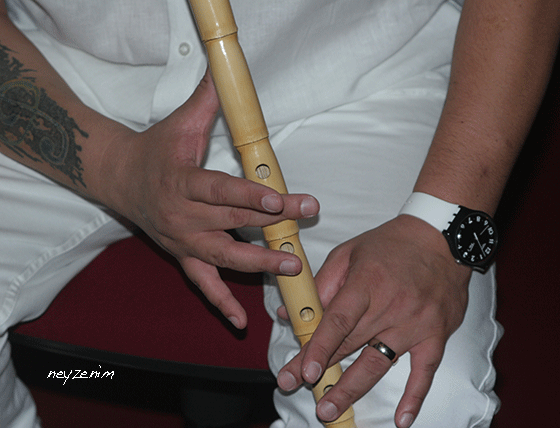
LA NOTE :
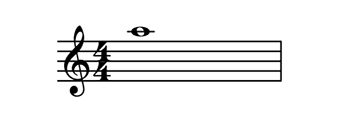
We will close Curtains:
RIGHT HAND: Head and Middle Fingers.
LEFT EL: Middle Fingers.
Review the picture below:
Movie:
Let's look at the tiny exercises about
the middle curtains and work them over and over again.
Minor Exercises 1:
Metronom: 60

Movie:
Important Note: It is not enough to
play these exercises once.
Work at a hefty tempo at first, then
work faster, then work faster and faster.
Minor Exercises 2:
Metronom: 60

Movie:
Minor Exercises 3:
Metronom: 60

Movie:
Minor Exercises 4:
Metronom: 60

Movie:
Flat concept in Turkish music
Flat : Before
it is the sign that drops or pauses the sound that comes to half
the volume.
Flat :
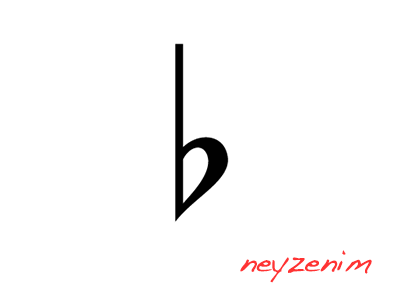
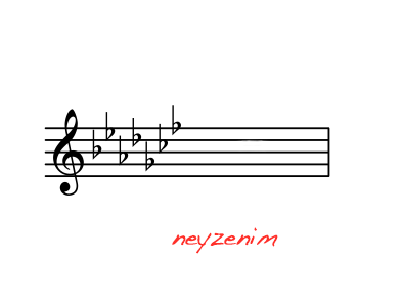
The order of writing to portey: si,
mi, la, r e, left, do, fa.
Arrangement order of flags:
Turkish Music Flats:
Aral���n
Ad� |
Koma
De�eri |
Bemol
��areti |
Sembolü |
Koma |
1 |
|
F |
Bak�ye |
4 |
|
B |
Küçük
Mücennep |
5 |
|
S |
Büyük
Mücennep |
8 |
|
K |
Tanini |
9 |
|
T |
Art�k
�kili |
12-13 |
- |
A |
NEY
DERSLERI |
|
|
neyzenim.com |
In Turkish Music, 1, 4 and 5 koma values
are used as coma.
That is, coma (F), balance (B) and small
magic (S) comma are used as coma values.
We finished this lesson, the end of
the lesson:
- As I have always said, never go to
another lesson without ever completing one lesson.
- We know the notes on the middle curtains.
- We know Mi flat and La bemol notes.
We are in a situation where we can play
tiny practices.
In the next lesson, we will do exercises
with notes we have learned.

www.neyzenim.com Neyzen Zeki Sözen |