In this lesson, I will ask you to make more sounds and learn the names of some curtains.
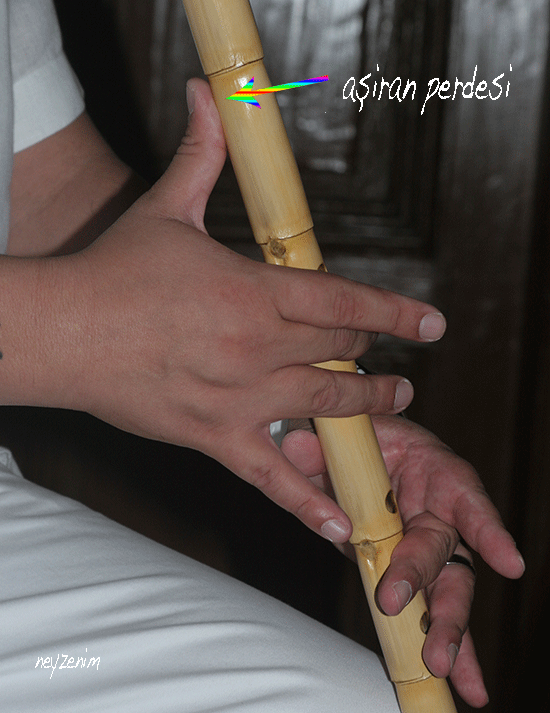
For the sounds we will learn, we will always keep the curtain located at the back of our Ney,
that is, the curtain of Aşiran.
Let us once again touch upon the subject of Ashiran Perde,
which we mentioned in our first lesson.
After this lesson, instead of using the term "Back Curtain", let's use the term ASIRAN PERDESİ.
In the picture below, you see the screen of Aşiran once again:
After this announcement, we can now start BASIC SOUNDS.
In the ney instrument, we stated that, unlike other wind instruments,
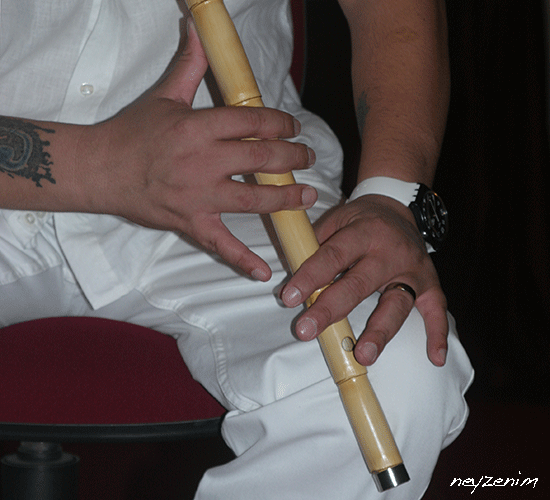
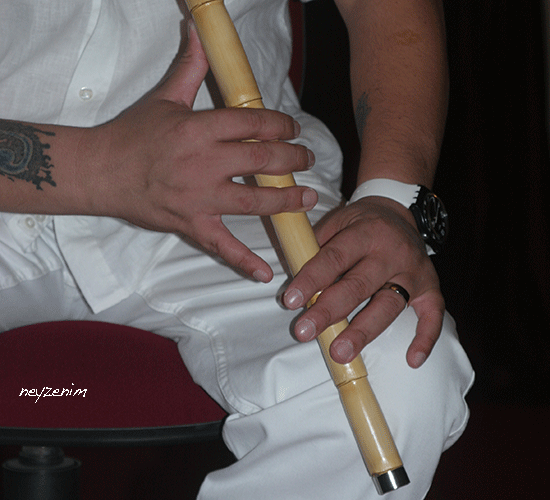
we would use the middle parts of our finger,
not the tips.
According to this :
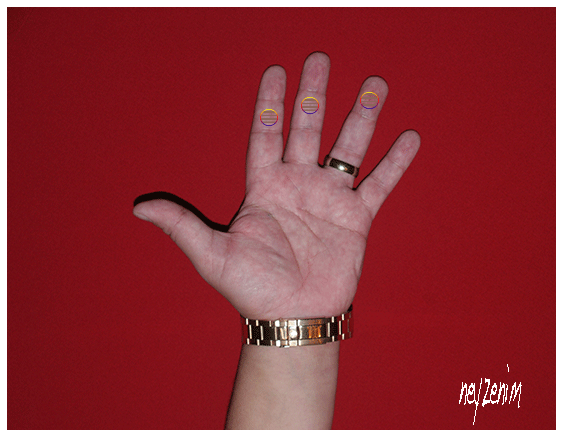
SECTIONS TO USE IN OUR LEFT HAND:
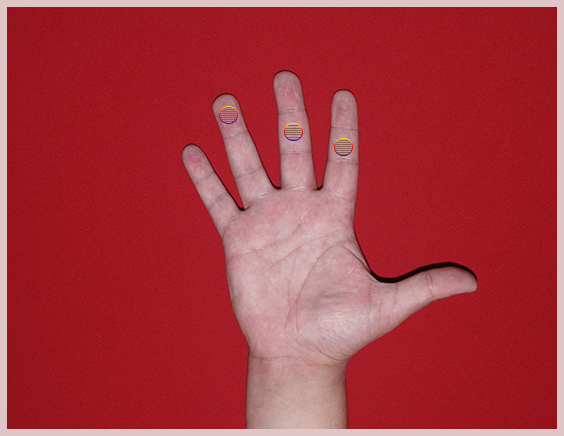
SECTIONS WE USE IN THE RIGHT HAND:
Should be.
As you can see in the pictures above,
it is not possible to use the middle part when using our ring finger;
because our fingers don't catch up.
Using the places indicated by the sign on our fingers while blowing Ney
will be the most suitable points to blow Ney.
Basic Voices
ATTENTION!! As I mentioned before,
while Ney is blowing, we must close the Curtains exactly !!
If we do not close the curtains completely, there will be no sound.
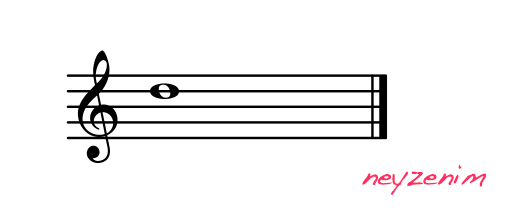
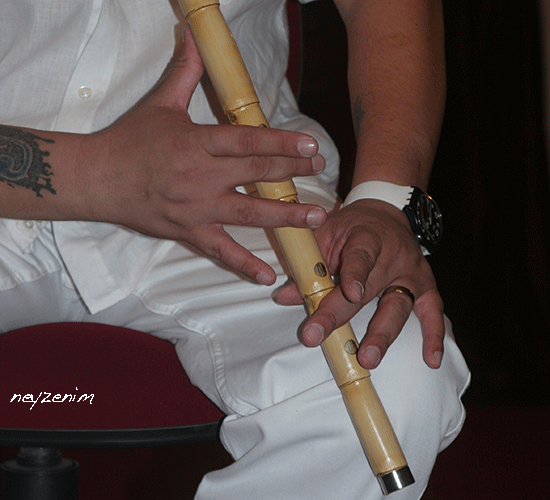
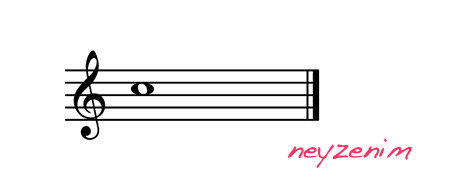
We can start the basic sounds with the note Re:
RE NOTE: In Classical Turkish Music, this pitch is called NEVA.
Curtains that we will close:
RIGHT HAND: Our Thumb and Middle Finger.
LEFT HAND: Our Middle Finger.
Check the picture below:
In fact, the Re note only appears with the curtain of Aşiran closed and other curtains open.
As you can see in the video below, our fingers may be open.
However, in order to blow other notes faster,
we will close the middle fingers of both hands and work the sounds.
We work from this position in order to make it easier to remove the other notes
after the Re note in any work.
The middle fingers of both hands must be pressed on the middle frets of our Ney.
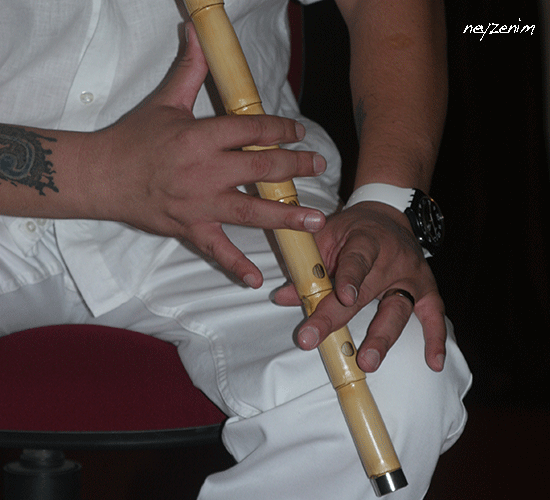
DO NOTES: In Classical Turkish Music, the name of this curtain is ÇARGÂH.
Curtains that we will close:
RIGHT HAND: Our thumb, index finger and middle finger.
LEFT HAND: Our Middle Finger.
Check the picture below:
Movie:
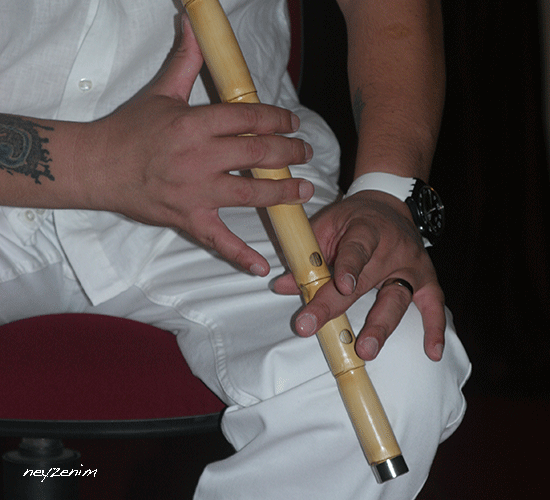
Sİ NOTA: In classical Turkish music, the name of this fret is SEGÂH note.
Curtains that we will close:
RIGHT HAND: Our Thumb, Sign
Our Finger, Middle Finger and Ring Finger.
LEFT HAND: Our middle finger is our finger.
Check the picture below:
Movie:
LA NOTASI : Klasik Türk Müziğinde DÜGÂH perdesidir.
Curtains that we will close:
RIGHT HAND: Our Thumb, Finger, Middle Finger and Ring Finger.
LEFT HAND: Our index finger and middle finger.
Check the picture below:
Movie:
LEFT NOTE: In classical Turkish music, this pitch is called RAST note.
Curtains that we will close:
RIGHT HAND: Our Thumb, Finger, Middle Finger and Ring Finger.
LEFT HAND: Our Index Finger, Middle Finger, and Ring Finger.
In other words, all curtains will be closed.
Check the picture below:
How to strengthen the sounds from the Ney instrument?
Flat Sound
Our video about flat sound blowing :
We need to blow out long,
flat sounds to consolidate sounds.
We need to blow flat sound to ensure that the sounds coming out of our Ney are not loud like whistles,
but loud.
This straight sound blowing, which is valid for all wind instruments,
consists of blowing a note until our breath runs out.
You can blow a flat sound starting from Re curtain to the left curtain.
Our Videos:
As a personal opinion, it is extremely necessary for my new friends to start blowing 100 flat sounds a day
and
I find it useful.
If our lips are tired, start again from an upper veil or Re veil and
blow straight sound
Try to descend to the left curtain.
The last and hardest sound that will come out at this stage will be the Left voice.
Let's patiently blow straight sound.
How to strengthen our Flat Voices or what's coming from Ney:
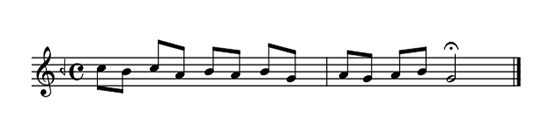
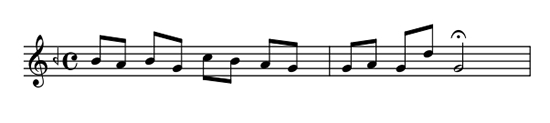
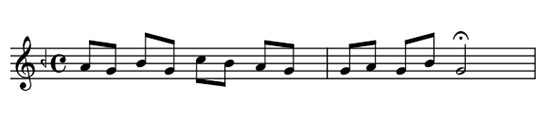
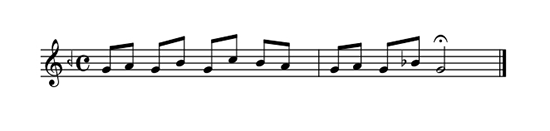
The example sentences or melodies I have given below will also strengthen our voices.
Our first sentence and sample note that we prepared to improve our sounds in Ney instrument;
Our second sentence and sample note that we prepared to improve our sounds in Ney instrument;
Our 3rd sentence and sample note that we prepared to improve our sounds in Ney instrument;
Our 4th sentence and sample note that we prepared to improve our sounds in Ney instrument;
Our 5th note and sample note that we prepared to improve our sounds in Ney instrument;
When should I change my ney instrument;
We completed our second lesson here.
Our Objectives At The End Of This Course:
- While we are starting to study the ney, let's blow the sound of Re for a long time so that the position of our lips is now seated.
- Let's try to make a sound from the Do curtain later.
- Let the sounds sound solid and clean.
- Then let's try to make a sound from Si screen, let's blow long sound.
- We make sounds from the la curtain, we make long sounds,
we don't make unnecessary tunes and we work flat sounds.
- We make a sound from the left curtain. We do not play MELODY
and we blow the FLAT SOUND.
Finally we blow out the long Left voice.
Do not proceed to our 3rd lesson without making the left voice
.
After completing our goals, we can proceed to our third lesson.